

On January 28th, 2026, the BRAVE project organised a focussed collaboration day between the Dutch and German pilot partners, to exchange knowledge and lessons on scaling strategies for local cleantech innovators, start-ups, and SMEs. With both regions exploring similar challenges within the BRAVE project, clustering these regions together attempts to generate more focussed synergies and partnership opportunities.
Guiding questions of the day
What can local government do to further local innovation despite a congested energy grid?
How can a city transition from subsidising energy costs to co-investing in future energy markets?
What support is needed when scale-ups no longer need grants but don’t yet qualify for commercial financing?
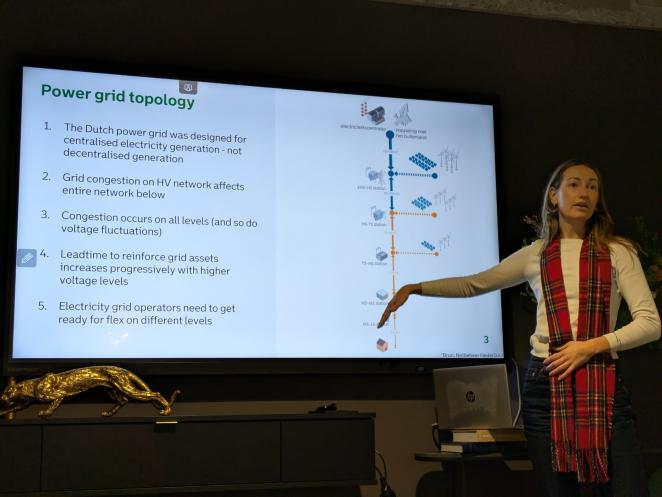
Partners from the City of Rotterdam and the Erasmus Centre for Entrepreneurship hosted Hannoverimpuls and Logistic Network Consultants for a range of presentations and workshops. The day focused on unpacking the key success factors and emerging challenges of Rotterdam’s start-up and SME ecosystem, and featured deep-dive presentations from their Smart Energy System Program (a 6-year €8m innovation fund), as well as the city’s dedicated Grid Congestion team.
For Hannover, with a strategically similar but less mature start-up ecosystem, the key learnings included:
- Building an effective innovation ecosystem requires a long-term commitment - The Upstream initiative in Rotterdam took over 3 years to gain significant visibility within Europe.
- Energy is now increasingly seen by city leaders as a value opportunity rather than just an operational cost. The more ambitious public sector organisations are starting to proactively invest in regional “market-making” rather than just subsidizing bills.
- While strict budget management in Hannover makes it difficult for the city to become a major buyer of promising energy technologies, Rotterdam illustrates alternative roles for city government as a proactive sector "enabler" and market creator.
- Descriptions of Rotterdam’s energy grid challenges, permitting, and financing offered potential future insights for Hannover. While Hannover’s grid is currently less congested, considering scenarios already is a vital risk management strategy for local startups.
- Rotterdam’s Smart Energy System (SES) grant is a high-value tool that Hannover could potentially replicate through a dedicated fund.
- LNC will support the transfer of Hannover’s learnings beyond the BRAVE project, specifically focusing on how German cities can adopt exemplary Dutch innovation models.
"Hannover is trying to support a cleantech ecosystem under strict budgetary discipline. However, Rotterdam’s success shows that we can adopt the role of a market orchestrator – leveraging our existing network to create the right conditions for scale-ups to thrive independently of continued grants.”
- Hannoverimpuls
This BRAVE collaboration day showed the immense value of knowledge sharing among the project’s international consortia (the project includes 14 partners across 7 European countries).