
Introduction
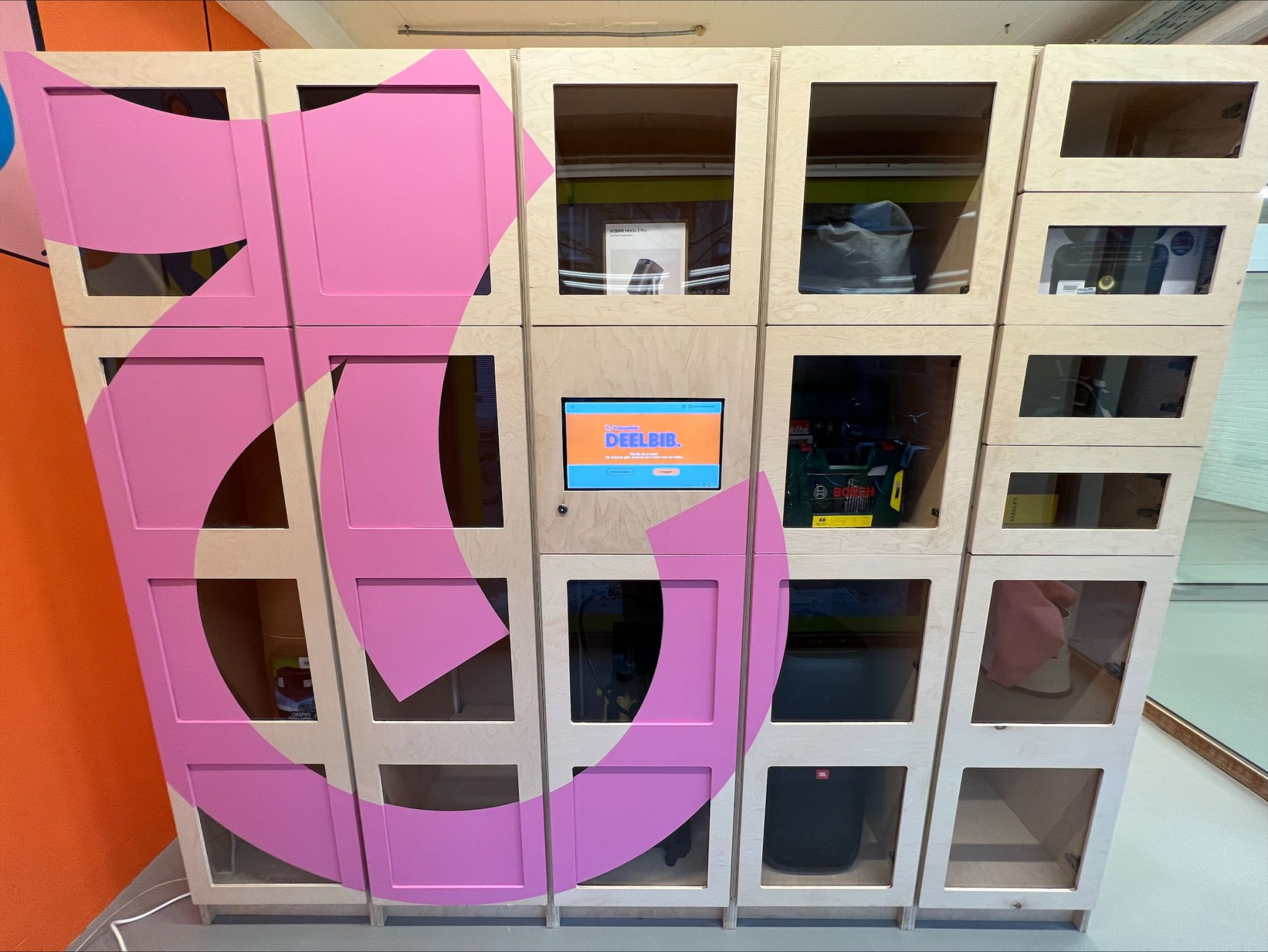
The Kringwinkel Antwerp pilot introduces two multipurpose sharing stations designed to expand access to practical household items and promote more circular consumption habits among local residents. Building on Kringwinkel’s strong reputation in reuse and second-hand culture, the pilot aims to explore new service models that complement existing activities and make it easier for people to borrow infrequently used items instead of buying them.
Location
The stations will be placed at two strategic points connected to Kringwinkel’s existing operations:
- One indoor station, located in the display window of the main Kringwinkel second-hand store.
- One outdoor station, positioned next to the donation point at the Kringwinkel store in Deurne.
These locations were chosen because they are easily recognisable, frequently visited, and already associated with sustainable behaviour. Positioning the stations in and around Kringwinkel stores ensures high visibility, convenient access, and a natural connection to the organisation’s mission of reuse and circularity.
Sharing station types
Both stations will function as multipurpose sharing stations, each offering 14 items.
The exact selection of items is still under development, but will likely include household and cleaning tools that people typically use only a few times per year. The target group will consist of Antwerp residents living near the stations, with a likely focus on individuals already familiar with shared mobility or reuse concepts and therefore more inclined to adopt shared product models.
A mixed business model will be tested:
- Pay-per-use, allowing users to rent items flexibly as needed.
- Membership model, offering broader access to the full product range for a fixed fee.
Testing both models will help determine user preferences, willingness to pay, and the potential demand for subscription-based access to shared goods.
Objectives
Short-term objectives
- Achieve 500 rentals during the first pilot year.
- Reach 150 registered paying users, either through pay-per-use or membership subscriptions.
Long-term objectives
- Assess financial viability and explore the potential for expanding the number of kiosks, either within Kringwinkel stores or through partnerships.
- Investigate opportunities to integrate various locker-based services (such as parcel sending and pickup) with the sharing stations, creating a multifunctional kiosk ecosystem that enhances Kringwinkel’s business model from purely product-based to service-oriented.
As Kringwinkel Antwerp already has 'Re-use' at the core of its business model, it's important to look at other Re-use models as well. Currently we're focused on selling products but the true shift that all companies are making now is to also transfer to service. With the sharing stations this is what we're researching. An essential part of this is that it's at the top of the Circular Economy R-strategies, sharing stations help us 'Re-fuse' consumption which is essential for a more sustainable future"