

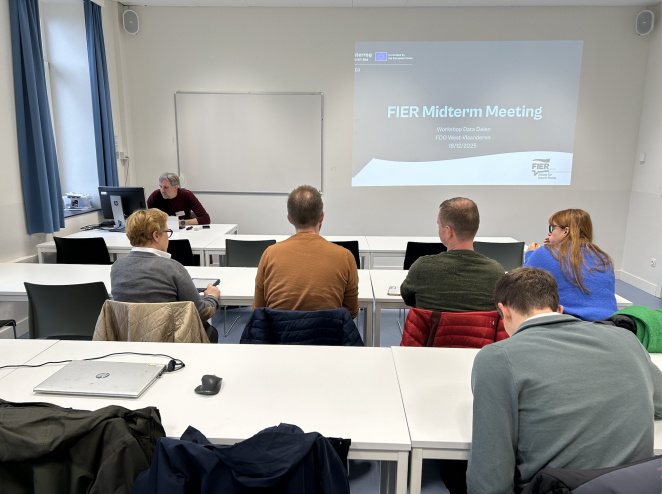
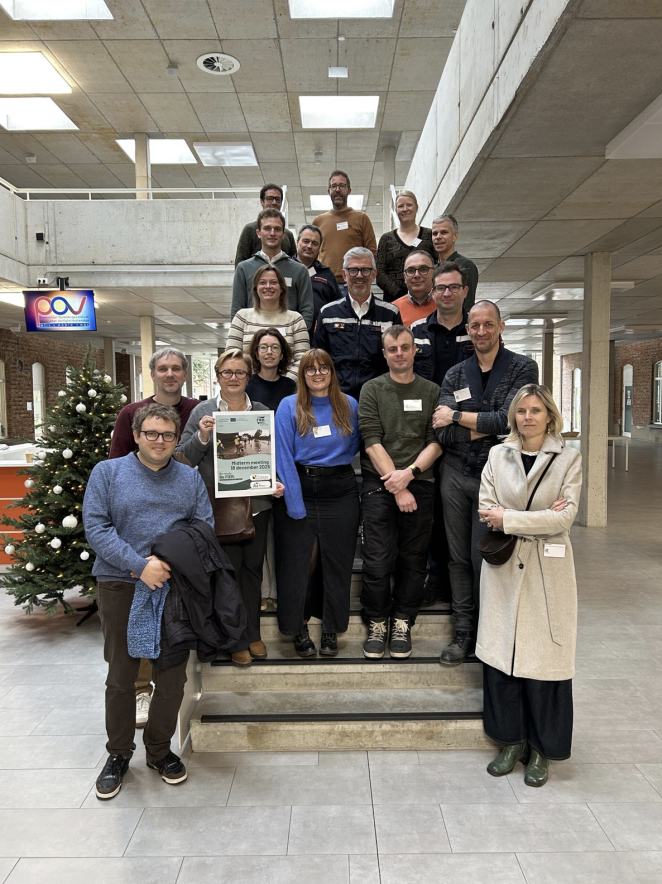
Flemish partners and stakeholders of the Interreg North Sea FIER project met at the West-Flemish Training Center for Fire, Rescue and Ambulance Services (WOBRA) in Zedelgem for One of the regional midterm events. The meeting marked an important milestone to reflect on progress so far and to further strengthen cooperation on managing and preventing flood risks in Flanders and across borders.
©ibz
From Data Exchange to Coordinated Flood Risk Management
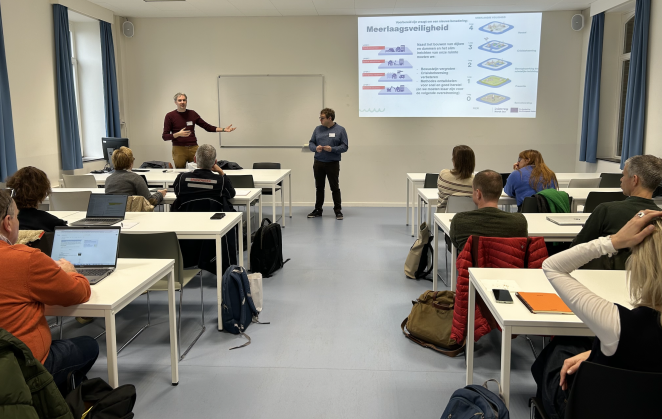
During the plenary session, participants - including local fire brigades, the Flemish Government (Department of Environment, Maritime and Coastal Services, and the Hydraulic Information Center), the Federal Government’s National Crisis Center, and the City of Geraardsbergen – were introduced to the overall objectives of FIER and the work carried out by the federal emergency planning services of the governors of East Flanders and West Flanders. Their activities in the project focus on improving preparedness and response for climate-related flooding by enhancing data exchange between Flanders and the Netherlands, aligning approaches - such as aligning flood models, comparing and translating flood data, and matching emergency response strategies - and reinforcing collaboration between water management and emergency response actors.
©ibz
Linking project results to future policy
After the plenary part, participants took part in two parallel workshops. One group explored how better data sharing can support faster and more coordinated responses to flood events. Sam van Vuuren from the lead partner the Province of Zeeland, was present to represent the Dutch side of this cross-border data sharing activity. The other group focused on guidelines for the population and how to strengthen citizens’ preparedness and self-reliance.
©ibz
Stronger communities through preparedness
These exchanges underlined the importance of creating a shared understanding between different sectors and countries. As Jiri Nossent (Hydraulic Information Center) explained: “The project about Data Sharing/Data Exchange, part of the FIER Project, is a perfect opportunity to look into developing a shared ‘language’, between emergency management and water management partners, on both sides of the Belgian/Dutch border”.
During the event, the importance of individuals and communities in reducing flood impacts was also highlighted. Lennart De Mecheler, Emergency Coordinator at the City of Geraardsbergen, noted:
“Anyone who can help themselves or their loved ones in the event of flooding increases the resilience of the entire community.”
The day concluded with a networking lunch, where participants not only continued discussions but also identified concrete next steps for cooperation, including the idea of organising a cross-border meeting between water management and emergency response partners to further break down barriers, better understand differing procedures, and strengthen joint responses to cross-border flood events.
The Flemish midterm event showed strong engagement from policy makers, emergency services, and researchers, and confirmed the added value of collaboration across multiple levels – between sectors, organisations, regions, and countries. By connecting data, expertise and people, FIER is laying the groundwork for a more coordinated and resilient approach to flooding in the North Sea Region.
As a final remark, Bert Van Severen (Department of Environment, Flemish Government) emphasized the potential policy impact of FIER:
“The FIER Project is a highly relevant project, and we are looking forward to the end results, as they can be useful for future policies regarding spatial planning”