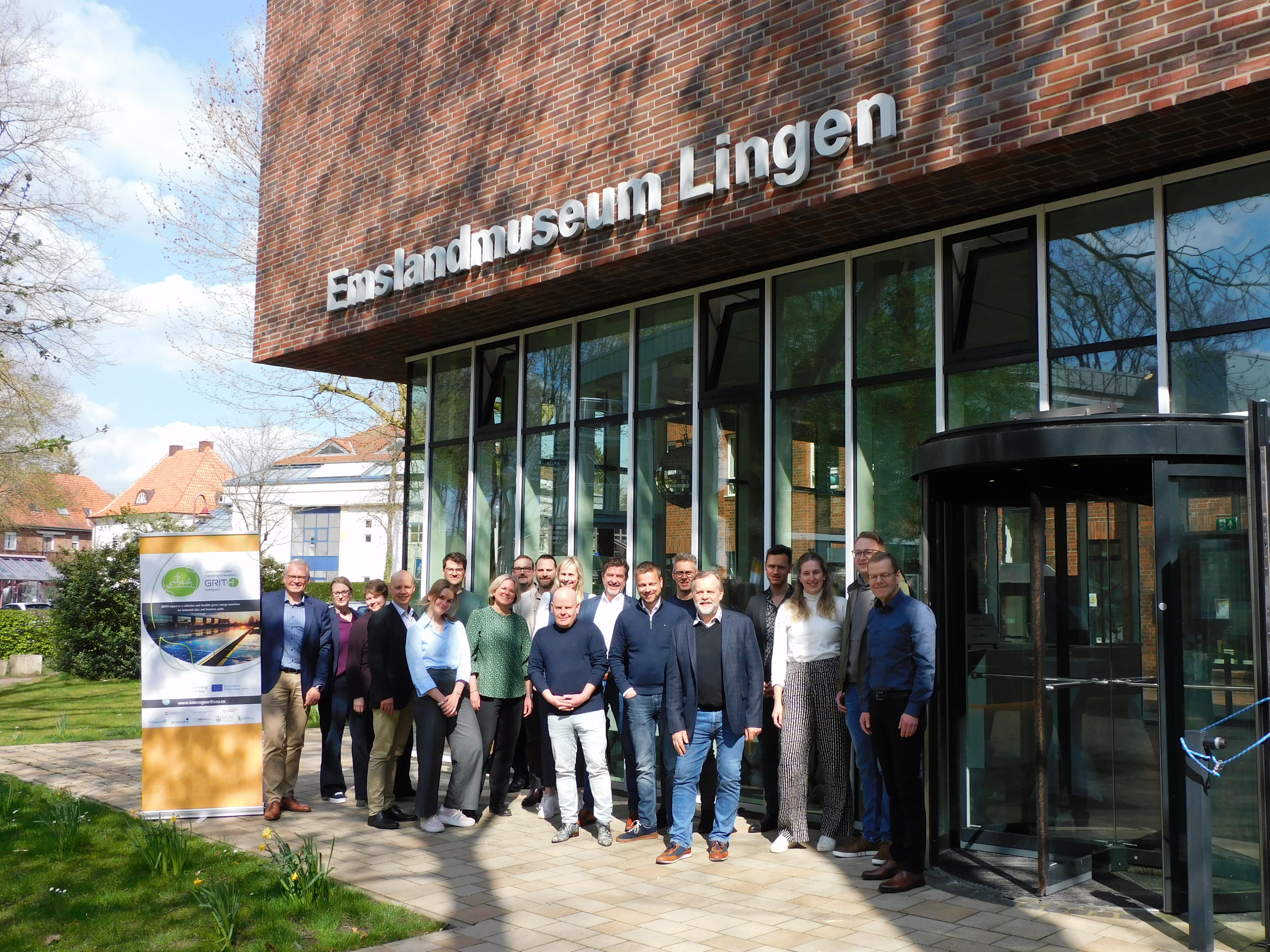
Three sunny days in April set the scene for our GRITH partner meeting in Emsland, Germany. From April 14th until April 16th, we gathered to have an innovative, inspiring, and productive meeting. The Emsland is characterised by its namesake, the river Ems – as well as a rich energy history and future. From peat, oil, and nuclear plants to solar, wind, and hydrogen Emsland shows that a lot can happen in one region. This demonstrates how a region can shape the past and future energy transition, such as the transition to renewable energy GRITH is working on.
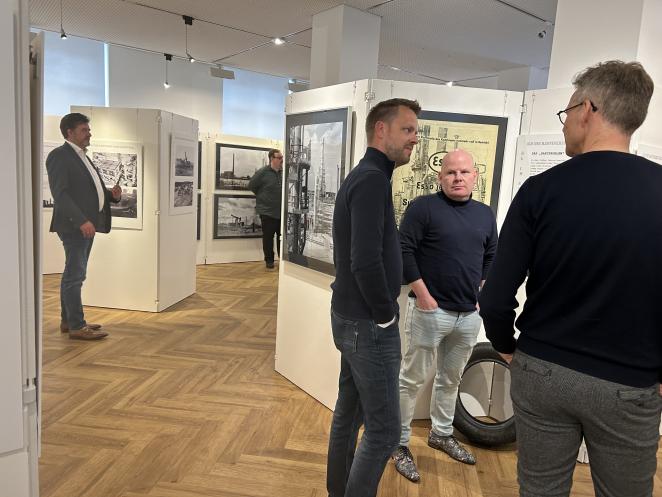
The Emsland Museum exhibition visualised the region's history.
Our visit started in the afternoon of April 14th at the Emsland Museum, where Dr. Christof Spannhoff shared a very informative history of the region. This was visualised by the museum exhibition on exactly this Emsland energy. Contextualising the region provides the opportunity to dive deeper into the contemporary energy issues and chances. Andreas Stroink and Vanessa Böhle from the H2 region Emsland provided us with a presentation on the just mentioned contemporary situation and the challenges and projects of the moment. Having been given the opportunity to see what Emsland is all about, GRITH partners utilised their first opportunity to work together this meeting. Transnational updates show that GRITH is proceeding according to plan while also acting on opportunities. Together partners worked on the development of a communication guide and the policy and impact brief. Finally, our Emsland and Wesermarsch partners provided GRITH-specific updates, focusing on energy hubs, pilots, NetZero Germany, and the theme of futureproofing.
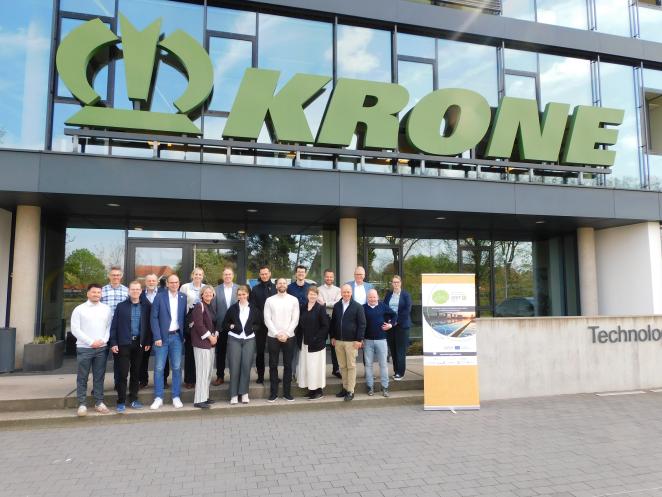
A worthwhile visit to the Krone Technologiezentrum.
Energy Account
April 15th marked a day full of GRITH activities, with a bright and early start to travel to Spelle. Spelle is a municipality in the Emsland region that covers three towns and is seeing a large amount of population growth corresponding to industry growth. The mayor of Spelle, Matthias Sils, and Jens Konermann, head of economic development, welcomed us at the Krone Technologiezentrum and shared their municipality’s energy insights. Renewable energy is an opportunity to stabilise energy availability, prices, regulations and requirements with the added benefit of reducing fossil fuel dominance. However, the municipality faces challenges in lobbying, EU and national regulation, a complex and rapidly changing field, grid congestion issues, a lack of investment capital, and a need for a local coordinator and caretaker. In order to generate more investment Spelle developed a local cooperative Compass eG with citizens buying shares. Spelle does a in local heat planning, concessions, priority PV areas, public charging stations but a gap remains to link this to relevant, local companies. These companies do seem to support the energy transition due to the local benefits and stability. The vision is there; the transition is underway and through productive collaboration much can be achieved.
Still at the Krone Technologiezentrum, our partners from Drenthe, Vejle, Emmen, Borås, and Mechelen provided regional updates. Drenthe talked about roundtables at business parks, community of practice successes, and expanding reach to more companies. Vejle spoke about challenges due to local elections, picking up the pieces to continue development on Vejle North, and an end of summer event of alliance of energy cooperation in Denmark. Emmen highlighted the circumstances around the A37 solar route, Bargermeer, and the Getec industrial site. Borås talked about how to develop a business model for energy sharing, workshops with companies to brainstorm this business model, national Nordic knowledge exchange and a study visit in Lund, and the need Sweden has for a national database on energy. Finally, Mechelen shared successes from the Mechelen North site in the renewable energy community, district heating exploration, and active feasibility studies. Mechelen South site also sees positive developments in heat exchange with steam power between companies there. Small-scale district heating is making good steps in the area.
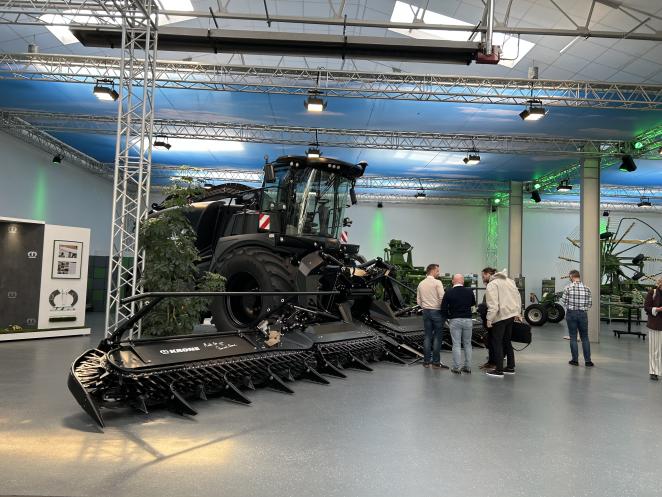
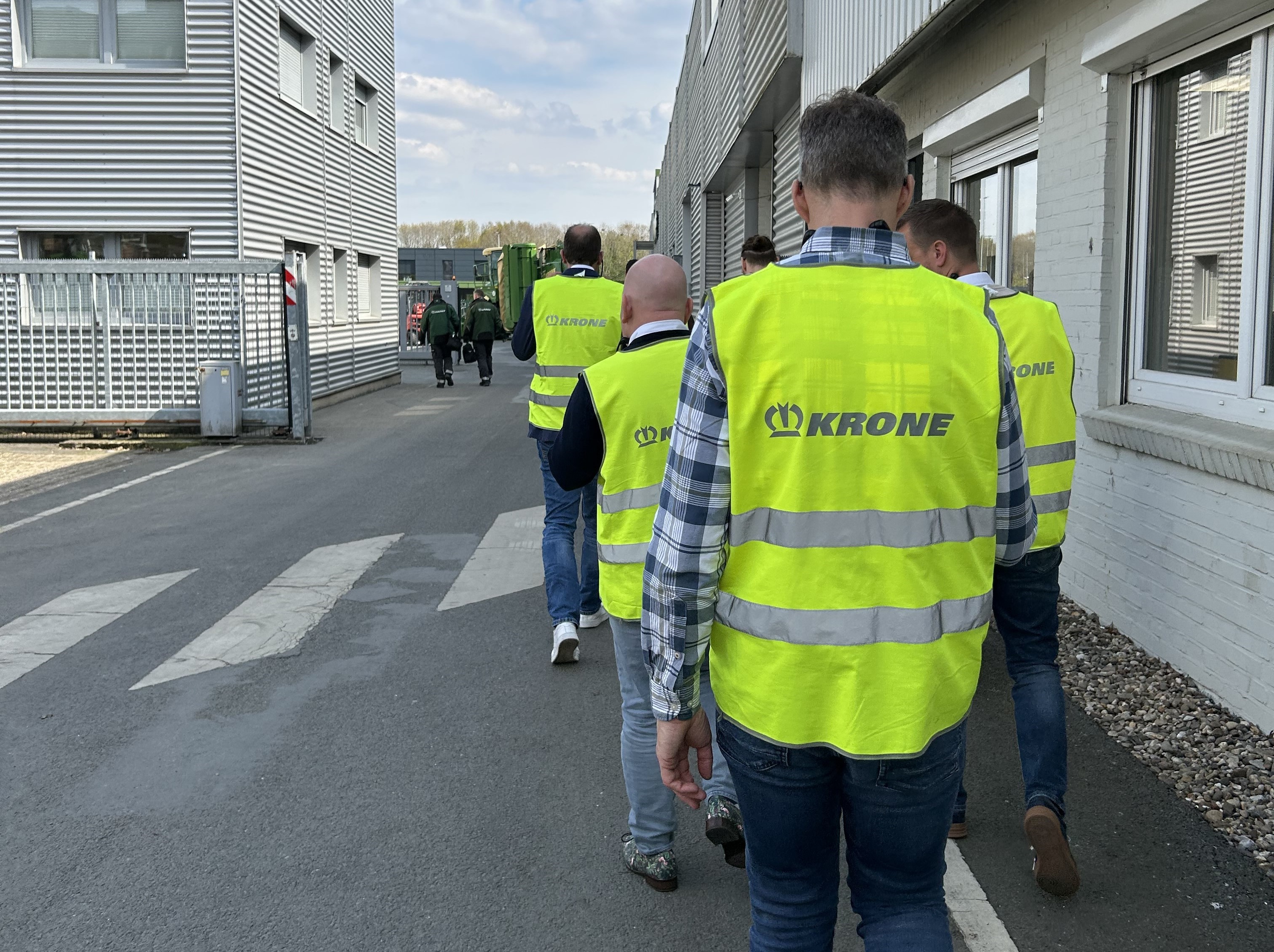
Krone's factory showroom showed the size of production.
Massive Manufacturing
Our hosts at Krone Agriculture – a producer of agricultural machinery spanning rotary rakes to round balers and much more – took to the floor next. Philipp Sander, head of sustainability provided us a basic introduction to the company, and then dove deeper into the energy demands, needs, strategies, and visions. Mixing between spot market and futures allows more stability and future planning in the energy market. Going renewable proofs challenging due to the natural gas usage in the coating process, but options are explored especially after more uncertainty of availability. Chances arise in the reduction of grid fees in optimising peak loads and flexibility, as well as reduction in fees if energy from nearby renewable sources is used. To get further insights into the energy demand Krone Agriculture has, GRITH partners were taken on a factory tour which showed the scope or products, the testing centres, the energy-intensive painting process, and the sheer size of the machinery. Krone Agriculture are a key part of the industry in Emsland, providing jobs, and demanding energy. Their interest in GRITH is of key importance.
To round off our second programme day, we visited the RWE at the former nuclear plant taken out of production in April 2023. The site is being transformed from one type of energy hotspot to another, as the focus has shifted to green hydrogen production and aligning pilots. At RWE, Felix Ringenberg provided us with information on RWE’s developments, hydrogen pipeline connections, and the green hydrogen value chain that incorporates Oranjewind at Dutch Eemshaven and GET H2 Nukleus. Emsland is part of a hydrogen valley, it offers interesting opportunities due to its already existing grid – from the nuclear times – and large water availability.
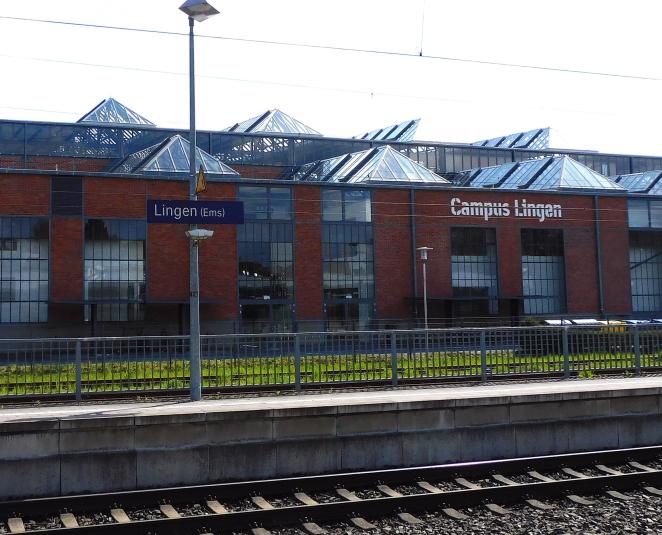
Campus Lingen set the scene for the third day of our programme.
Teamwork
The IT-Zentrum Lingen was the host of the final day of the Emsland programme. GRITH partners again were able to collaborate here, building on the Tuesday’s developments and covering the theme of on-site renewable energy systems. After this bright morning start, we were given the opportunity to collaborate with students from the Osnabrück University of Applied Sciences and their professor Dr. Anne Schierenbeck. The students are part of the energy management master’s programme, and they were given the opportunity to share the projects they are currently working on. Together, we looked at European Energy Directives applications in the different partner regions, opportunities, challenges, and renewable energy developments. Finally, we used the day to wrap up some important GRITH ends, to look at where we are now, what we need to do, and some practical tuning related to this – such as end conference dates.
The GRITH project partner meeting in Emsland was another highlight of the great progress the project is making, by coming together and sharing what is happening we are reminded of the importance of the transition we are realising. Collaboration, cooperation, and creativity are keystones to a fruitful and fair future as GRITH continues to strive towards greening renewable industrial transition hotspots.
A special and heartfelt thanks to Emsland for hosting us so productively.