

Welcome to "Inside the Hubs"— in this news series we go behind the scenes of our five pilot areas to discover the latest user data and success stories.
In our first article we take a closer look at the key facts and figures from our partner in Belgium.
Pilot Area: Mechelen | Partner: City of Mechelen
Use Case #1
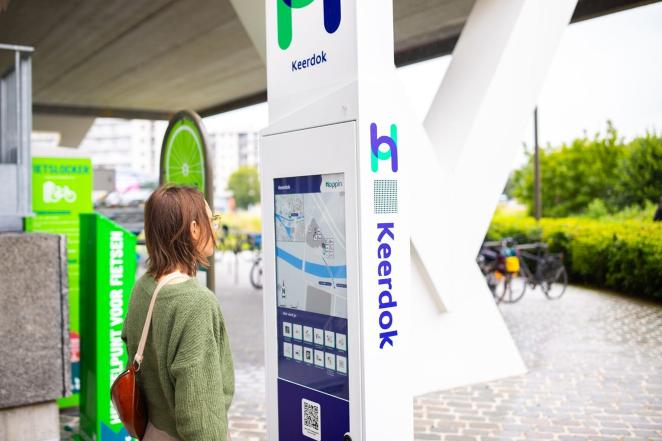
Hoppinpunt Keerdok (Stad Mechelen)
Integrating Hoppinpunten with Parcel Lockers
Within the MoLo Hubs project, the City of Mechelen developed seven Hoppinpunten (mobility hubs). These hubs combine services such as car-, bike-sharing and public transport (at selected locations). By clustering mobility services and parcel lockers in one location, we aimed to explore potential synergies between passenger and goods flows in the city.
To understand user behaviour, a master’s student from the University of Antwerp conducted an online survey (80 respondents) focusing on travel habits, use of Hoppinpunten and parcel lockers, and the perceived synergies between the two services.
Key findings:
- Multimodal travel is common: Many respondents frequently use public transport and often combine different mobility modes within a single trip.
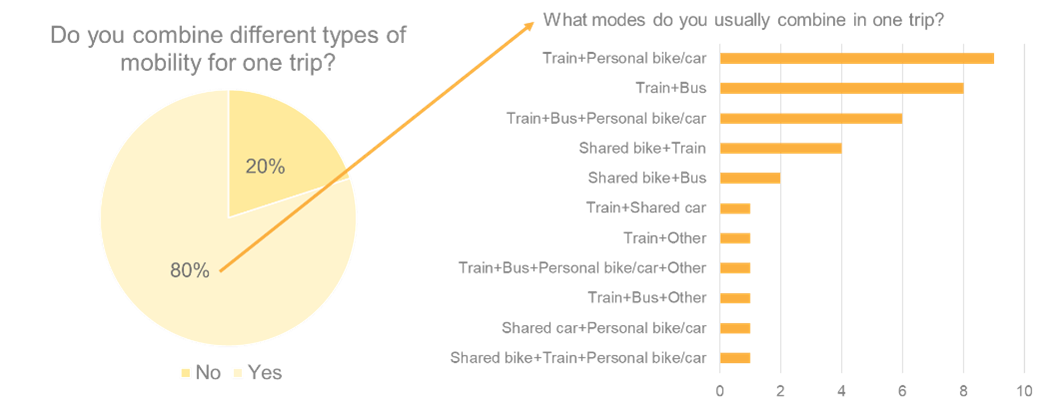
Results survey: Combi-mobility
- Limited perceived synergy between lockers and mobility services: Users generally do not see a direct link between using parcel lockers and using mobility options. This seems to reflect current habits rather than a lack of potential.
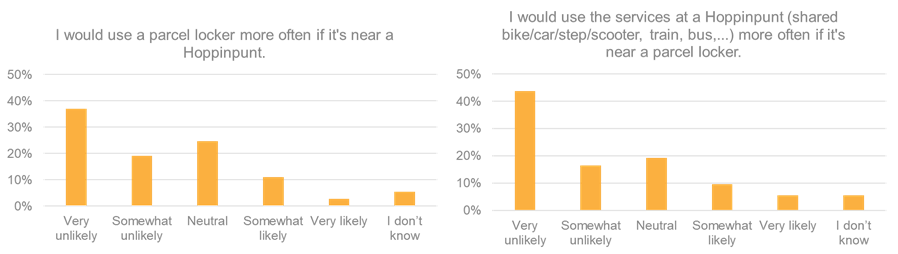
Results survey: Synergies between Hoppinpunt and locker
- Proximity is the real driver: Convenience is crucial. Both parcel lockers and mobility services are used more when they are located along daily routines—near home, work, or supermarkets.
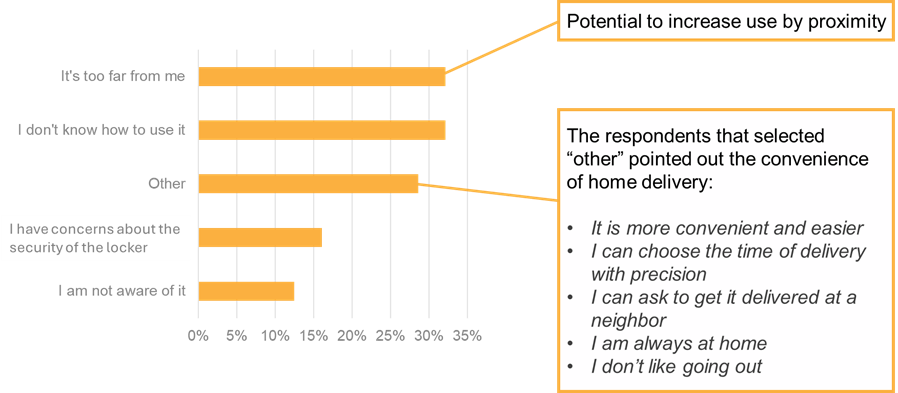
Results survey: Why don’t you use a parcel locker?
- Integration still supports broader planning goals: Even if users do not actively connect these services, co-locating them contributes to goals such as improving accessibility, encouraging multimodal behaviour, and making better use of scarce urban space.
Use Case #2
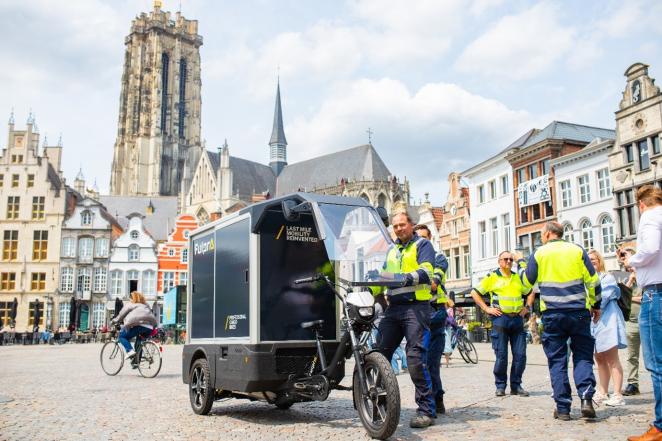
Trial day with Pidpa technicians (Stad Mechelen)
Service Logistics Pilot with Pidpa
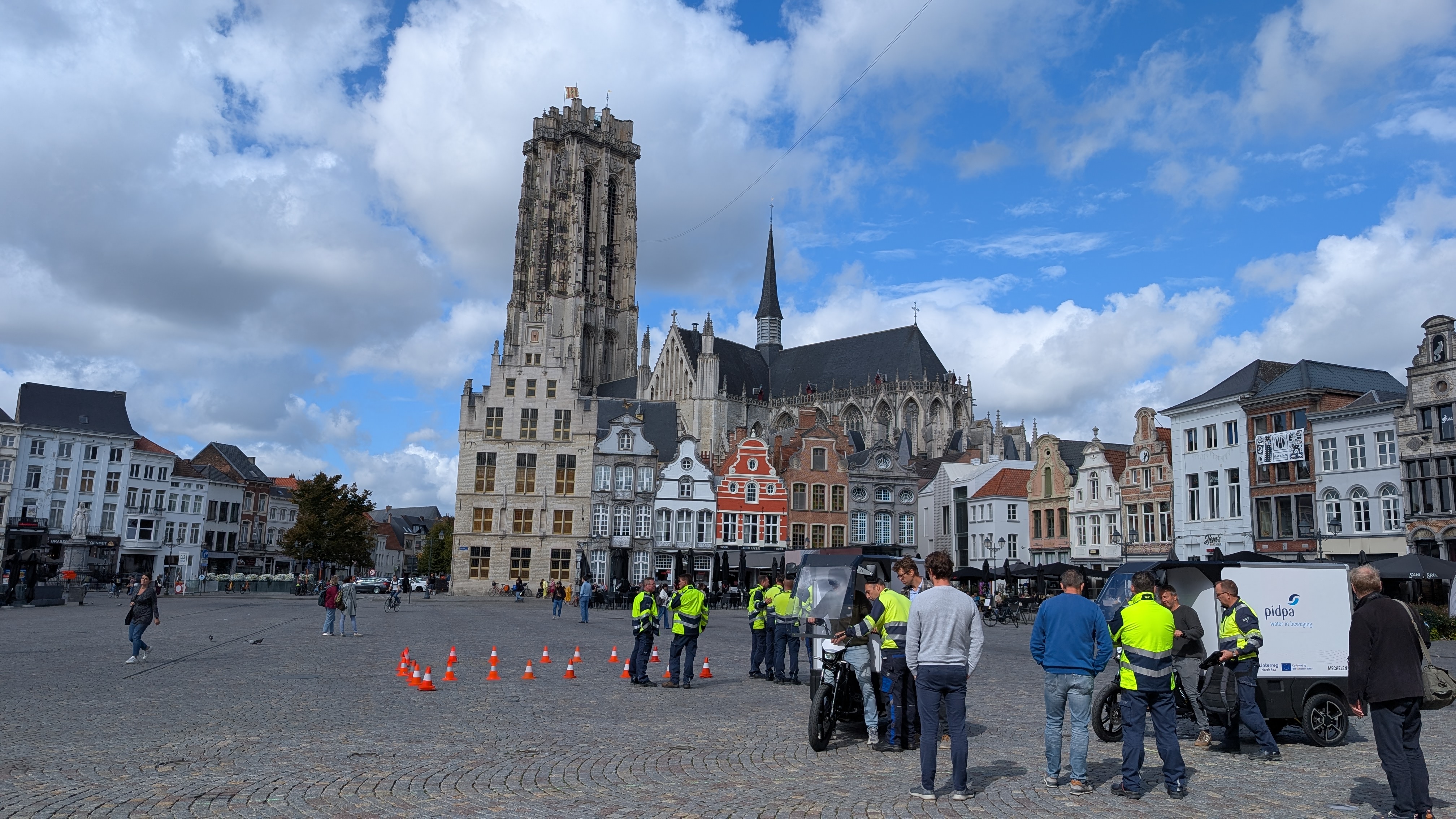
Inspired by the Amsterdam pilot, Mechelen collaborated with water company Pidpa to test the use of a cargo bike for service logistics. Ten technicians participated, each using the cargo bike for at least one day. Although technical issues shortened the test period, the pilot clearly demonstrated the advantages of using a cargo bike for service logistics.
Key findings:
- Efficient and flexible in dense urban areas: Shorter travel times, easier parking close to the clients’ homes, and more freedom of movement, with several technicians experiencing less stress than in a van.
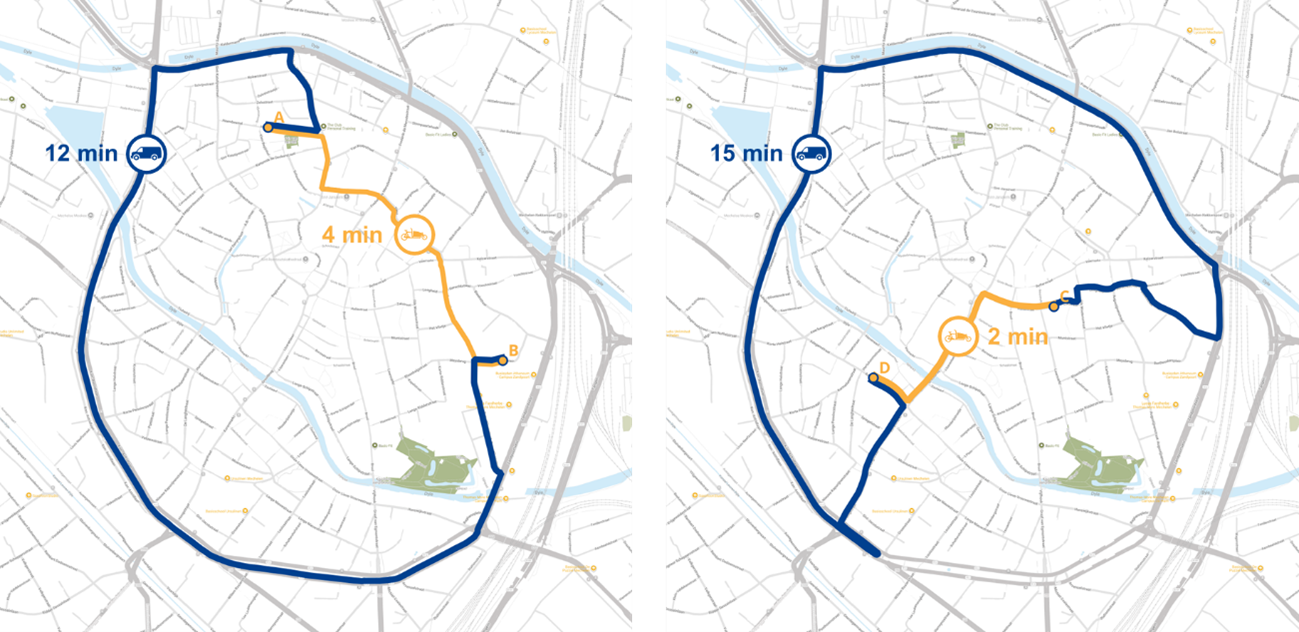
Comparison travel time van – cargo bike
- Lean logistics model: Less on-board stock is needed during the day compared to vans. The cargo bikes were replenished at the end of each day from the technicians’ vans.
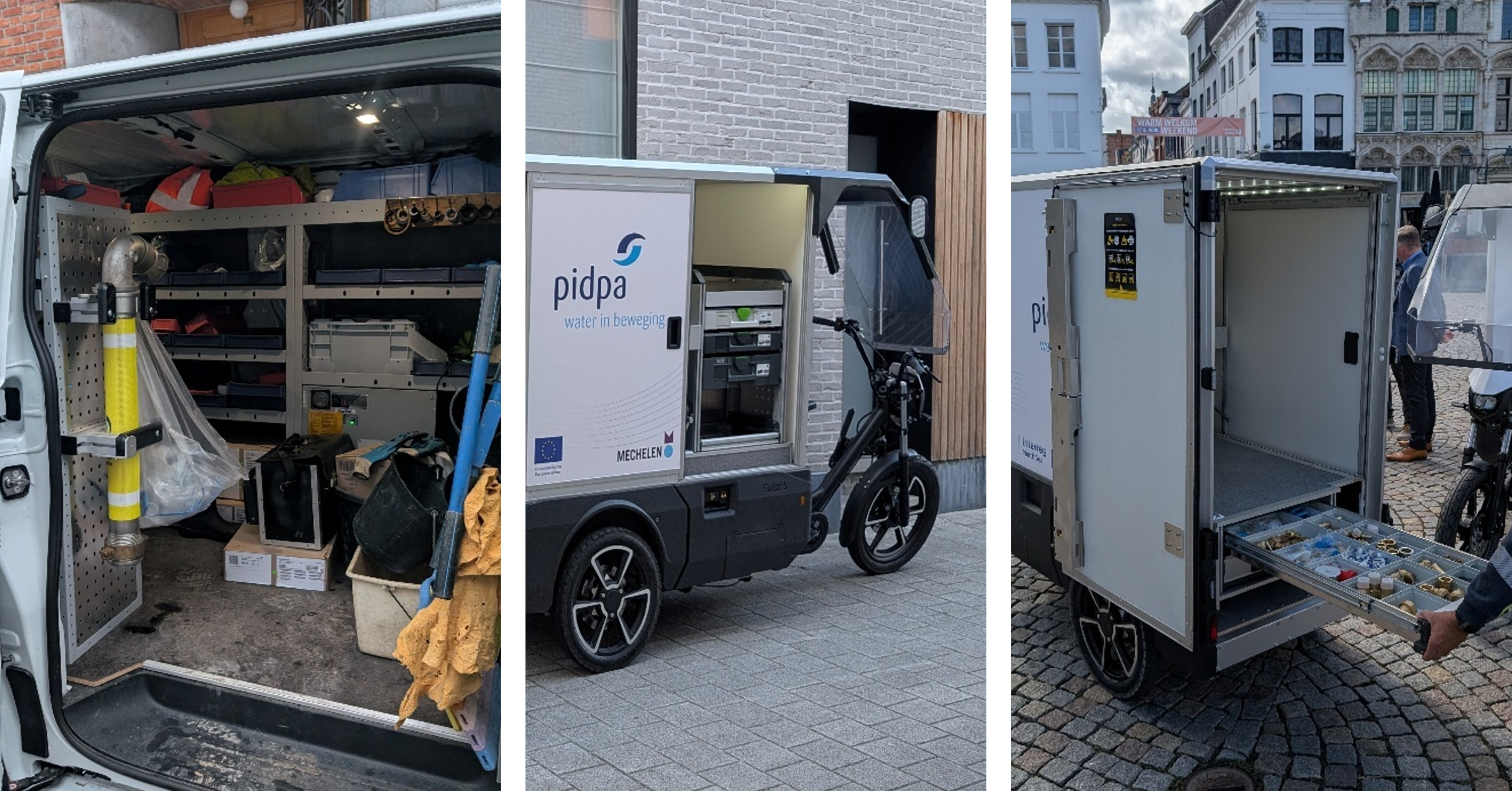
Comparison stock van – cargo bike
- Reliability is essential
Technical reliability and sufficient battery range are crucial to ensure trust and consistent results. - Hub location is important
The hub was too far from the city centre, limiting technicians’ ability to return during the day. This was a challenge, more specifically during lunchtime and in case of bad weather. - Training and familiarity matter
Additional training helps technicians feel safer and more confident when using a cargo bike, especially if they have limited prior experience.
Source: City of Mechelen