

The ELECTRICITY Pilot 3 Green Transition in Korsoer (WP2.2, P3 ) aims at testing a BESS, i.e. a Battery Energy Storage system and incorporate it into the grid of a comprehensive port energy system, thus reaching Solution 3 (S3: battery/grid/port-integration). In order to implement the pilot the port management foresees various negotiation meetings with the local power grid supplier to strengthen the importance of the investment not only for the port itself, but also for the local harbour community as a whole. The purchase of a transformer station is expected for the BESS to adjust the voltage levels between the energy storage system and the power grid. Contruction of the BESS is foreseen to be completed in early 2026 by connecting it to consumption points. The final implementation, evaluation of the system and uptake of the solution will be finalised and the solution presented at the project final event.
The achieved capacity can be used and charged at times of green power surplus, to harmonize the pressure on energy grids of energy providers. Furthermore, an analysis of intelligent battery capacity construction and implementation for an optimal utilisation of battery capacity in ports will be undertaken. These activities then will illustrate what battery technology opportunities may accommodate regarding the electrification agenda of ports and with that look into a business case for future investments of this technology.
See article "Korsør Havn investerer i grøn energi med SOL BESS-anlæg. Port Director Jimmi Jørgensen stated: "The SOL BESS facility is a concrete example of how green transition is not just something the Port of Korsør talks about – we act on it. The facility is a game changer for the Port of Korsør because it both reduces our climate footprint and creates an economically sustainable solution. Many people believe that green transition is expensive and only for large ports, but with this solution we show that a smaller commercial port like ours can lead the way and make green transition a good business."
The project links to the ELECTRICITY Pilot 4 Green Transition in Mossthat aims to test the introduction of e-powered equipment in ports. Due to the complexity of the investment, focus will be placed in shaping the specifications and legal framework of the tender competition to procure a mobile e-crane, paying particular attention to the technical adaptation of the crane to the existing high-voltage power grid, ensuring operational compatibility and future-proof infrastructure. The Pilot is expected to lead to Solution 4 (S4: electric powered equipment/grid/port-integration (Moss e-crane).
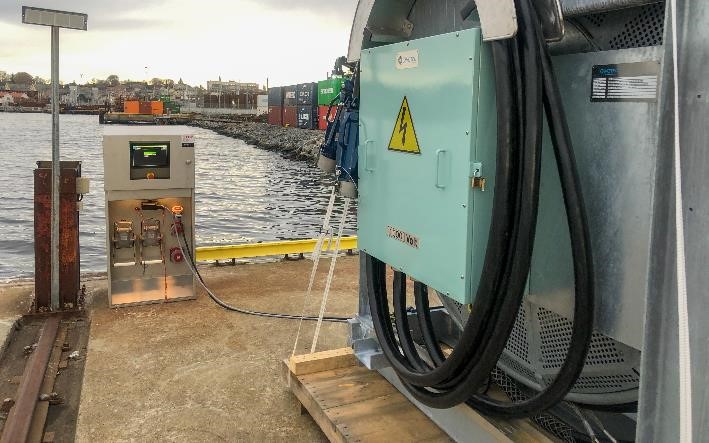
The pilots link to the other ELECTRICITY Pilot 5 Green Transition in Skagen aiming at fostering the implementation of shore-side electricity facilities in ports. The Port of Skagen will outline possibilities of low operational- and construction costs of shore power systems. Focus here will also lie on the fully flexibility of the solution towards supplying variable currents and frequencies, through a mobile unit that may be moved along the quay by truck. This mobile option is needed for fossil free shipping, as there is a high loss of energy in the production of e-fuels, making these fuels relevant for the transition but also very inefficient because of the high loss of energy during its production. The system will feature five shore power connection points, each placed with a distance of 100 meters between them, with flexible mobile shore power unit being able to connect to the grid. Through this layout, the mobile unit can be connected to the grid from two connection points, doubling the power capabilities. The power output can vary between 400 – 690 V, with a variable frequency of 50 to 60 Hz. This will be a huge improvement, compared to the current need to use fossil diesel and the CO2, NOx and noise pollution coming with that. The expected reduction of CO2 emissions in Port of Skagen alone are estimated to be more than 300 tons per year.
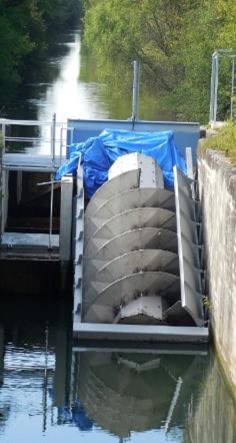
Port of Brussels will also develop another green power generating technology. Brussels will also investigate the use hydropower turbines to produce energy in locks on inland waterways. An innovative solution to produce green energy. Therefore, a study on the technical feasibility and economic opportunity of acquiring hydroelectric power generation capacity will be carried out in the first half of the project lifetime. The basis for the analysis are two locks in the Port of Brussels that may be able to create sufficient flow to power turbines that produce renewable electricity to be consumed for the operation of the locks, but also injected into the distribution network of the energy community. However, the study will also assess the hydroelectric potential of the entire part of the canal managed by Port of Brussels. The installation of the hydropower turbine will then take place in the second half of the project lifetime. (NOTE: PORT OF BRUSSELS SADLY WITHDREW FROM THE PROJECT)
Workshops with relevant stakeholders, social media, websites of the partners and media outlets will be used to communicate about the progress of this pilot accordingly.
For more details, please contact:
Jesper K. Rulffs, or Mikal Nielsen from Port of Skagen
Øystein H Sundby, or Eirik Olsson from Port of Moss