

The HYDROGEN Pilot 8 (WP2.3, P8) aims at assessing the viability of H2 use in shipping and bunkering/distribution in ports. H2 sailing will be tested by Multimodal Container Services (MCS) with the monitoring support of Port of Zwolle, to assess it value for money and environmental benefits. Brittany Region will also investigate the potential of H2 (see completed report Potential of renewable hydrogen and hydrogen chains in maritime and port ecosystems: case studies of Brest and Saint-Malo).
BDI will complement it via its CRAFT tool upgrade pilot (see Pilot 13) thanks to which regional actors involved in the production and distribution of hydrogen can be visually located in a 3D virtual interactive pilot platform.
Port environments, thanks to the diversity of use cases that they can offer (boat, trucks, crane, generators…), are a very interesting case study for energy transition and an effective lever of action.
The activities in this pilot aim to identify renewable hydrogen loops and associated logistics chains in port environments up to 2050. Ultimately, the definition of the energy requirements and facilities needed to deploy these hydrogen loops will determine the size of the infrastructures required for their development. The viability of these loops will be assessed from a technical, economic, financial, and regulatory point of view.
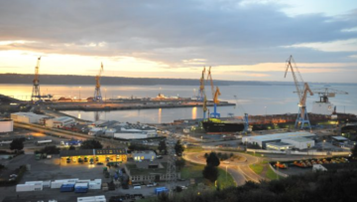
In Brittany, this study will be conducted on the ports of Brest and Saint-Malo, where Brittany region is foreseen to test a mobile H2 bunkering station in St Malo and Brest.
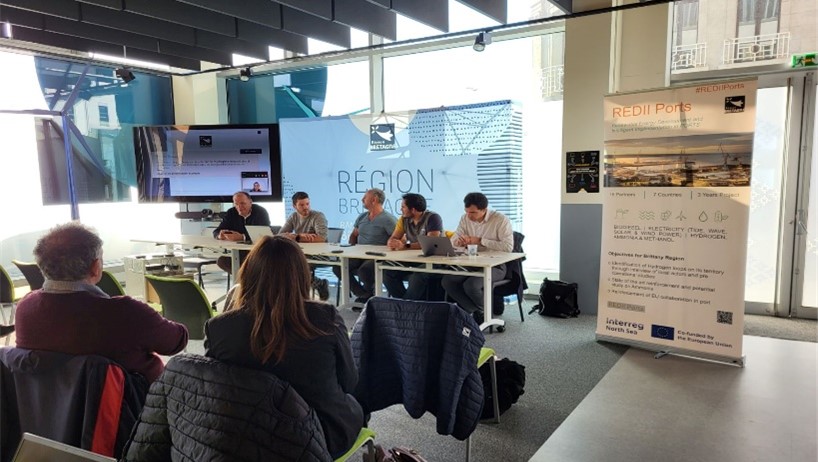
A discussion with local actors and users of the port is required as a first step. It is the opportunity to communicate about the different uses of hydrogen and to show them to what extent it can be a solution for the future of their activities. This meeting also helps to discuss around their actual needs in energy. Finally, the participation at this study is the opportunity for them to contribute to the port’s energy future and anticipate the fuel-related need of their activities.
This study also involves numerous discussions with local hydrogen producers and distributors to define together the technical and economic constraints to identify a viable scenario for the development of renewable hydrogen at the port.
The results of the studies will be the basis for infrastructure’s investments required for the hydrogen development from 2027.
Being piloted in 2 sites, the overall pilot is expected to lead to Solution 8H2 propulsion/supply which has 2 technological components (S8a: MCS/Zwolle H2 sailing boat and S8b: Brest/St Malo StatMobH2 mobile hydrogen bunkering/distribution station).
For more information contact:
Axelle Degueurce from Regional Council of Brittany