

The BIO-FUEL Pilot 7 (WP2.1, P7) aims at verifying the feasibility of bio-fuel (bio-ethanol) hybrid propulsion engine and (bio-diesel) supply opportunity in ports with cross-exchange of information among the partners. This involves some feasibility investigation in the port of Zwolle and Skagen (see completed Port of Zwolle Study Biodiesel in inland navigation: sustainable solution or technical headache?) and actual development and testing of BPS bio-ethanol engines. The Pilot is expected to lead to Solution S7: bio-fuel (BPS bio-ethanol engine/hybrid propulsion for sail boat and speed boat). The functionality will be evaluated for a potential transfer of the solution on CTV (Crew Transfer Vessels) used in offshore wind parks.
Hybrid Bio-Ethanol Engines and Solar Sails Prototype Vessel
This pilot project focuses on the pursuit of sustainable sailing solutions and the testing of the reliability and feasibility of hybrid propulsion systems. It involves two vessels, the Phoenix and the Merivy: one primarily powered by two 520 kW engines and another, a sailboat equipped with hybrid propulsion technology. Both ships will utilize bio-ethanol-powered engines, chosen for their relevance to CCT and trawlers, which operate within the same power category. The sailing vessel, designed as a commercial charter type, will undergo rigorous real-life testing of solar sail technology. This testing is crucial to assess the scalability of solar sails for commercial coasters and ocean-crossing vessels, potentially revolutionizing the maritime industry with cleaner, renewable energy sources.
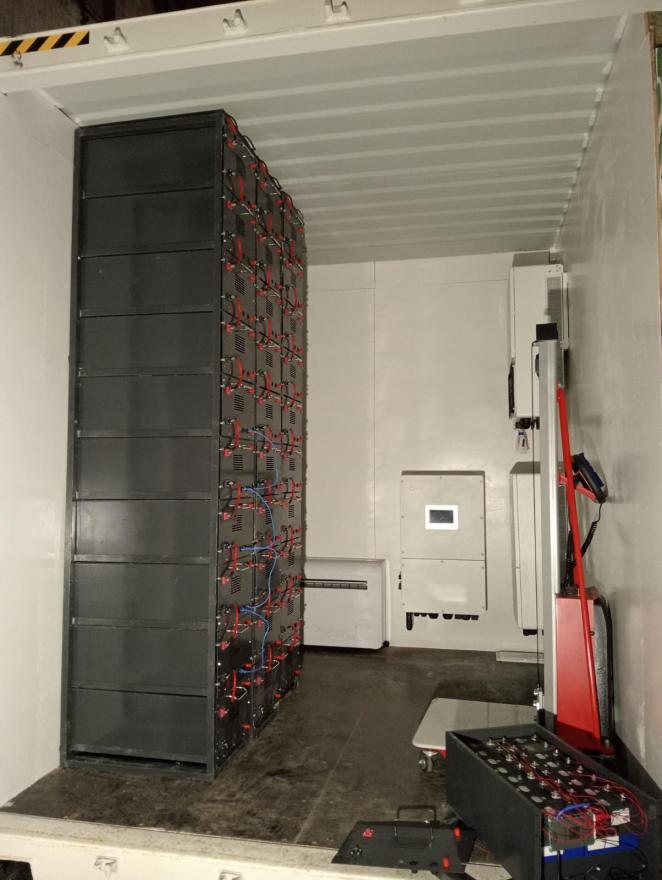
The ELECTRICITY Pilot 6 BPS Mobile Renewable -solar powered- Energy Storage (WP2.2, P5) is realising and testing a mobile battery bank, leading to Solution 6 (S6: Energy Storage - BPS Mobile Renewable Energy Storage / battery bank in container).
Mobile Renewable Energy Storage: A Solar-Powered Solution
The next activity focuses on mobile renewable energy storage. This innovative solution features a mobile battery bank housed in a 20-foot container, mounted on a trailer with a solar roof module. The solar roof is composed of three roll-up flexible panel setups, each covering over 15 square meters. This pilot aims to test the solution in real-life port environments, addressing the challenge of providing quay-based power supply in areas without grid access or where permits restrict grid usage.
Currently, diesel generators are the norm, but the solar-powered solution offers a sustainable alternative, significantly reducing carbon emissions. Its mobility ensures it can be deployed wherever and whenever needed, providing a versatile and eco-friendly power source.