

Stavanger, once shaped by its energy heritage, is now advancing future-oriented green mobility through the SHARE-North Squared project and related initiatives.
In this interview with Christin Berg and Imme Diks Eskeland, we discuss their role in the SN² project, challenges regarding car usage and spatial efficiency, the importance of local partnerships, and how EVs fit into the shared mobility story.
Welcome, Christin and Imme! Can you introduce yourself?
Christin -My name is Christin Berg and I work as an urban planner at the Department of Urban Planning in Stavanger. I work on transport and mobility planning and was responsible for the new strategy that was passed in June 2023. Our city, Stavanger, is the fourth largest in Norway, with a population of around 150,000. It is often referred to as Norway's 'Energy Capital' due to its history in the oil sector, which has driven much of our growth since the 1970s. We are part of the Nord-Jæren region, the third largest urban area in the country, and we are seeing a rapid urbanisation. A rise in private car availability and car ownership in the same period led to urban sprawl. Therefore, since 2000, we have worked on a regional plan to reduce urban sprawl and protect farmland while promoting sustainable mobility solutions.
Imme - I am Imme Dirks Eskeland, a mobility advisor at the Department of Climate and Environmental Affairs. My job is strongly related to our environmental ambitions: we must reduce our CO₂-emissions by 80% compared to 2015 and be climate neutral by 2030. I focus on soft measures like information campaigns and encouraging the public to adopt sustainable mobility. My role also includes working together with private developers and mobility providers to put mobility plans into practice. We are part of a collaborative effort, including regional strategies and local agreements, aiming to reduce car traffic while increasing access to more sustainable transport options like walking, cycling, and public transit.
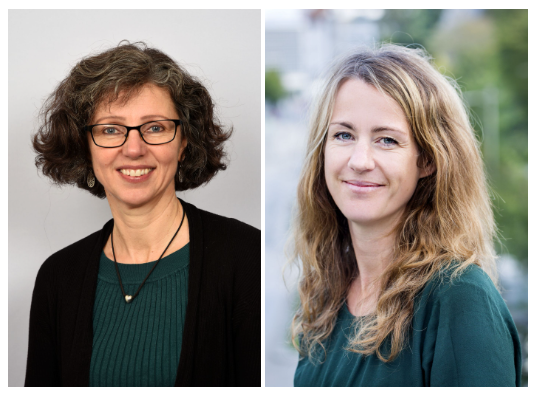
Christin Berg and Imme Dirks Eskeland are policy advisors for the City of Stavanger.
What triggered you to join SN²?
Christin - We were first introduced to the SHARE-North project through the City of Bergen. As we over the years have worked on developing our mobility strategies, we have looked at other cities for inspiration, and SHARE-North caught our attention. Imme and I attended some activities, where we discussed mobility hubs. A bit later, Rebecca Karbaumer from the City of Bremen reached out to us to join the SN² project. We are passionate about mobility planning, and this felt like the perfect opportunity to collaborate on shared experiences and solutions. The focus on housing and integrating mobility was particularly exciting for us, given our local context.
Imme - Stavanger is very car-dependent, so we saw an opportunity to learn from other cities like Bremen, where mobility services have been well integrated into urban life. We are looking at how we can introduce similar solutions here, collaborating with private developers and focusing on practical applications of shared mobility.
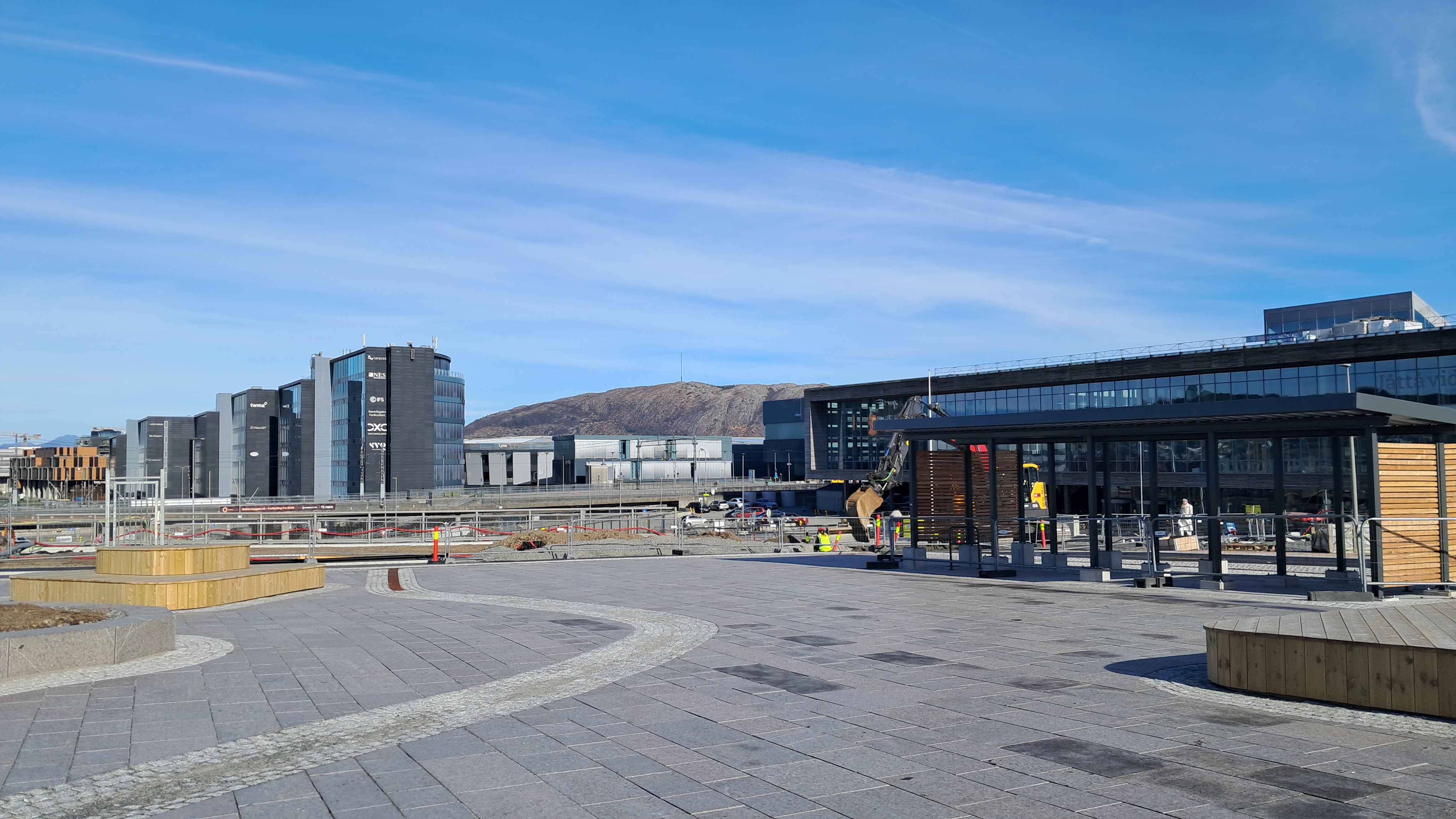
Jåttå-Nord, a SN² pilot area, is developed for a car-free lifestyle.
What do you hope to gain from the project?
Christin - One of our main goals is to reduce land use, so that we not just use it for car parking but also for more sustainable purposes. We are focused on connecting local mobility tools and sharing best practices with other cities. We also collaborate with the local public transport company Kolumbus, especially regarding their Home-Work-Home scheme to create more sustainable home-work travel.
The project’s emphasis on housing is also particularly interesting for us. We have already been collaborating with private businesses and housing developers, and SN² allows us to focus more on this. Adding to that, the partnership will help us build stronger links between the mobility hubs and the surrounding neighbourhoods, making transportation options more accessible.
Imme - I agree. It is about turning our vision into reality, especially with housing projects directly linked to mobility hubs. We want to make the local transport system more flexible and get the residents to understand that they can switch between different modes of transport. That is why we are exploring how to involve residents in this process, so it is not just about infrastructure but also community engagement. Kolumbus will be integral in providing insights, and the digital platforms we are using, like Heime, will help tie everything together.
What is your biggest contribution to SN²?
Christin - I think the biggest contribution we will make is in shaping policy, especially in how we finance and implement mobility services. We are looking at models from cities like Bremen to find sustainable ways to fund shared mobility initiatives. The pilot projects around housing developments are crucial as well, as they will directly integrate new residential areas with major mobility hubs, ensuring that the infrastructure supports long-term sustainable transport.
Imme - I also think our work with developers is crucial. We are already working on zoning plans for new residential areas, and the goal is to connect them seamlessly to mobility hubs. This includes new bus lanes and cycle routes, which are being integrated into the developments. Kolumbus and other mobility partners are helping us map out these connections.
We are looking at models from cities like Bremen to find sustainable ways to fund shared mobility initiatives.
Can you already share some learnings with us?
Christin - One of the biggest lessons has been the importance of patience. Every project takes time, and there are always delays. For example, we faced a year-long delay with land acquisition at the start of this project. But through these challenges, we have gained valuable insights, particularly from other cities in the project. We are learning how mobility services are structured elsewhere and how they deal with social housing. This knowledge has been really helpful in shaping our own plans.
Imme - Another challenge is the ongoing discussion about financing shared mobility. We are trying to find a way to make sure mobility services are sustainable in the long term, which is key to providing operational certainty to the end user. It is one thing to plan for infrastructure, but financing and maintaining those services is another. That is where we are looking for solutions from other cities and developers.
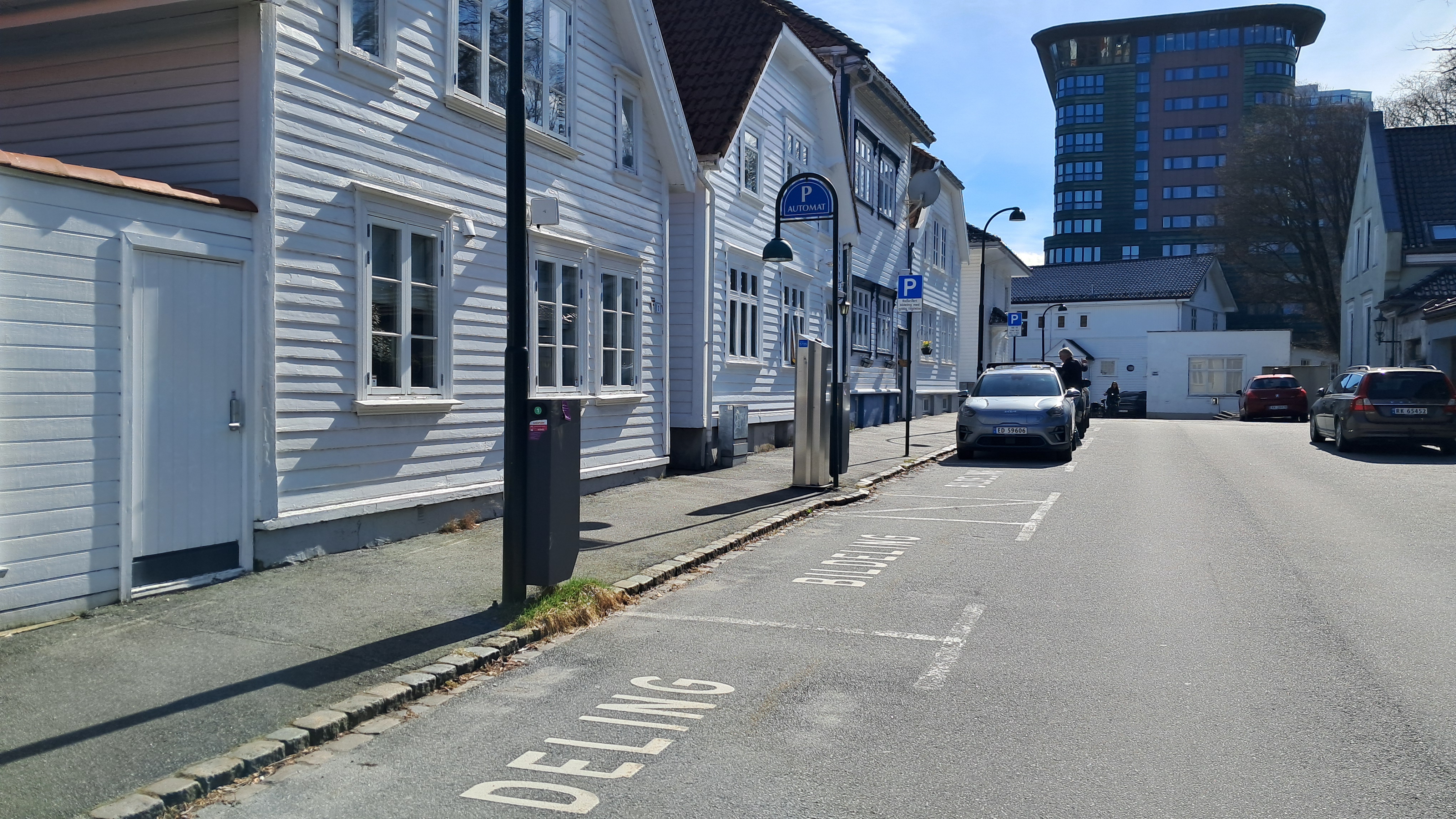
Car sharing spot in downtown Stavanger.
Norway is the frontrunner in using electric cars. Where do they fit in the story?
Imme - Norway indeed has a very high adoption rate of electric cars, with over 90% of new cars being electric. This has certainly changed the way we think about mobility. While electric cars are a step towards reducing emissions, they can also contribute to the idea of “green” mobility, which can sometimes overlook the importance of multimodal transport. The challenge is balancing electric car use with other sustainable transport options, like public transit and cycling, to create a truly integrated mobility system.
Christin - I fully agree. People often see electric cars as the solution, but it is important to emphasise that sustainable mobility is not just about cleaner vehicles. It is about offering people a variety of ways to get around, from public transport to cycling and walking, to truly reduce our dependency on cars. That is what we are working towards in Stavanger!
Sustainable mobility is not just about cleaner vehicles, it is about offering people a variety of ways to get around.
Thank you for your time, Christin and Imme.
Credits
Interview by Steffie De Moor (ex-Mpact), edits by Jelten Baguet (Mpact).
Pictures by Cornelia Cordes (City of Bremen).