

Cities across Europe are facing a fundamental dilemma: how should scarce urban land be used in a time of climate change, densification, and growing demands for public health and social cohesion?
For decades, a significant share of urban space has been allocated to the storage of private cars. Streets, courtyards, and large surface lots have been designed around the assumption that car ownership is a normal and necessary condition of urban life. Yet as cities pursue climate neutrality and more livable environments, this model is increasingly questioned.
Examining Resident Perceptions
This study examines how residents in Malmö, Helsingborg, and Lund perceive the transformation of parking areas into green spaces. Through in-depth interviews with 27 residents and analysis of municipal planning strategies, the research explores whether reducing parking is experienced as a loss of accessibility or as a gain in environmental and social quality.
The Value of 'Breathing Spaces'
Across all three cities, green spaces were consistently described as essential elements of everyday life. Residents referred to parks and green courtyards as “breathing spaces” that offer relief from traffic, noise, and dense built environments. They associated vegetation with calmness, mental restoration, and improved well-being. During recent heatwaves, shaded areas and tree-lined streets were experienced as noticeably cooler and more comfortable than asphalt-dominated environments. Parents emphasised the importance of green areas for children’s play and development, while many interviewees described parks as shared meeting places that strengthen neighbourhood identity and social interaction.
In contrast, parking was primarily framed in terms of convenience. For residents who commute by car or live in less centrally located areas, having accessible parking was described as practical and sometimes essential. However, even frequent drivers often acknowledged that parking occupies a large amount of valuable space relative to how little cars are used. While parking benefits were perceived as individual and instrumental, the benefits of green space were seen as collective and multifaceted.
Adapting to Sustainable Mobility
The study also found that parking availability influences mobility behaviour. In areas where parking supply had been reduced and high-quality alternatives such as cycling infrastructure, reliable public transport, and shared mobility services were available, residents often adapted their routines. Some shifted to cycling more frequently, others increased their use of public transport, and a few households reduced the number of cars they owned. Importantly, these adjustments were rarely described as long-term sacrifices. In many cases, residents reported that neighbourhood quality improved after parking areas were converted into green or multifunctional spaces.
“Green spaces generate ecological, social, and health benefits simultaneously, while parking serves a single purpose: storing vehicles.”
How to Deal with Resistance?
Resistance was nevertheless present. Concerns about accessibility, especially among older residents and suburban commuters, were common. Some homeowners expressed fears that reducing parking might affect property values or housing attractiveness. Generational differences were visible, with younger residents generally more open to car-light lifestyles and older residents more attached to established mobility routines. However, acceptance of parking reduction increased significantly when high-quality green spaces visibly replaced former parking lots. When residents could see and experience the benefits, scepticism often softened.
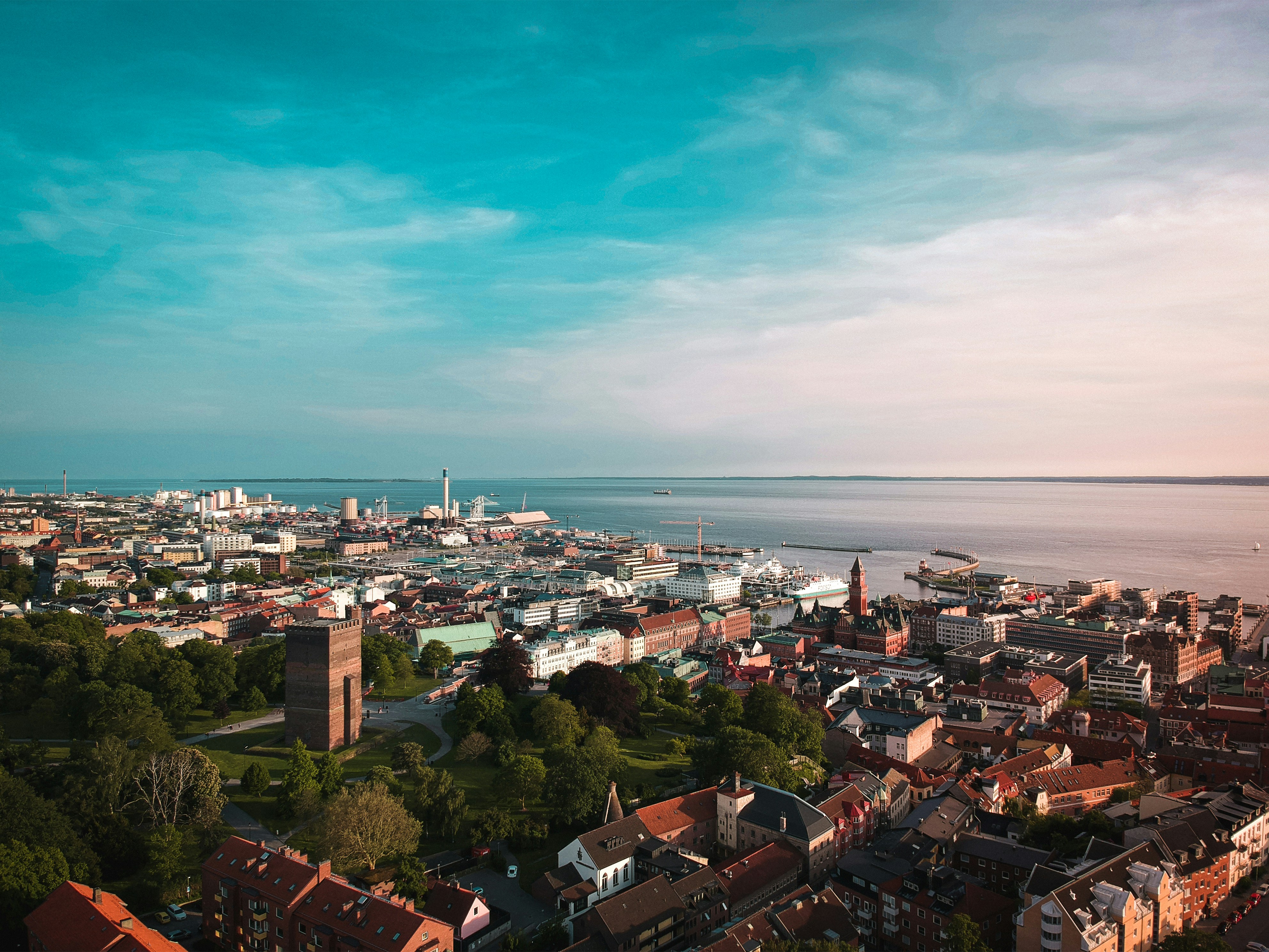
View over Helsingborg, one of the research locations and SN² pilot cities.
So What?
The findings suggest that the debate between parking and parks is not simply about transport logistics. It reflects deeper questions about what cities prioritise and how urban value is defined. Green infrastructure provides multiple benefits simultaneously, including climate regulation, social cohesion, public health, and aesthetic quality. Parking primarily supports private vehicle storage. When land is scarce, this difference becomes crucial.
For cities, the research offers important insights. Parking reform can support sustainable mobility transitions, but only when combined with reliable transport alternatives and inclusive planning processes. Visible improvements in public space are essential for public acceptance. Reallocating space from parking to vegetation is therefore not merely an environmental improvement; it represents a structural shift toward more resilient, inclusive, and climate-responsive urban systems.
Ultimately, the study suggests that the question facing European cities is not how much parking they can maintain, but how urban land can best serve collective well-being in the long term.
“The real question for cities is no longer how much parking they can provide, but how urban land can best serve collective well-being in the long term.”
Credits
Text by Michael Johansson (Lund University)
Edited by Jelten Baguet (Mpact)
Photo by Jacob Ekelund on Unsplash