

Way To Go (formerly Autodelen.net) is Flanders' shared mobility specialist. They raise awareness about what shared mobility is, develop tools to illustrate its impact, and give advice to municipalities and real estate developers.
Right before the Christmas holidays, we met up with Esther De Reys, Way To Go's project manager responsible for SHARE-North Squared. We had an interesting conversation about Way To Go's role in the project, what they are currently working on, and what they have learned so far.
Welcome, Esther. Can you introduce to Way to Go?
Of course! Way to Go is a non-profit organisation dedicated to promoting shared mobility in all its forms. This means any mode of transport that can be structurally shared. We work on two main levels: community building (supporting users) and policy advocacy (working with businesses and government bodies). We do not offer services ourselves but act as a neutral, overarching advocate for the concept.
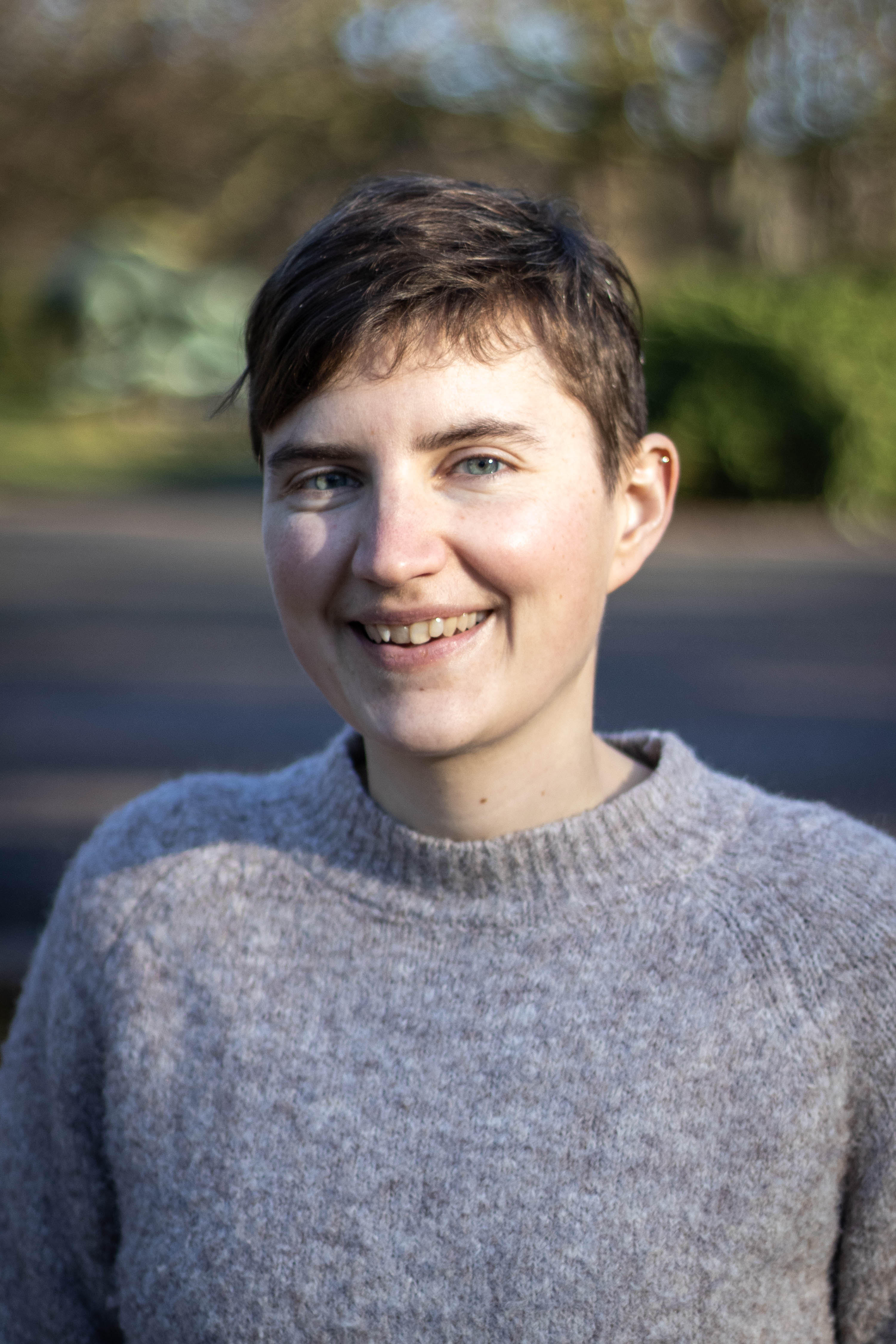
Esther De Reys is a Project Officer at Way To Go.
How did you get involved in SN²?
We were already part of the original SHARE-North project and noticed a growing need for shared mobility in residential developments. We often looked to Bremen as an example. When the opportunity for a new project arose, we helped to shape its framework. The demand for shared mobility in housing developments was evident across multiple countries. Following initial discussions in February 2022 in Ghent, we officially kicked off the project online and later brought in new partners, such as Housing Europe. By April, we had the project fully outlined.
What do you hope to achieve with this project?
Our main goal is to gather strong examples from abroad, particularly for policymakers in Flanders and Belgium. Bremen remains the best case study we know, and we want to replicate that success. We also aim to raise awareness of shared mobility, especially in residential areas.
Additionally, we are focusing on impact measurement and replacement ratio calculations. These help urban planners and developers understand how shared mobility affects spatial planning: specifically, how many parking spots or shared cars are needed in their housing developments. To support this, we are creating a replacement ratio calculator, a tool designed to provide concrete data for urban planning decisions. This is a common question, but there is no clear answer yet. We hope this project provides valuable insights that can also be applied in other countries.
What is your biggest contribution to SN²?
Our expertise lies in in shared mobility in Flanders. We focus on raising awareness, communicating its relevance, and demonstrating its impact. Within this project, we are emphasising communication strategies, sharing them with partners, and showcasing good examples for international use.
We also want people to experience shared mobility firsthand. Testing makes a huge difference: people who try it are more likely to use it.
That is why we are bringing information directly to residents, setting up physical information points where people can learn about shared mobility and even book a test ride. This makes the concept more personal and accessible.
What are you currently working on?
Right now, we are focusing on two key areas: community-driven initiatives and replacement ratio calculations. We are launching more local campaigns to encourage neighbourhoods to adopt shared mobility, shifting towards a bottom-up approach. In terms of replacement ratios, we are developing a tool to quantify the impact of shared mobility on urban planning.
In the earlier project phase, we worked more on policy guidance. We will then shift towards a major communication campaign. One idea is 'Residential Area Seeks Shared Car' to promote shared mobility within existing neighbourhoods rather than new developments, since construction in Flanders has slowed.
What lessons have you learned so far?
Our main learning is related to parking policy. On the one hand, local governments in Flanders are often reluctant regarding reducing public parking. Developers, on the other hand, want lower parking quotas for the residential areas they build. And even though we have developed a parking policy guideline for carsharing - which is a huge aid to policymakers to favour carsharing over private cars in their region - they are not ready to adapt their parking policies to ensure that more space is allocated to carsharing than to private cars.
Parking is an emotional issue, and we still underestimate how deeply ingrained car dependency is. In Flanders, company cars are common, and public transport has a negative perception. Changing these mindsets takes time.
Another lesson is that we, as professionals, sometimes assume that people understand shared mobility better than they actually do. Therefore, we need to communicate more clearly and reassure future users more about the convenience provided by shared cars.
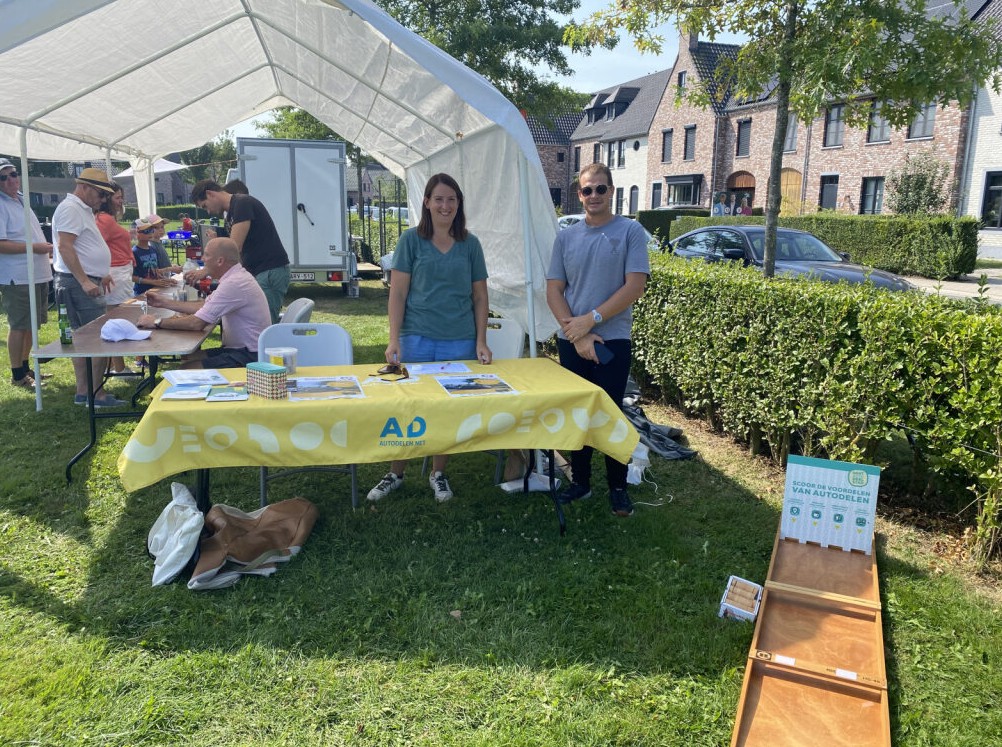
Informing the future users of shared mobility via pop-up events is an essential part of Way To Go's mission.
What are the biggest challenges you still face?
Gaining support, both politically and among residents. Shared mobility requires long-term behaviour change, which is a challenge for any new concept. How do you build a sustainable future when people are still hesitant to take the first step?
What we are doing now will be crucial for the next generation of urban developers. By the time a project is complete, shared mobility must already be in place. That requires coordination among many different stakeholders, which is not always easy
Thank you, Esther, and keep up the good work!
Interview by Steffie De Moor (ex-Mpact)
Edited by Jelten Baguet (Mpact)
Pictures provided by Way To Go