

In 2024, the province of Drenthe (Netherlands) organized its very first hybrid citizens’ assembly on the topic of housing. This initiative was a direct result of citizens’ requests for stronger involvement in provincial decision-making. The method combined a deliberative assembly with broader public input via an open questionnaire, through which up to 6,500 residents shared their views! The following article reviews this successful citizens’ assembly’s design, implementation, and evaluation.
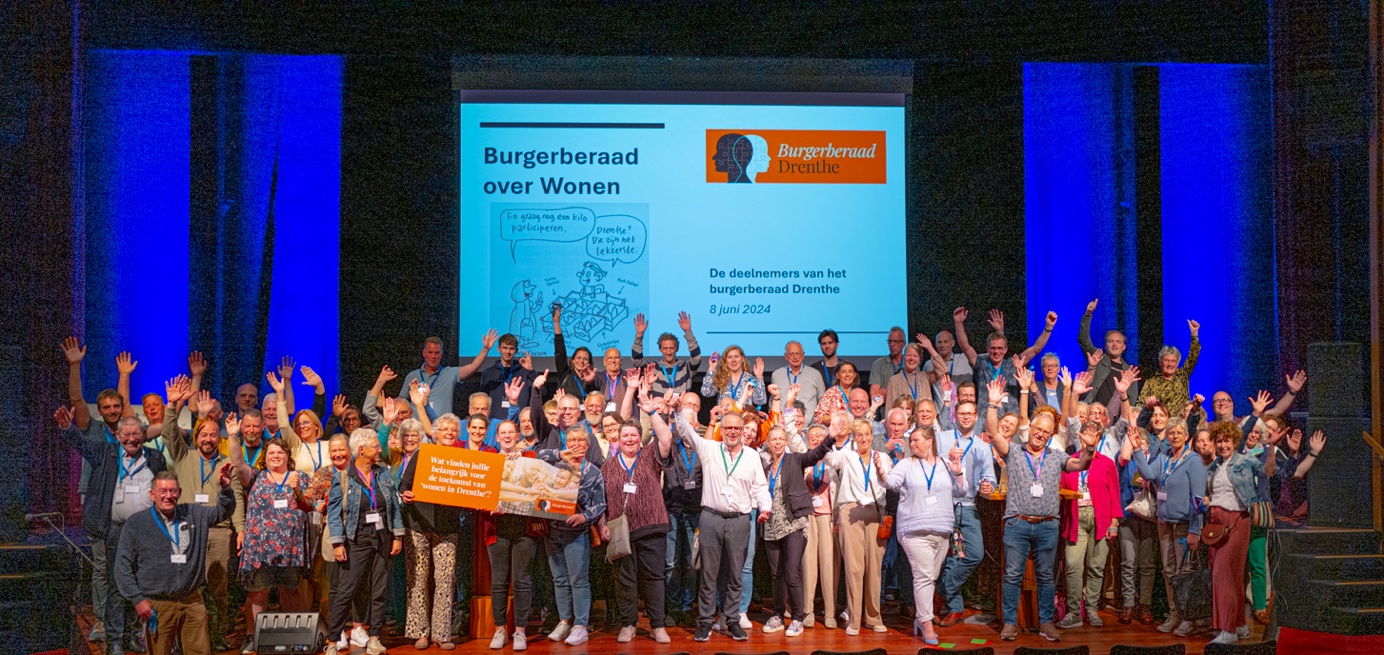
Drenthe’s citizens’ assembly was designed to directly respond to citizens’ needs. For example, the selection of the topic “housing” was carried out through a broad public survey, after which it was assessed against criteria for suitable assembly topics. Efforts were also made to ensure a diverse group of participants, aiming to be as representative as possible of the population. In the end, a total of 162 participants were selected, mirroring Drenthe in terms of gender, age, education, municipality, and housing-related characteristics (e.g. tenure, location, and level of concern about housing).
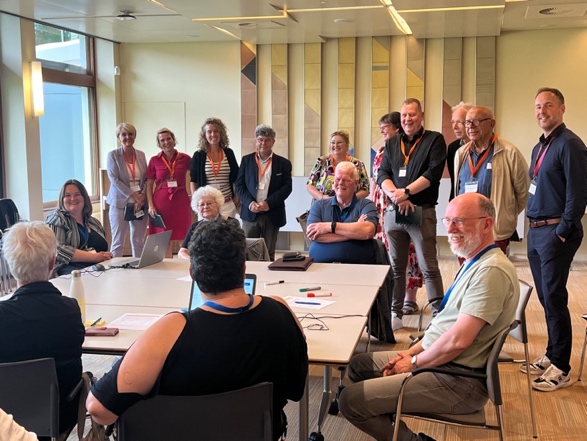
To make the assembly experience as smooth and positive as possible for everyone involved, it was facilitated by an independent organization and supported by trained facilitators. During the four sessions, participants heard directly from experts to become better acquainted with the subject, before deliberating in small groups and drafting recommendations. This process enabled them to feel more comfortable and confident when discussing the topic and sharing their ideas.
Another element introduced to reduce potential conflict and give participants more agency was allowing them to create their own voting process (a two-thirds majority). In the end, the advisory report contained eight key themes, 26 selected recommendations, and 15 additional recommendations included in an annex.
“I know so much about housing now. I’m almost an expert myself.” — Citizen assembly participant
In September 2024, the Provincial Parliament decided that policy proposals would be developed based on all of the recommendations. These were subsequently integrated into the Drenthe Housing Agenda for 2024–2028, with each of the 26 adopted recommendations linked to a concrete implementation plan. Participants requested, and received, a follow-up meeting in June 2025 to hear how their advice had been used.
“We are very pleased with the advisory report. As the Drents Parliament, we have learned a lot from you: how you debate the content and remain open to each other’s opinions. A big compliment for that!” — Fenneke Mensen, member of provincial parliament
A positive experience for all
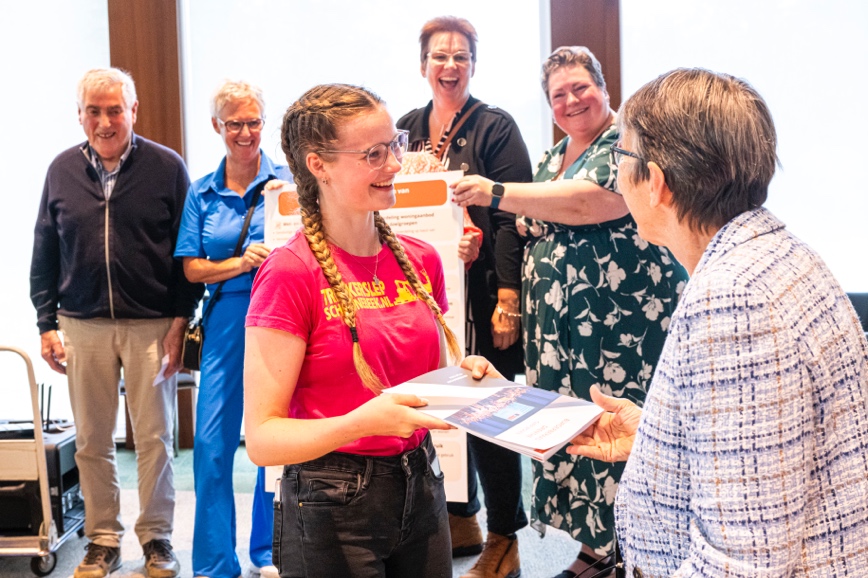
Overall, participants were satisfied with their experience, evaluating the citizens’ assembly very positively. Among the most frequently highlighted elements were the respectful dialogue, the feeling of being heard, high satisfaction with the experts, and a low dropout rate. Other indicators of success included increased confidence in cooperation between residents and the province after the event, as well as a decrease in perceived conflicts between groups around housing.
“There is very good collaboration in small groups. Everyone can have their say, and solutions are being considered for all residents of Drenthe.” — Citizen assembly participant
Unfortunately, awareness of the citizens’ assembly among the wider population remained modest, with slightly over half of respondents reporting they had never heard of it. Residents who were aware of the assembly, however, viewed it positively, and the more people knew about the process, the more heard and trusting they felt toward the municipality. This highlights an important takeaway: there is significant potential for impact through strengthened communication and outreach.
On the political side, representatives also valued the citizens’ assembly as a meaningful method for engaging residents more deeply. However, they pointed out that both the assignment and the resulting advisory report were too broad. This emphasized the need for clearer upfront agreements on objectives, frameworks, and the link to political questions.
Key lessons and recommendations
Overall, the Drenthe citizens’ assembly is seen as a successful first step toward “governing in connection” by reducing the distance between residents and the provincial administration. The evaluation ultimately recommended future adjustments, such as investing more in communication efforts throughout the entire process, increasing transparency in reporting on the implementation of recommendations, and establishing clear, jointly defined goals for the initiative. These lessons will inform the design of the second Drenthe Citizens’ Assembly in 2026.
The positive experiences reported in Drenthe by both citizens and politicians demonstrate how effective public participation initiatives can be when sufficient effort and reflection are invested in their design and execution. As public institutions across Europe increasingly implement these processes, successful examples like this can act as true catalysts—both inspiring others and providing concrete experiences to learn from.
If you are interested in learning more about the methods used, outcomes achieved, and lessons learned from this successful assembly, we highly recommend reading Drenthe’s full evaluation report.
You can download the Dutch report of the Drenthe Citizens Assembly here or download the English version below: