

Across Europe, local governments are always trying to find better and more efficient ways to connect with their citizens and increase participation. Often, these methods materialise on the internet, in the form of articles, podcasts, newsletters, or social media posts. However, it’s often hard to get people to look up websites or articles voluntarily. QR codes are a way to lower this barrier and to make the connection between citizen and government smooth and efficient.
QR codes are seemingly very easy to use: just scan it with your camera and you immediately get access to whatever it leads to. They are on-the-go, simple to use and make, available in many places, and more convenient to access than navigating to a website. This is why they should surely make it easier for citizens to interact with the government, and they should help increase participation, right? Well, there are a few things that make users reluctant to scan them. Luckily, the Oldenburg research institute OFFIS has uncovered what those obstacles are and how you can avoid them.
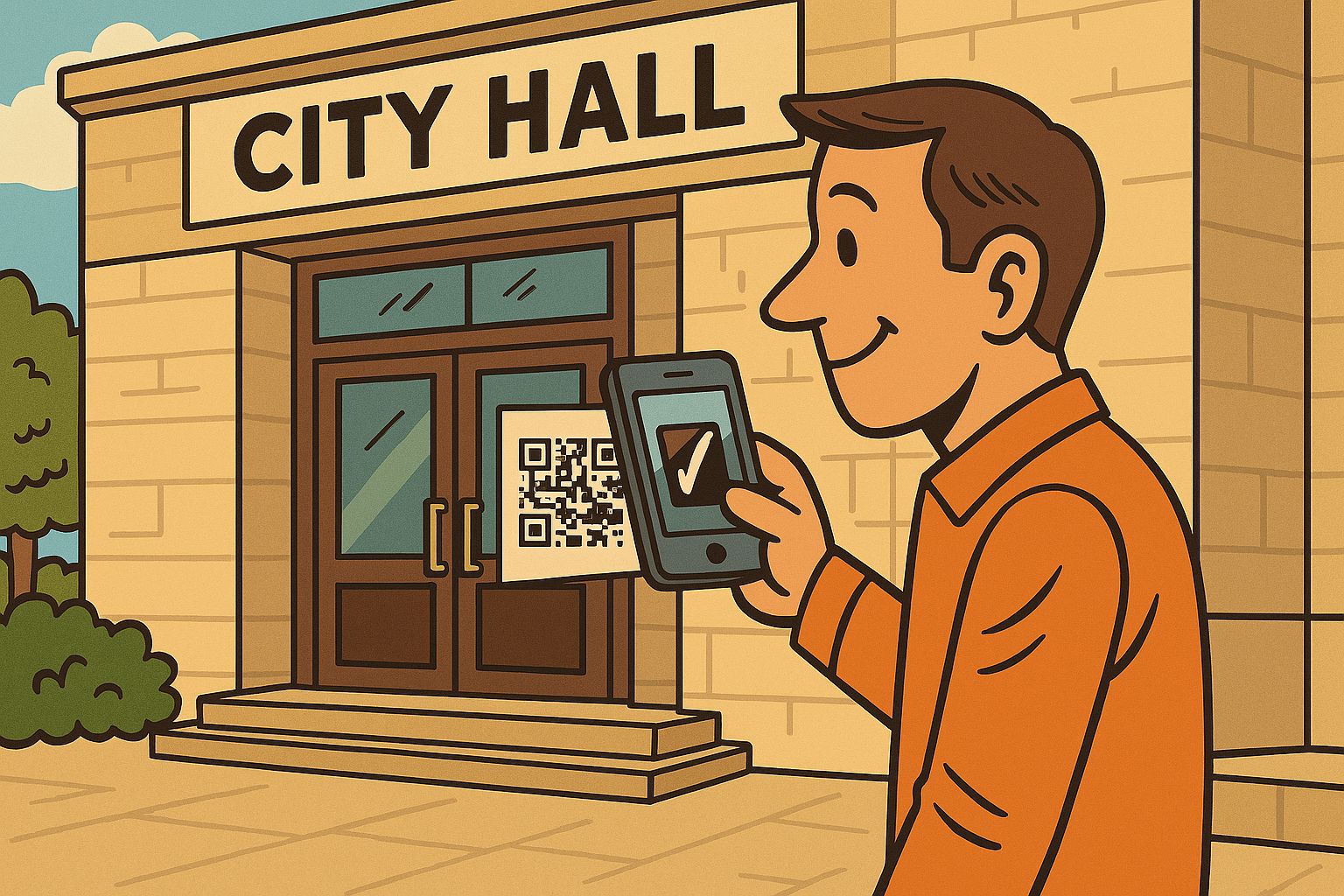
The four major obstacles that OFFIS has identified are location, reason, audience, and security concerns. First, the researchers advise to post QR codes in locations where people already have their phones out, access to the internet, and the space and time to scan it. During their investigation, they found that people were more likely to scan in a place such as a restaurant, compared to in a store, because people were already sat down, phones nearby, without something else that needed their attention.
Second, people will always ask themselves why they should scan the QR code before scanning it. The research shows that people were most likely to scan for an overview, downloading an app, or rating something and they were most willing to scan for the overview. Use this information to make the QR codes attractive to scan.
Third, OFFIS found that the audience that has the most willingness to scan QR codes is younger, highly educated, employed, has a high affinity for technology, and is used to QR codes. This can help you narrow down your audience to maximise QR code usage. It can also make you more aware that if you do want to include other audiences, you might need to make some changes to make them comfortable enough to scan your QR code.
Lastly, users are worried about the security of the QR code and the security of their data. OFFIS found that users need to trust that the municipality cares and will keep them and their data safe. This can, in part, be accomplished by clear branding and by clearly explaining how their data and privacy will be handled.
So, always ask yourself four questions before posting a QR code:
- Where am I scanning it?
- Why am I scanning it?
- Do I want to scan it?
- Is it safe to scan?
If you have satisfactory answers to all of them, you are good to go! By clearing away the obstacles in the users’ paths, you can easily increase their willingness to scan the codes, which will make it easier for citizens to connect with and participate in the local government.
This article has been based on the research by Professor Susanne Boll, Alice Benedetti, Dr. Maria Wolters, and Simon Kimmel of the Social Computing Group OFFIS, presented by Dr. Maria Wolters during the Speak Up Partner Meeting in Oldenburg, December 2025. For more information, see: https://www.offis.de/anwendungen/gesellschaft/social-computing.html