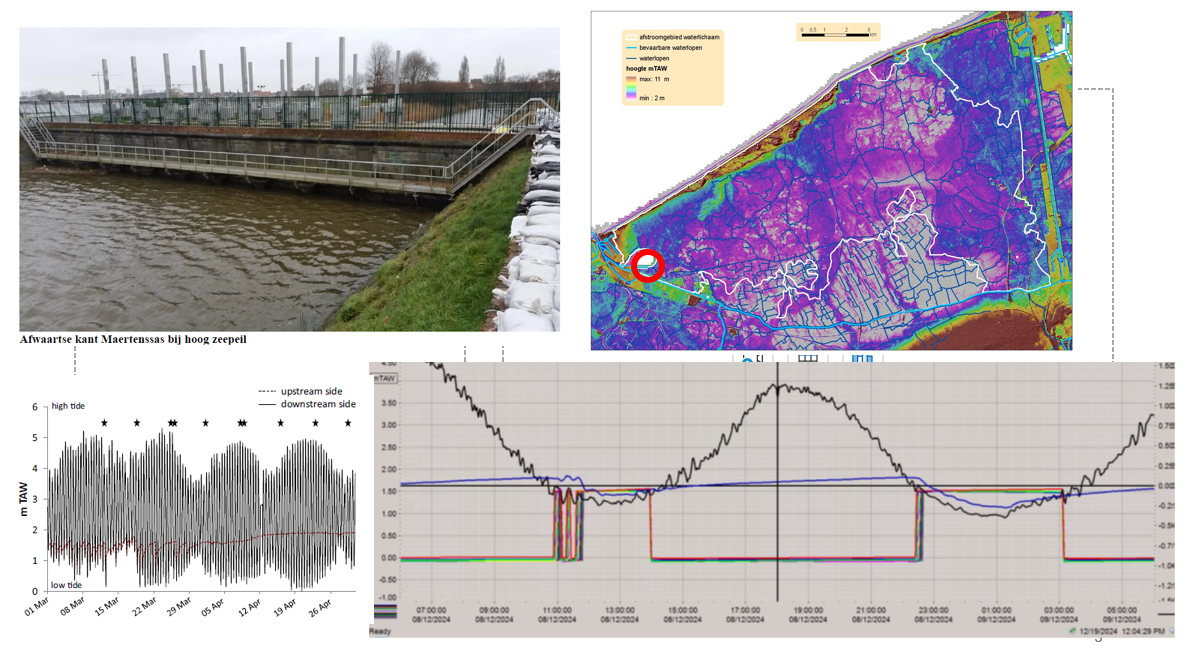
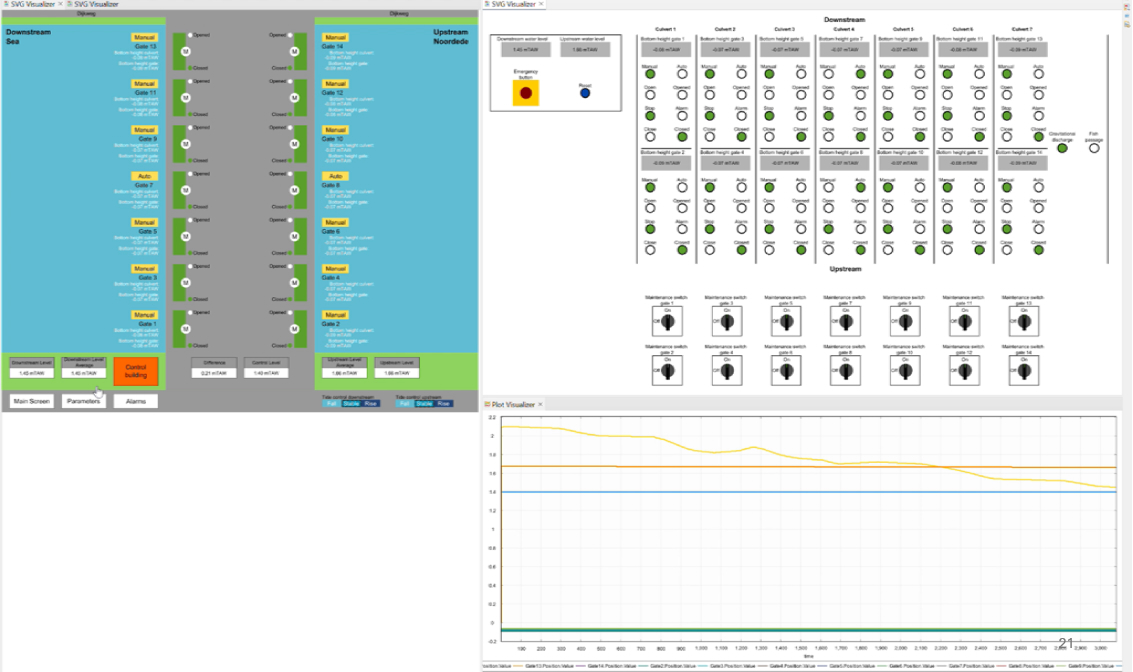
During the in-depth case study session, VMM and TU/e demonstrated what they had achieved in just nine months: a functioning supervisory controller for the Maertenssas sluice. This tangible result highlights both the urgency of the challenge and the effectiveness of a model-based approach.
The necessity is clear. Inland water must be discharged safely to the sea while preventing seawater from flowing upstream. Due to rising sea levels, the time window in which discharge is possible is becoming increasingly short. This makes reliable and intelligent control software essential. Every minute counts. This sense of urgency is recognised not only by experts, but also by the wider public.
During the session, the modelling of the Maertenssas sluice was presented step by step. The process began with a basic model that was iteratively refined until a comprehensive, consistent sluice model was achieved. Particular emphasis was placed on formulating and specifying system requirements, and the message was clear: good documentation should focus on what the system must do rather than how it does it.
The session concluded with a live simulation, enabling to observe the model in action. Combined with a PLC implementation, this simulation provided a powerful means of validating the models and building confidence in the solution.
Overall, there was strong enthusiasm about what had been accomplished in such a short timeframe. This case study clearly illustrates the achievements that can be made when domain expertise and a structured approach are combined, and it is hoped that it will inspire other projects too.
Marijn Minkenberg, Eindhoven University of Technology | Maarten Goegebeur, Flanders Environment Agency