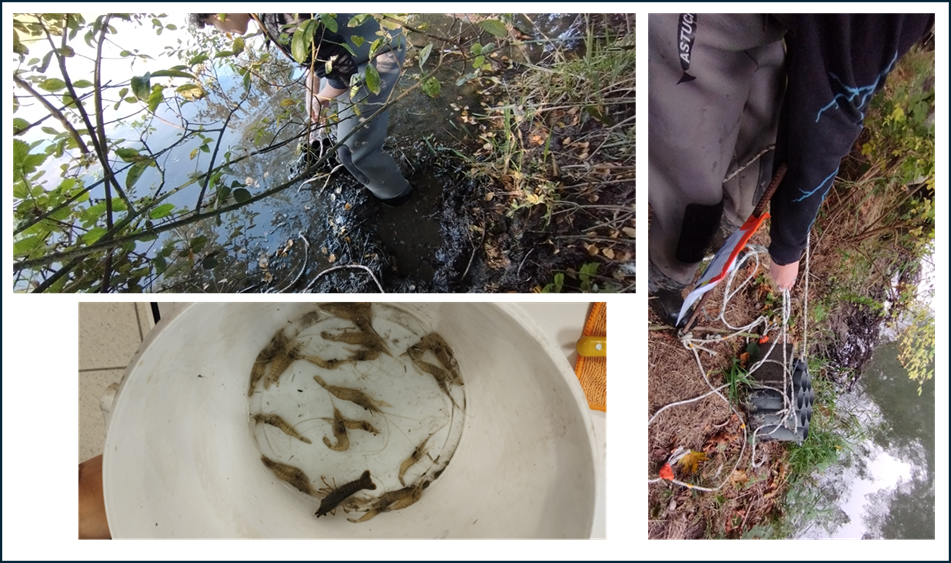
Chinese mitten crabs have been observed and monitored for several years in the Seine estuary by fishermen and water managers, as well as the CSLN, one of the French partners in the Clancy project. Yet, very little is known about the pathways the crabs use to enter and leave the region. Condo traps are a passive trapping method currently used in the UK to monitor crustacean movements. Introducing this trap in France could deepen the understanding of the crab’s presence or absence in the Seine Estuary and provide new information of possible entry points and circulation routes of the crab population.
Condo traps as a new detection method in the Seine estuary
CMC populations are a lot smaller in France than in the other partnering countries, but it is still a necessity to map the presence of the crabs. If effective, condo traps could be a very useful monitoring tool. To test their value in real conditions, pairs of condo traps were deployed on three different coastal rivers: the Durdent, the Arques and the Valmont. Another pair of traps was installed in the Seine River National Park where crabs had previously been observed.
Each pair contained 2 sizes of traps: one with pipes that had a diameter of 5 cm and another with pipes that had a 10 cm diameter. The first is used for juveniles and the latter for adults. The traps remained in place for four consecutive weeks and were checked weekly. Deployment was synchronized with the installation of similar condos built and put into place by the GEMEL, another CLANCY partner, in order to have comparable results.
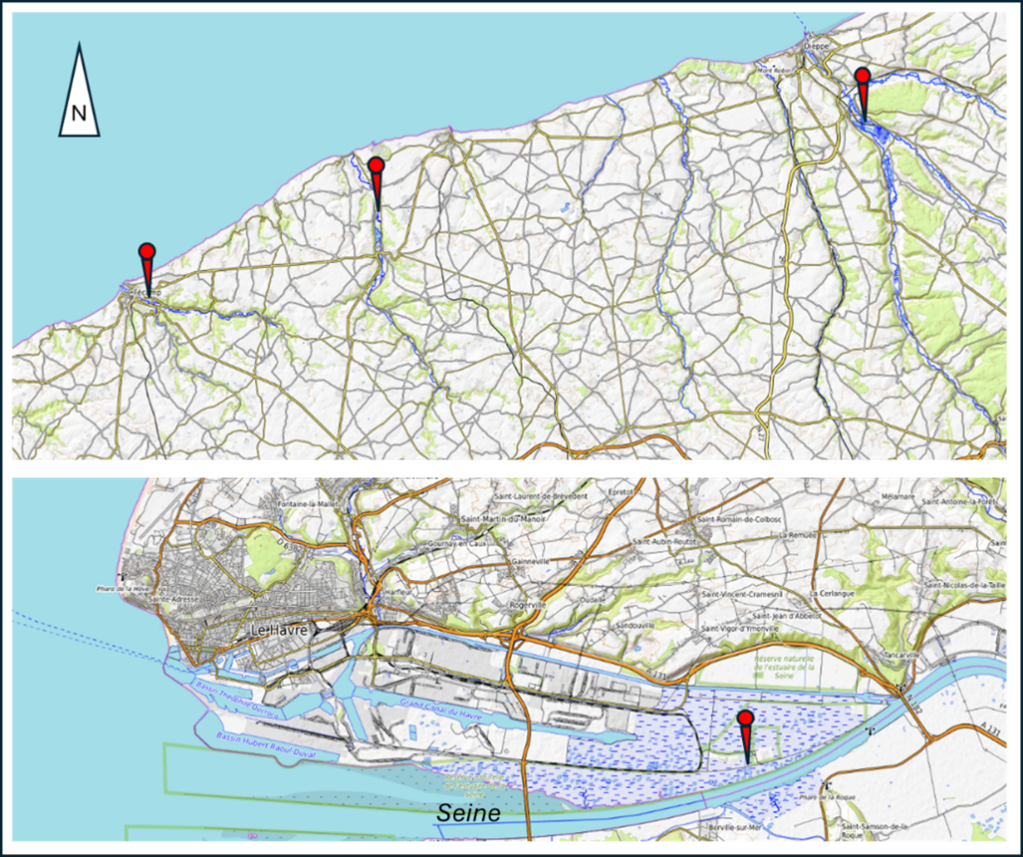
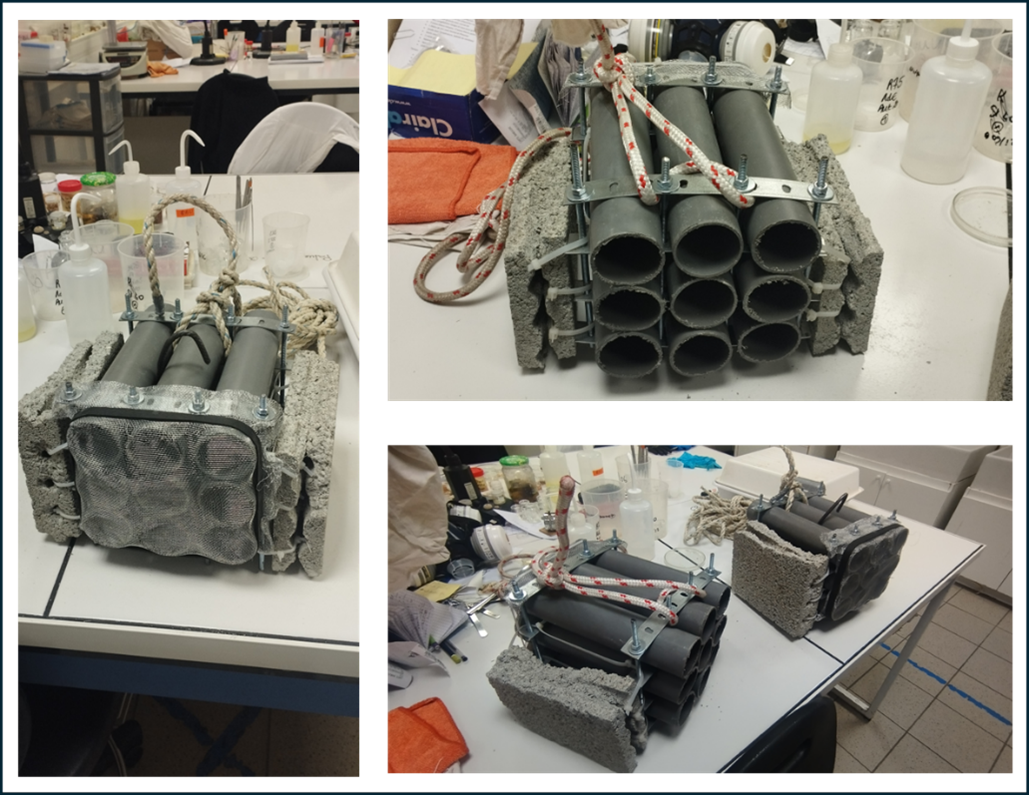
Installation conditions
Each trap was individually attached to metal rods and oriented facing the current. A sign was placed on each rod explaining the objectives of the study and with CSLN contact information in case of issues.
The traps in the Arques river were installed in a calm stream with relatively deep riverbeds. The two traps in the Durdent were placed on a mud bed in relatively shallow waters. The condo traps in the Valmont River had to be firmly attached because of the strong current. Weight was added to these traps to ensure they would stay in place. Finally, the last traps installed in the National Park were put in a small side channel of the Seine close to a valve used to regulate the water level within the park. Crabs were observed in this side channel during the installation of the crabs.
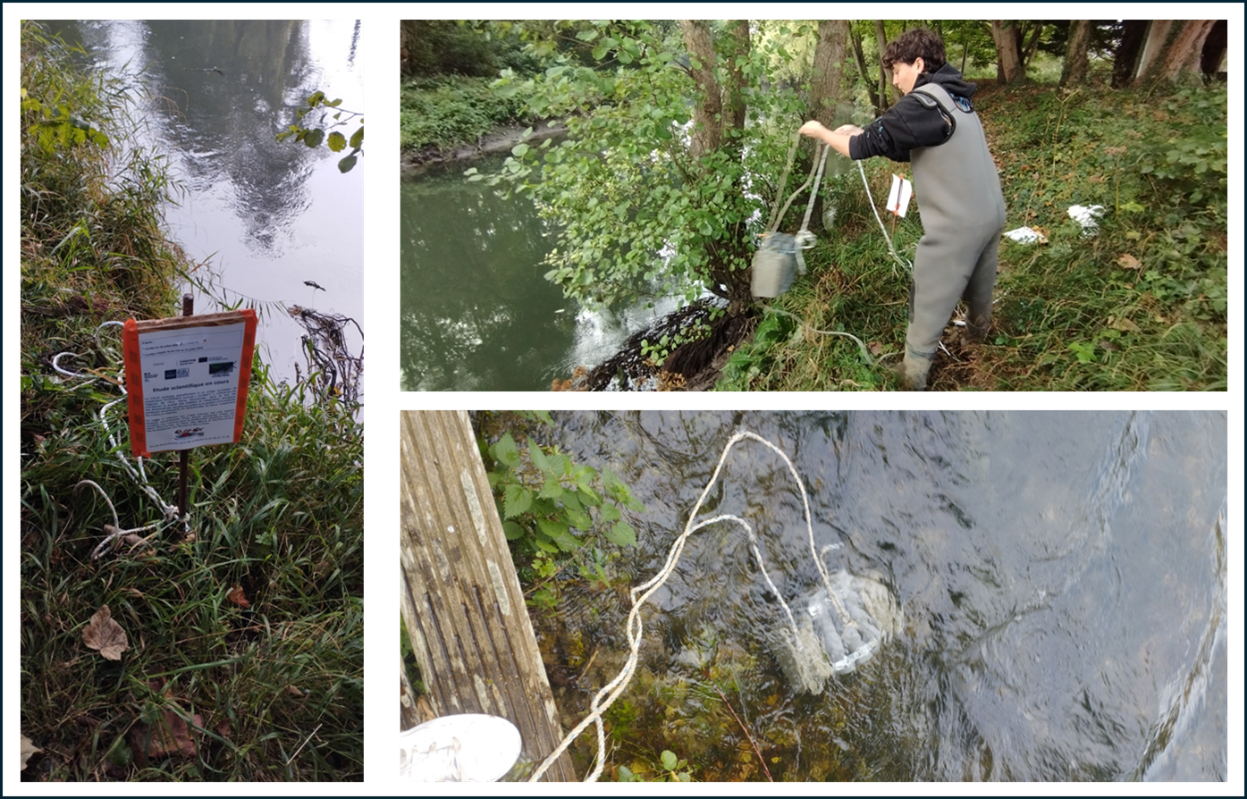
Monitoring results
No CMC were captured at any of the four sites during the four-week monitoring period. However, the traps positioned on coastal rivers caught some Amphipoda (Gammarus sp.) and the traps positioned in the National Park caught white shrimp and crayfish. This indicates that the condo traps can be good refuges for crustaceans in the Seine Estuary, which is coherent with the results obtained by the GEMEL with their condo traps.
Outlook and key takeaways
The absence of CMC in the coastal rivers may suggest that the species does not enter the area through these rivers and that they move mainly through the main river body of the Seine. This hypothesis requires further validation through additional experiments in these places using different traps.
The overall lower crab population density in France, compared to other partnering countries, may limit the effectiveness of passive traps like condos due to the decreased probability of crabs taking refuge within the condo traps. Such experimentation leads to many new hypotheses that need to be elaborated upon.