Through several of its partners and its participation in many monitoring projects across the estuary, the CSLN has been gathering data about Chinese mitten crabs in the Seine estuary. After a first trial in November 2024, the CSLN deployed mobile traps at locations where crabs had previously been observed. The results will help refine the traps for maximum effectiveness during future deployments.
Because the Seine river is too wide for a direct trap installation, two locations, indirectly linked to the Seine, were selected to install the mobile traps made of PVC piping and plastic meshing following the “VMM-style” trap design. These traps were installed from the end of October to the middle of December. Numerous crabs were observed migrating through the Seine estuary this year, many of which were caught as bycatch by fishermen and scientists studying fish population.
Location selection and trap installation
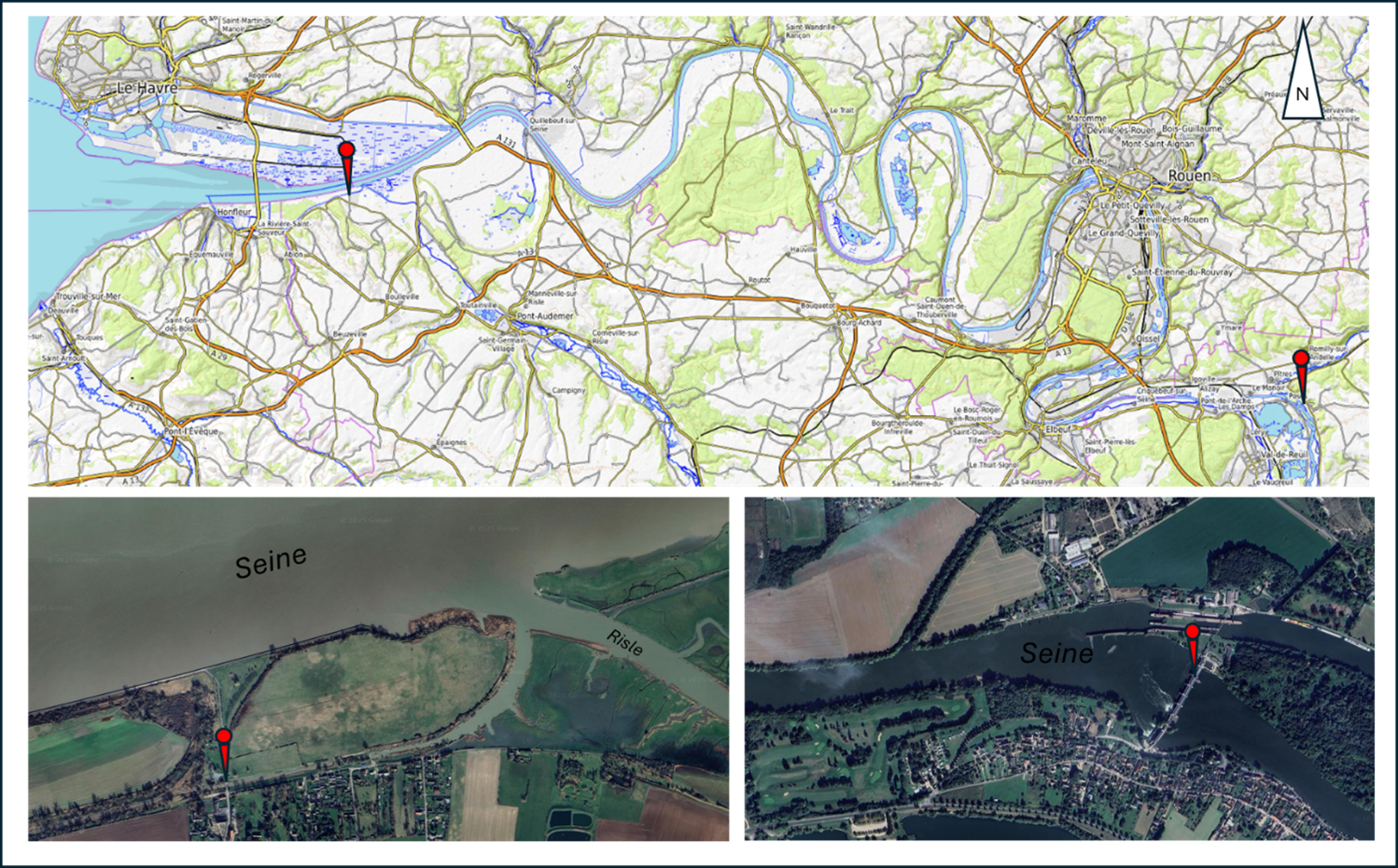
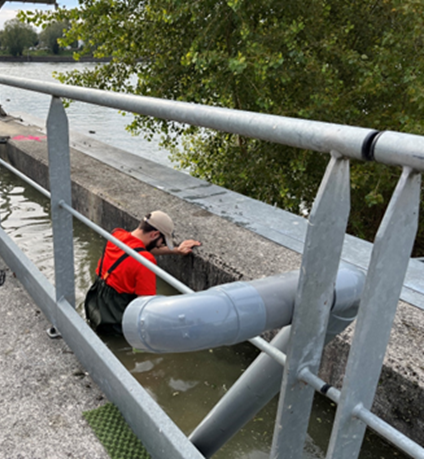
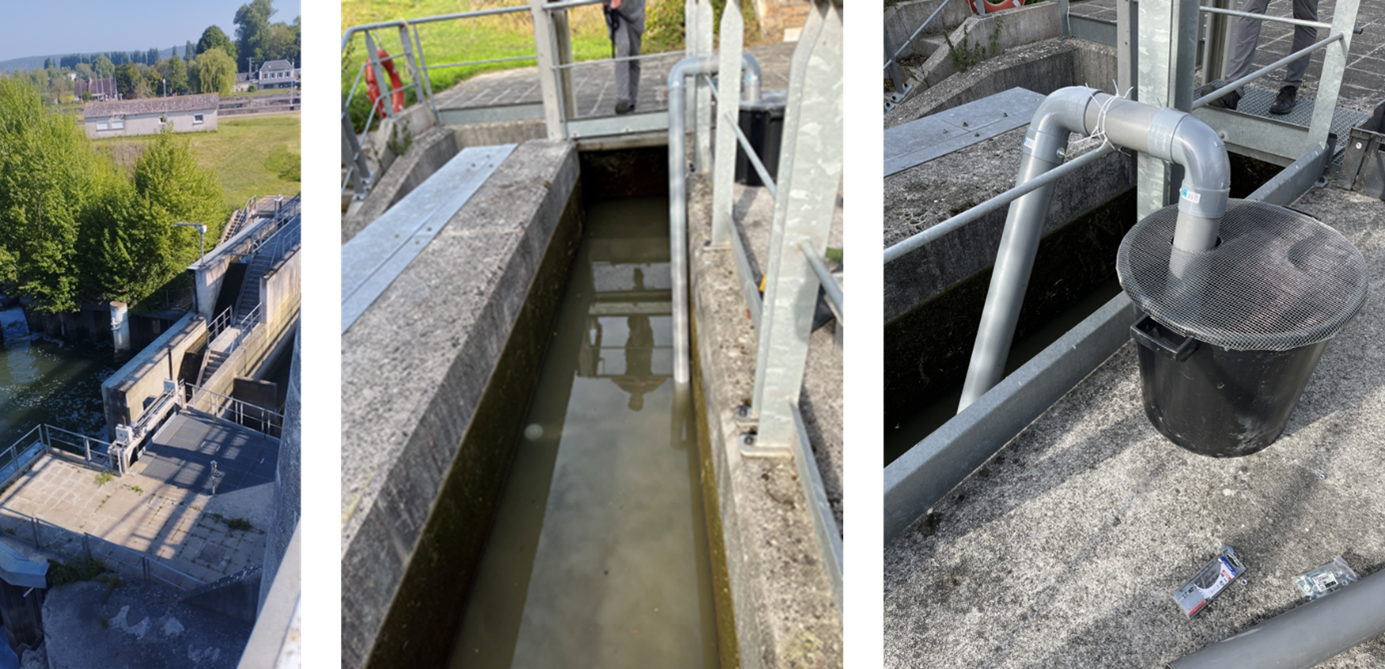
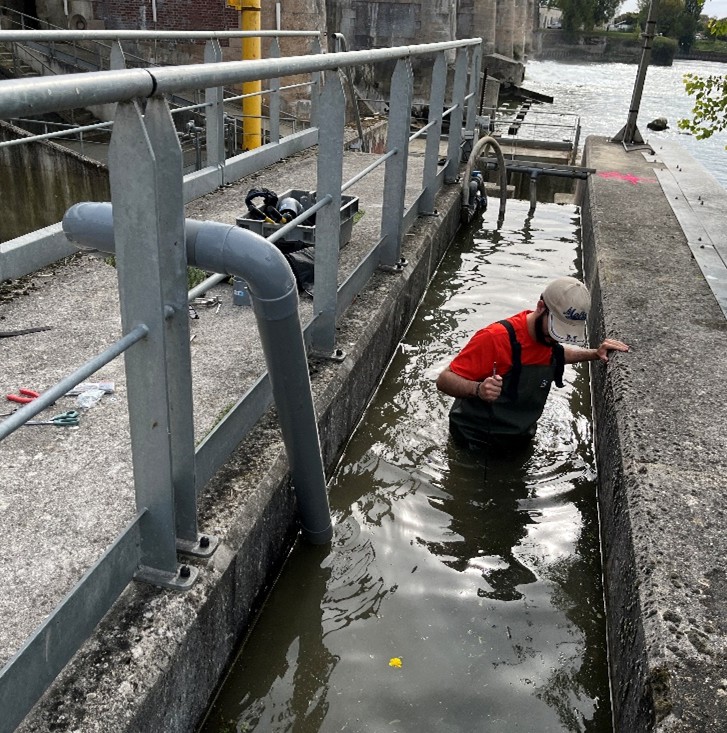
The Poses dam crosses the Seine and is home to an important monitoring station for migrating fish species. The station is operated by SEINORMIGR, an NGO focused on migrating species. They reached out to the CSLN in spring 2025 after witnessing numerous crab-crossings in the eel-counting system. The crabs climb through the eel ladder, pass through a little canal and clog the system, making the canal an ideal location for testing a mobile trap. A smaller version, using 10 cm diameter PVC pipes, was installed. This smaller trap had only one collector on the right side of the canal, which was the only accessible side.
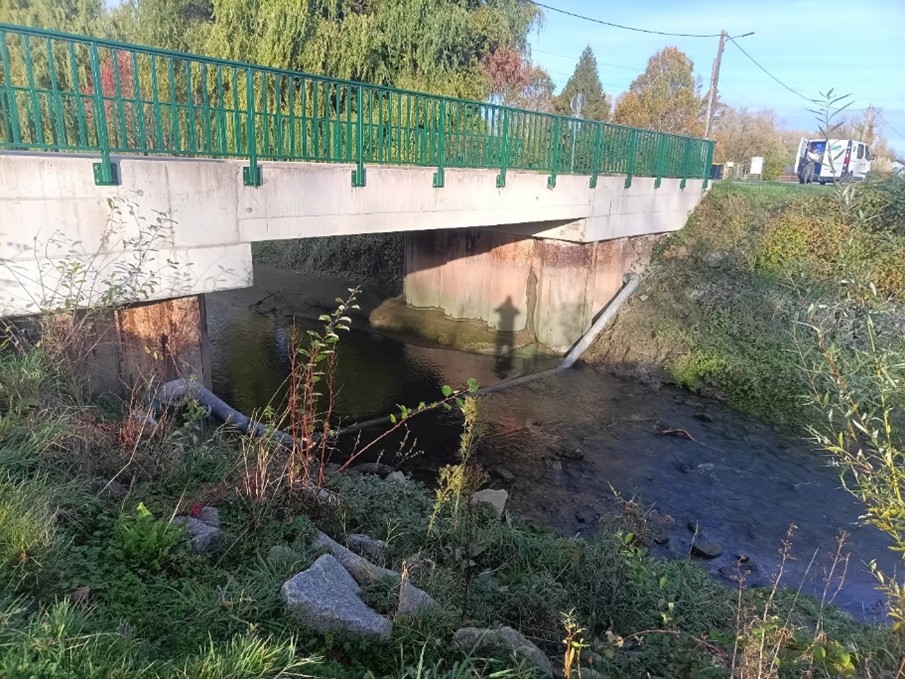
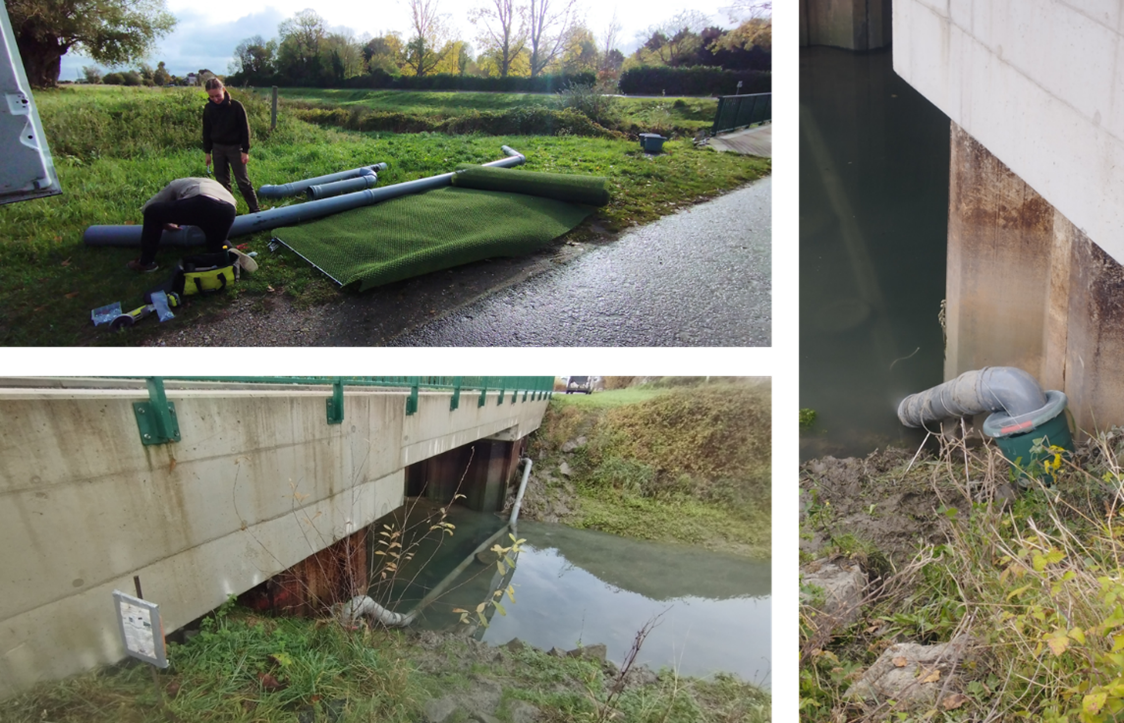
The Risle return canal is an artificial tributary of the Seine, located near the confluence of the Risle and the Seine. Several crabs had been caught as bycatch in monitoring projects nearby, and individuals were also observed during trap installation. Thanks to the easy access and the cooperation of the mayor, the trap could be stretched across the entirety of the stream (6 meters wide) with collectors on each side. The pipes used were 50 cm wide. At first, the trap was equipped with fine plastic meshing that was weighed down with metal rods in order to sink to the bottom of the riverbed.
Results of the monitoring
Poses dam trap
The monitoring period had to be cut short due to a required canal clean-out intervention, which left the trap above water level. Despite this interruption, the trap resisted well to the conditions and was not displaced by the water movement within the canal. However, the trap was ineffective in successfully luring small crabs into the sealed collector.
The crabs that were observed by SEINORMIGR were larger than expected and the trap size proved to be unsuitable for the adult crabs. The trap was removed in order to increase the size of the bottom pipe for further deployment. It was also noted that the bottom corner of the trap could create a gap between the curved PVC angle and the straight concrete walls of the canal. This gap, originally thought to be easily sealable, should also be reduced. Finally, despite providing a 45° angle for the crabs to climb, a newer version of the trap with a pipe that isn’t as steep could benefit the overall ‘attractability’ of the trap.
The trap was removed to include all these upgrades for future deployment at the same location in spring 2026.
Risle return canal
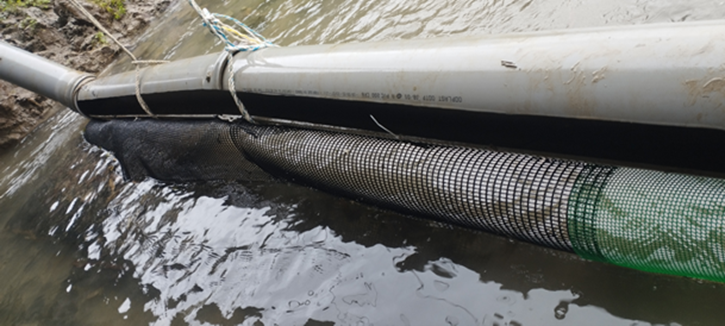
The trap on the Risle return canal suffered significantly from several storms that displaced the trap, causing it to move back up to the surface and leaving a wide gap between the trap and the riverbed. The meshing was completely ripped away. Several interventions allowed the CSLN to replace the meshing with sturdier fabric and add weight to the entire structure so that it could move closer to the bed of the river. Unfortunately, despite these improvements, the trap was unsuccessful at capturing any individuals.
It is important to note that no crabs were observed in the vicinity of the trap during the period of monitoring. Moreover, the strong current diverted the flow of the stream around the trap, causing erosion of the riverbanks. The trap was removed in December and the received feedback will guide the improvement. Deployment is scheduled for spring 2026, possibly at a different location in case the erosion of the riverbanks cannot be mitigated.
Key takeaways
Despite numerous sightings within the Seine River, the mobility of the crabs in the tributaries remains unclear. The size, the period of migration, and the exact locations still require refinement in the Seine Estuary. These variables will require the different traps to be enlarged to be able to capture all sizes and to be deployed at periods of time outside of the original range that has been established.
At the different locations that will be chosen for future deployment, a refinement period will be necessary, in order to study the particular characteristics of the streams and to ensure maximum effectiveness of the traps. This process has already started at two different locations in the Seine estuary. It allows the CSLN to focus on the specificities of the Seine estuary and to identify the adaptable factors that need to be taken into account in order to make mobile traps as effective as possible, no matter the place they’re installed.