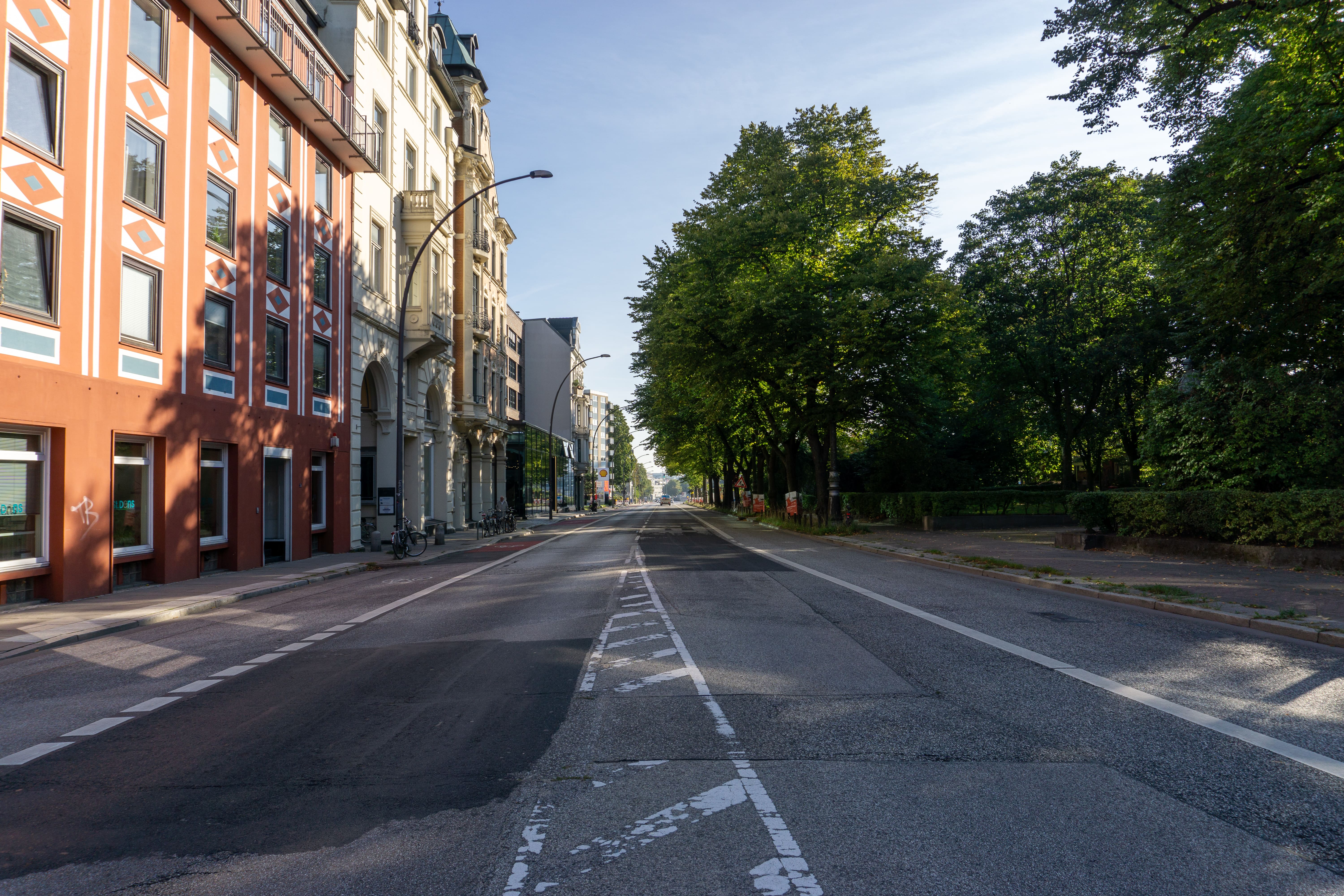
Unlike the other Cool Cities pilots, the Königstraße transformation in Hamburg-Altona is an independent project. Although it is not part of the Cool Cities programme, it offers valuable insights and real-world data. This pilot is especially relevant because it has already been implemented, and our partners HCU and ZEBAU have been directly involved. They bring this experience into Cool Cities, strengthening our approach to monitoring and evaluation.
About the pilot
The Königstraße pilot is part of a major street transformation carried out between 2023 and 2025, designed to achieve three key goals: improving livability and comfort, expanding cycling connections, and introducing blue-green infrastructure to support urban cooling and decentralized water management. Once a four-lane thoroughfare with up to 22,000 vehicles per day, the street has been redesigned into a greener, people-friendly space with wide cycling lanes, shaded walkways, and areas for relaxation. Parking spaces were significantly reduced, making room for trees, planting beds, and public seating.
What makes this approach unique?
The Königstraße pilot stands out for combining traffic reduction with climate adaptation in a single urban design. By reallocating road space from cars to greenery, the project creates room for trees, shallow swales, and natural water retention areas. Around 1,140 m² of new green infrastructure was added, including 47 newly planted trees and bioswales designed to absorb and evaporate rainwater. These interventions not only cool the street but also improve safety, biodiversity, and the overall quality of life for residents and visitors.
The Königstraße pilot benefits from the expertise of the BlueGreenStreets project, a BMBF-funded initiative led by HCU and ZEBAU that brings together cities, universities, and landscape/water management planners across Germany. BlueGreenStreets focuses on evaluating and developing planning instruments for green urban infrastructure and future-proof street design. Lessons and monitoring methods from BlueGreenStreets have been applied in Königstraße, linking local practice with broader research without making the project part of Cool Cities.
Results
The renewed Königstraße has become a more comfortable and climate-resilient public space, offering shade, cleaner air, and a pleasant microclimate even on hot days. Local residents, cyclists, and pedestrians now enjoy a safer, greener, and more welcoming street. The transformation has also improved local biodiversity and reduced surface runoff through enhanced rainwater management. As part of Hamburg’s growing Cool Network, Königstraße now serves as a model for how blue-green infrastructure can turn a traffic-dominated corridor into a thriving urban space that supports both people and nature.