
About the pilot
In the Klarenbeek neighbourhood, the Arie van Driellaan pilot focuses on reducing heat stress in one of Middelburg’s most vulnerable residential areas. Built in the late 1970s, the district is highly paved, with limited greenery and little shade, making summers uncomfortable and unhealthy for residents. With support from the North Sea Region programme, the city and partners are testing nature-based solutions: planting trees, creating shaded public spaces, reducing paved surfaces, and connecting green corridors. The pilot also contributes to a roadmap for a city-wide Cool Network, embedding cooling and greening into future urban development.
What makes this approach unique?
The Arie van Driellaan pilot stands out for its integrated focus on climate resilience, social wellbeing, and ecological value. By involving residents directly in the design, the project ensures that cooling strategies meet community needs—such as safer play areas, greener parking, and accessible shaded spaces. Small-scale interventions are strategically placed to maximize cooling effects, while the location’s visibility near schools, shops, and the city center makes it an ideal demonstration site for other Dutch post-war neighbourhoods.
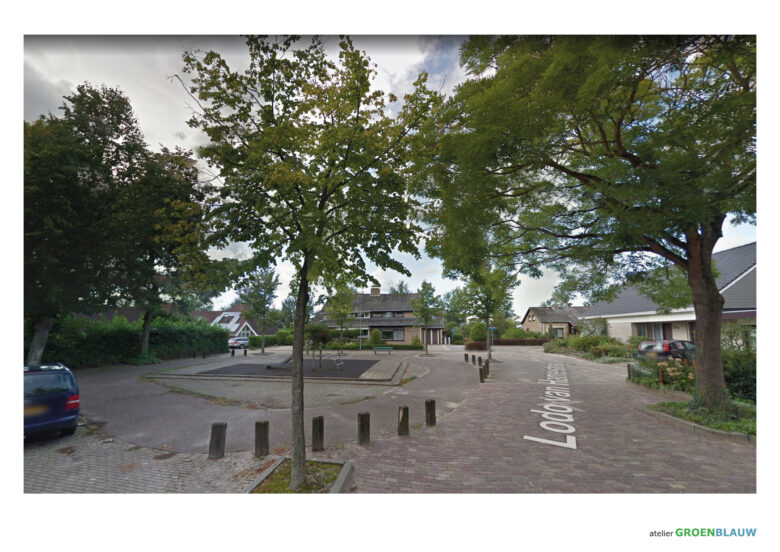
Arie van Driellaan - before. Photo: Atelier GROENBLAUW
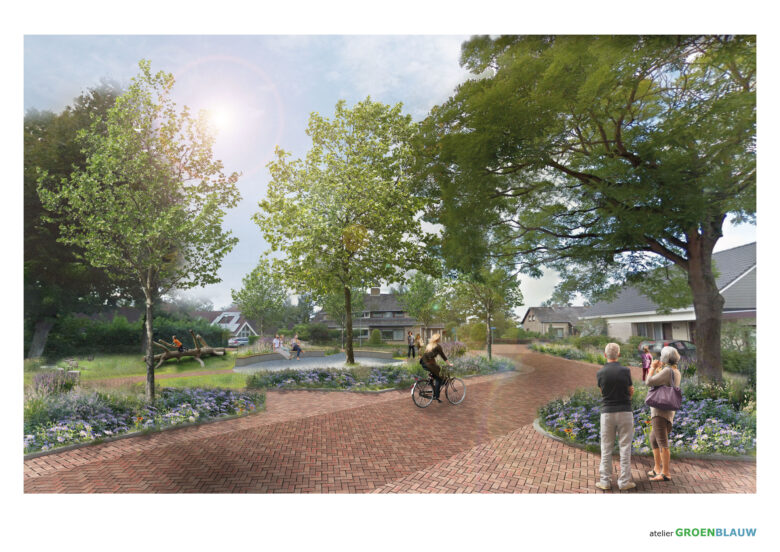
Arie van Driellaan - after (impression). Photo: Atelier GROENBLAUW
Expected results
The pilot is expected to make the Klarenbeek neighborhood cooler, greener, and more welcoming, especially for families, children, and older residents. Shade and vegetation will improve comfort, biodiversity, and water management, while new public spaces will encourage social interaction. Long-term, the lessons learned will guide the transformation of similar districts in Middelburg and across the North Sea Region, building towards a connected Cool Network that strengthens resilience and inclusivity.