

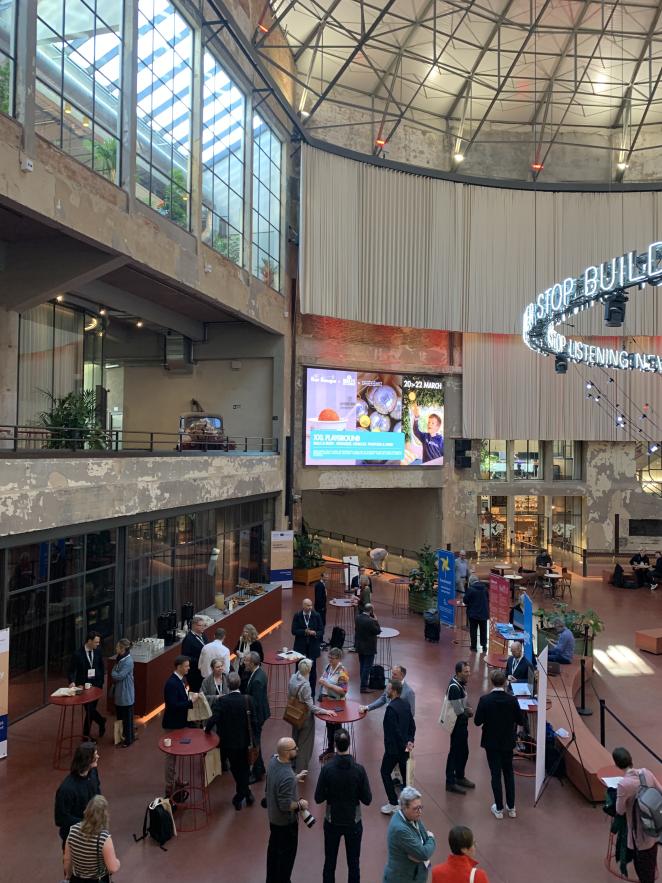
Ghent, 17 March - The COPPER project was proud to organize the first-ever European Conference on City Energy, hosted by the city of Ghent at the magnificent Winter Circus. The conference brought together politicians from different policy levels (city, national and EU-level) and key decision-makers from government bodies, NGOs and commercial organizations to discuss the challenges and opportunities of the city-led energy transition.
Cities across Europe are getting into GEAR
The key message of the conference was clear; cities are moving beyond “green goals” and are working towards an energy transition that is Green, Equitable, Affordable and Resilient.
During the opening session, Mathias De Clercq (the Mayor of Ghent) shared his view: “cities are ready to lead the local energy transition, but they need the right framework to operate in”. While cities are expected to implement EU and National-level policy and regulation, they are not always equipped to do so.
Throughout the day, speakers from different perspectives advocated the need for multi-level and integrated governance from pilots to EU policies, alignment of strategic plans from different stakeholders, and local energy transition that puts citizens and local businesses at its center. The value of Local Energy Action Plans (LEAPs) and the City-Grid Interface (CGI), both COPPER concepts, were validated as missing pieces to the puzzle in this local energy transition.
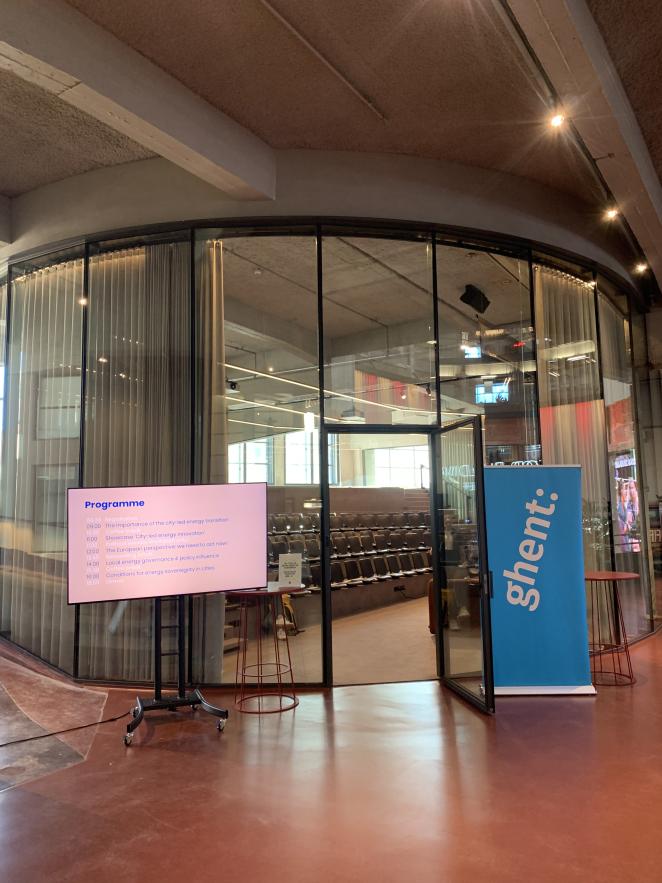
Costs, conflict and control
Throughout the conference was a recurring emphasis on the concepts: cost, conflict, and control.
Cost – This reflected the need for affordability, especially during a time of rising energy costs and energy system instability. Rolf Bastiaanssen (Partner at Bax Innovation) started with a paradox; While the Local Levelized Cost of Energy (LLCOE) for renewables is decreasing at a rapid pace year-on-year, energy prices all throughout Europe are sky high. This triggered a question towards the audience - Is our current energy system really designed for our citizens?
We need to ensure a just transition, distributing the benefits that the local energy transition has to offer to our citizens and local businesses. Sven van Elst (General Director of ASTER) demonstrates how new market models, enabled by decentralized energy systems, can make energy more affordable for our citizens; ASTER delivers locally produced solar energy to tenants of social housing corporations' way below market prices, proving that it is possible to make energy more affordable.
Conflict – The energy transition will come with new conflicts – around space, market share, expertise, among many others. Different energy systems and market models are colliding; new technologies are emerging at a rapid pace, and as with all major transitions there will be winners and losers. We need to make trade-offs, which require open and transparent communication.
Conflict is also visible when it comes to energy systems. Our energy system, that is more than ever proving to be critical infrastructure, is not just a centralized system anymore. Increasingly, the energy system is adapting to neighborhood- and building-level solutions, as the adoption of decentralized production and storage is increasing. This requires a new perspective on grid planning – flexibility where it is possible, grid strengthening where it is needed. City-DSO collaboration is vital when it comes to proper grid planning.
Control – Sofia Hedén (Deputy Mayor of Malmö) shares one of Malmö’s biggest lessons learned - “If you have control of your energy, keep it, do not sell it”. We are witnessing a shift of controlover energy systems as they are becoming increasingly decentralized. This creates opportunities for cities, citizens, and local businesses to take more ownership over the local energy transition. Multiple panel members agree - if you give cities more control, they can create green energy systems while making sure that everyone can benefit from the energy transition.
Niall O’Brolcháin (former Mayor of Galway) further amplified this message, arguing that cities need to stand up for their citizens and make sure policies on different levels are designed to benefit the cities’ needs.
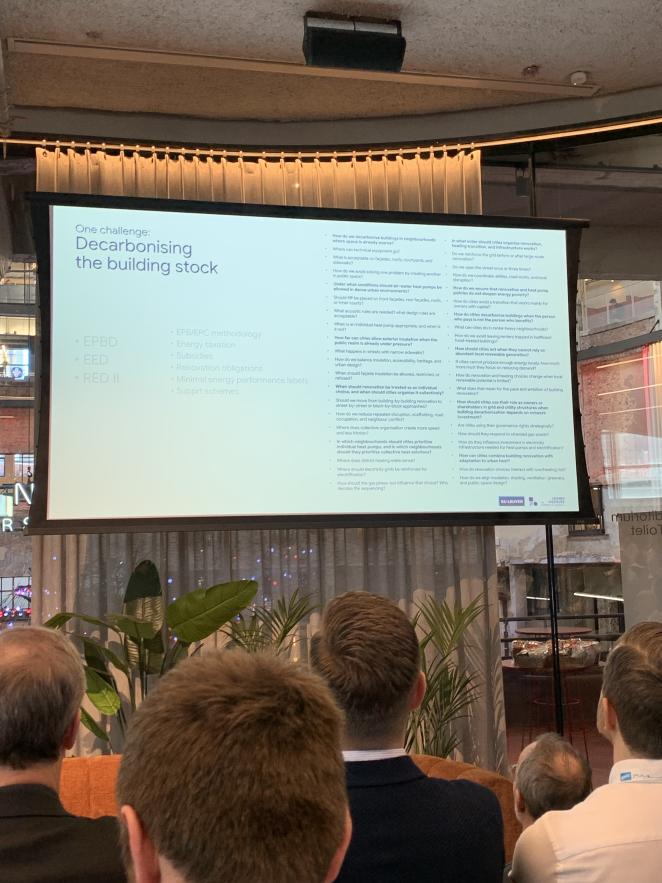
Spreading the COPPER message
We were proud to have the COPPER consortium represented during the conference. Several consortium members took the stage.
Andreas Wolter (President of Climate Alliance and Counsillor of Cologne) and Jan Desmet (Ghent University) shared the stage during the oping session, setting the tone for the conference by emphasizing the need for a city-led energy transition.
Charles Esser (Secretary General of E.DSO) presented the key insights of the newly released E.DSO white paper on city-DSO collaboration and the City-Grid Interface. As investments into the grid are high and very time intensive, it is crucial to have strong collaboration between cities and DSOs to ensure effective grid-planning. The CGI captures this ongoing dialogue and is an important part of a city’s LEAP.
Sam Goodall (CEO at Cambridge Cleantech) moderated the session on city-led innovation, showcasing new innovations that are being implemented and scaled throughout Europe. During the session, Henrik Näsström (Project leader at Varberg Energi) inspired the audience with the Nätflex pilot, which is part of the COPPER project. Nätflex shows the potential of a city-wide Virtual Power Plant, that uses flexible renewable energy systems to reduce grid congestion and energy costs for citizens. Emile Clarisse (University Ghent) shared the latest research on the different roles that cities can or should play in the local energy transition, with clear guidance on what their role could be in both the short- and long-term.
Rolf Bastiaanssen (Bax Innovation) moderated the session on governance and policy influence, sharing his views on how to create a leveled playing field for decentralized energy systems, how the energy transition is a strategic investment into a strong local energy economy rather than a cost, and how cities should play a bigger role in multi-level policy shaping. Together with the panel, the session explored new market models, discussed the need for city control of the energy system, and how to put our citizens at the heart of the local energy transition.
Additionally, the conference confirmed that the work of COPPER on LEAPs and the city-led energy transition is of great value to cities, and to Europe as a whole.
Nobody should be left behind in the energy transition
The energy transition has major implications for cities around Europe, and we can leave nobody behind. On the one hand, this means an affordable energy transition that is also manageable for vulnerable households. On the other hand, that means that smaller cities with more limited resources need support to acquire the knowledge and capabilities needed to lead the local energy transition. The “Netwerken van Morgen” initiative in Flanders, through which DSO Fluvius works together with several Flemish cities (amongst which are COPPER partners Ghent and Antwerp) on local energy planning, was highlighted as a good practice of cooperation between cities.
To make sure no city is left behind in the energy transition, regional energy transition hubs are increasingly necessary to manage this coordination challenge and knowledge exchange between cities. Also, the need to put this on the European agenda was emphasized.
Looking Ahead
With one-and-a-half year to go, the COPPER project can build on the momentum of the European Conference on City Energy and pave the way for cities across Europe to lead the local energy transition. In the coming period, the COPPER consortium will further embed Local Energy Action Plans in existing governance structures, explore new ways of city-DSO collaboration, and create insights into their city energy bill to empower themselves further to lead their local energy transition.
It is time for cities to shift into GEAR, and lead a local energy transition that is Green, Equitable, Affordable, and Resilient.