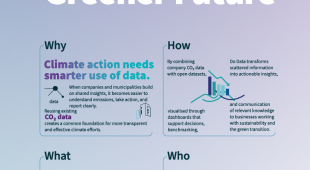
Do Data is an open-source digital solution that reuses and enriches Climate Compass data from local businesses to generate insights that support Vejle Municipality’s climate action plan. The prototype shows how existing datasets, combined with open data, can improve decision making, benchmarking, and collaboration.
Companies gain a clearer understanding of their energy related emissions, while the municipality receives aggregated and anonymised insights that strengthen climate governance. Do Data is not an ESG reporting tool, it focuses on understanding climate actions and supporting informed dialogue between companies and the municipality.
What was the challenge?
The pilot addressed several challenges that affected both businesses and local authorities. Many companies in Vejle are actively working to reduce their emissions, yet they often struggle to understand and use their own data. The Climate Compass provides structured carbon calculations, but it does not offer benchmarking, local insights, or support in identifying the most effective climate actions within the municipality. As a result, companies lacked guidance on where to focus their efforts. Municipalities faced related challenges. They receives climate related data from many sources, but information on business sector emissions is fragmented and governed differently across systems. Without a shared digital infrastructure, these datasets cannot be combined into reliable, aggregated insights that supported targeted climate planning.
The pilot identified several barriers. Knowledge barriers arose when companies were unsure how to interpret Climate Compass results, or which data was relevant for guiding green transitions. Municipal staff often worked with strong datasets, but in departmental silos that limited cross sector insights. Technical barriers were significant. Municipal systems at the time offered no way to process data from private companies without revealing identifiable information. There were no separation layers or technical safeguards that enabled secure, anonymised handling of company data, which restricted its use for aggregated climate insights. Ensuring interoperability and clear documentation of data provenance was therefore central to the pilot. Regulatory and ethical barriers required attention to consent, governance, and transparency. The pilot applied strict data minimisation and anonymisation. Organisational barriers related to collaboration. Before the pilot, no shared digital space existed where companies and the municipality could work with climate data together. Do Data created this shared space and tested new routines for governance, onboarding, and dialogue.
How did Data for All help?
The Do Data – for a Greener Future prototype addresses a central challenge for municipalities and businesses: the lack of accessible, consistent, and actionable insights into company level CO2 emissions. While thousands of Danish companies have completed Climate Compass calculations, these data have not previously been available in a form that supports local benchmarking, municipal planning, or meaningful dialogue between companies and the public sector.
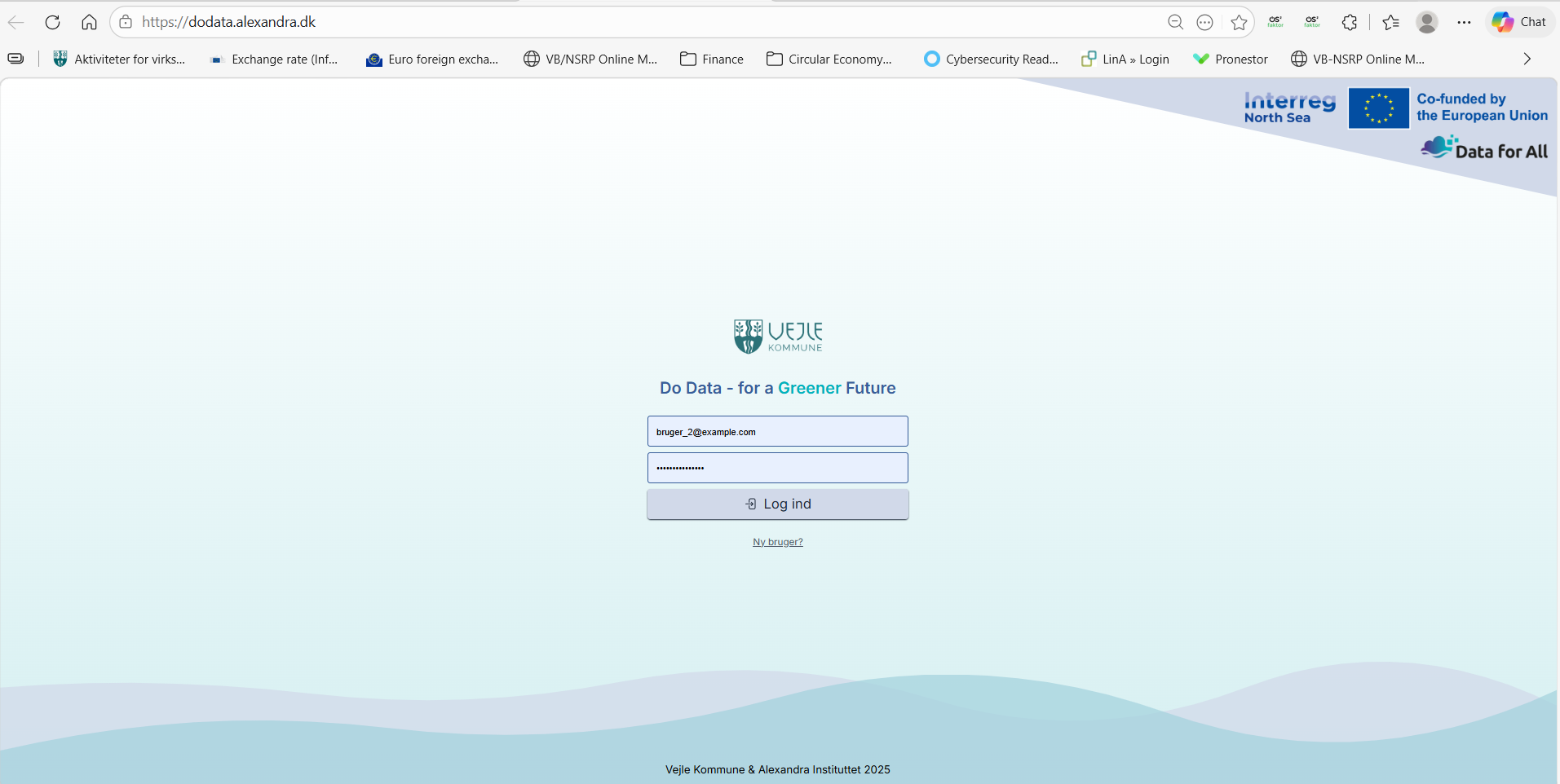
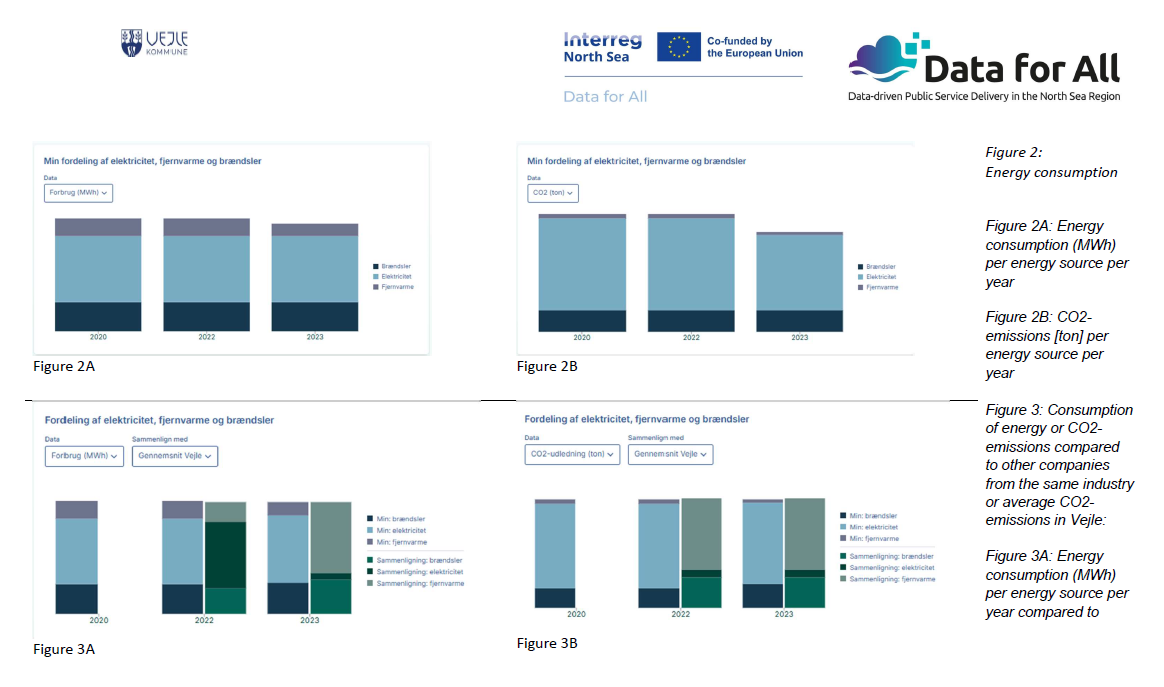
The solution is an open-source digital tool that imports, validates, and visualises Climate Compass data submitted voluntarily by local businesses. The tool enriches these data with selected open energy datasets and municipal information and transforms them into intuitive visual insights that help companies understand their energy related emissions and identify potential areas for improvement.
For the municipality, the tool provides aggregated and anonymised overviews of business-related emissions, enabling a better understanding of the local business sector’s climate impact and supporting targeted climate planning. The solution is designed with strict privacy safeguards, including data minimisation, purpose limitation, and a governance model that prevents visibility of identifiable company data.
For more details please check: Do Data - For a Greener Future. Open data for monitoring climate action in Vejle. Pilot Strategy and Action Plan as well as Videos on Why, How, What, Who, Next
Participating partners
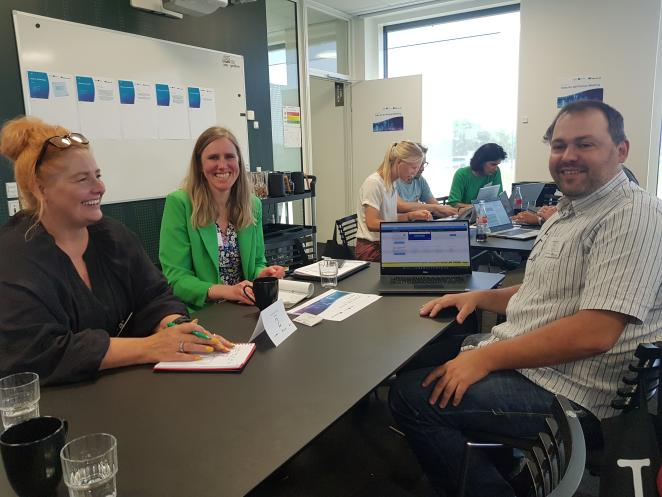
Vejle Erhverv (business services) led the pilot, coordinated stakeholder engagement, and ensured alignment with municipal climate strategies and public sector governance requirements. Through Vejle Erhverv, the municipality brought strong experience in supporting local businesses with sustainability and climate planning, as well as long standing participation in EU projects related to green transition. This provided a solid basis for engaging companies contributing Climate Compass data and understanding their practical needs. Vejle’s close relationship with the business community helped identify challenges and opportunities. The municipality also managed the integration of open datasets and contributed domain knowledge on climate planning and monitoring, shaping use cases and providing feedback throughout development.
Alexandra was responsible for the technical architecture, data processing pipelines, visualisation framework, and the open-source implementation. Their work ensured interoperability, documented data flows, and introduced privacy preserving mechanisms, creating a scalable foundation for future modules and reuse by other municipalities. As a national RTO with strong expertise in data spaces, energy data, and digital solutions, Alexandra played a central role in shaping the pilot. Their research-based insight and understanding of public sector needs were essential for developing a robust prototype aligned with municipal practice and emerging national and European standards.