Intercommunale Leiedal and Kortrijk are front-runners in Belgium in delivering digital public ser-vices. In D4A, their focus was on developing a regional data ecosystem facilitating data exchange between regional and municipal authorities as well as supra-regional levels. In collaboration with VIVES, the project examined the ethical and legal dimensions of this data exchange and produced user-friendly checklists for stakeholders Via concrete applications (e.g. dashboards) developed within the TRAFFIC <OF> DATA pilot, stakeholders throughout the municipal organizations were involved in the project from an early stage. In this way, support for this data project was actively built throughout the process.
What is the challenge?
Kortrijk, Leiedal and VIVES were confronted with three key challenges:
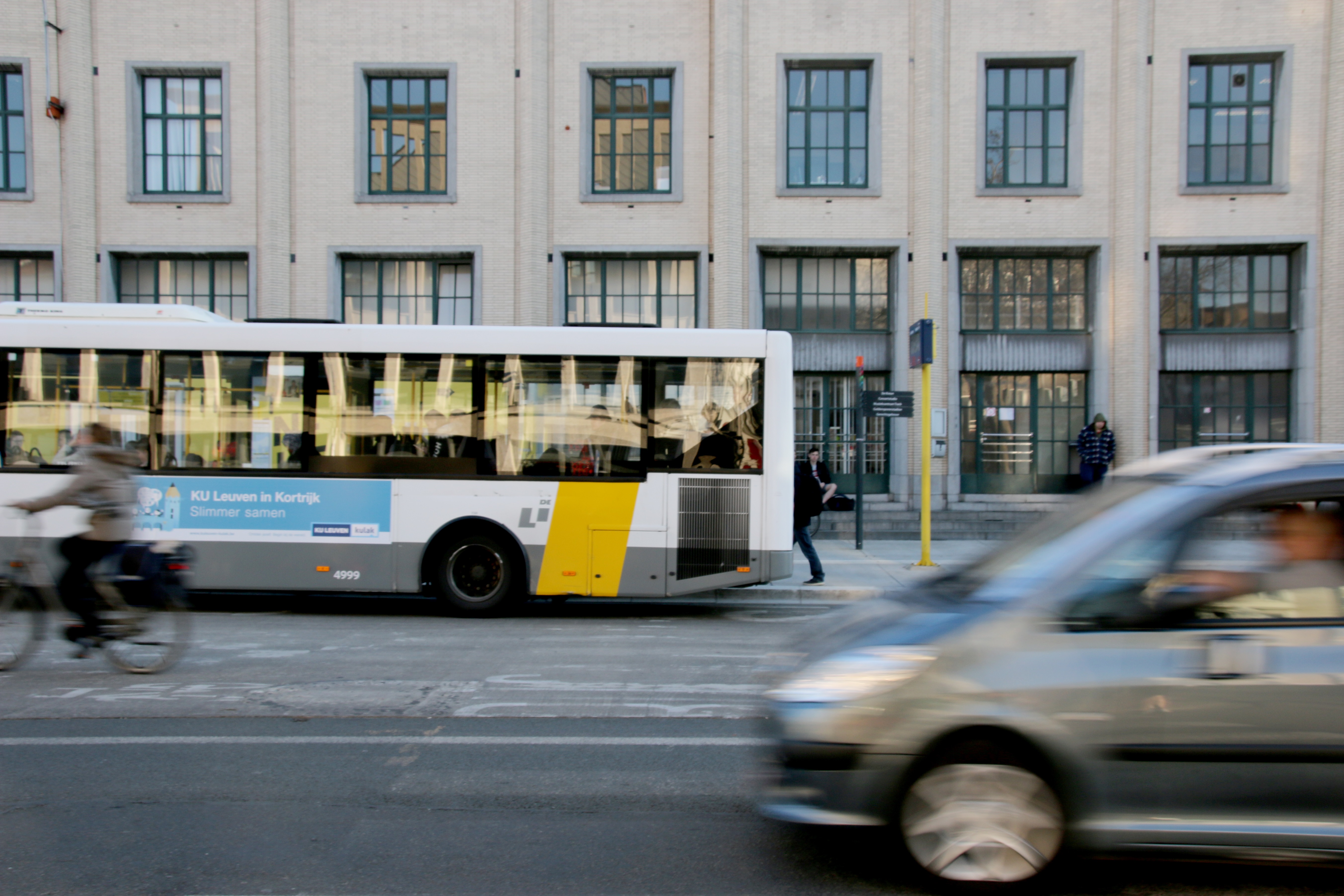
Monitoring traffic flows and evolutions (e.g. public transport, cycling, but also shared modes) is an important aspect to facilitate evalua-tion and data-driven policy making.
The supply of data has increased in recent years. The use of the da-ta for policy objectives and services to citizens, on the other hand, is still underutilized, due to:
- closed software applications: the data is locked up in the applications and databases
- insufficient data sharing between governments
- insufficient knowledge and awareness by domain experts and policy markers
There is a challenge in collaborating and sharing data; get clarity on data access and usage rights, responsibilities, data-model, content, standards, data traffic between lo-cal and regional data platforms, etc.
There is a need for an up-to-date, easy-to-use (metadata) overview of all available da-tasets with description, source, accuracy, owner, data-process (ETL), projects/services using the data, contact person, privacy,… (metadata management). The overview is important to avoid double work, to increase to multi-purpose use of data, to inspire colleagues in using data, to increase efficiency and reuse.
The common collection and sharing of accurate and high-performance data provides the opportunity to monitor, manage and where necessary, to adjust the region's objec-tives towards a more sustainable mobility.
Dealing with data entails numerous ethical and legal challenges that must be addressed in a coherent and systematic way. These include:
- Ensuring value alignment between individual projects and broader policy objectives
- Actively engaging stakeholders—including citizens—in the design, implementation, and evaluation of data use cases
- Developing robust procedures to embed ethical and legal reflection at all relevant levels of decision-making and governance.
Working with data carries significant implications. Activities involving personal data must comply with the GDPR, while other frameworks—such as the Directive on Open Data and the Re-use of Public Sector Information, the Data Governance Act, and the Data Act—govern the sharing, access, and re-use of non-personal and public data. Given this complex regulatory landscape, practical guidance, such as a flowchart, is needed to help users determine which rules apply in specific contexts.
Beyond legal compliance, projects should actively promote ethical values such as transparency, fairness, and accountability. Embedding these principles into project design and decision-making strengthens public trust, supports responsible data use, and ensures that data-driven initiatives deliver tangible benefits for society as a whole.
Both ethical and legal dimensions call for ongoing awareness-raising and the establishment of integrated procedures that foster responsible data governance. Embedding these dimensions into project practices will not only ensure compliance and accountability but also enable the insights developed within this project to inform broader governance frameworks beyond its immediate scope.
How did Data for All help?
The “dashboard Traffic Counts” provides an overview of traffic counting locations within the region (through geoloket), giving mobility officers within the municipalities a visual indication of the existing data (current and historical). This geoloket is enriched with other relevant data layers (e.g. existing cycling infrastructure). Subsequently, links are provided to dive deeper into this traffic data through powerBI analysis – for which the data are reformatted to be easily comparable.
The overview of the data is based on input and automatic reformatting of existing traffic count-ing data, making these better accessible for the municipalities themselves and easier to exchange (e.g. with neighbouring municipalities, police departments, provincial mobility department). This overview of existing data also provides municipalities with a tool to deliberately plan future data collection (e.g. where to install new sensors). Also, retrieving data (e.g. to answer policy ques-tions or requests for information from the citizens) becomes easier and less time consuming.
For more details please check TRAFFIC < OF > DATA in South-West Flanders, Belgium: Pilot Strategy and Action Plan
Participating partners
Intercommunale Leiedal is a regional public partner for thirteen municipalities in South-West Flanders, Belgium. Its core activity is urban and regional development. Leiedal aims to develop an innovative and sustainable smart region. It therefore supports its municipalities in their digital transformation and in the daily provision of digital services to citizens and companies. Leiedal’s Data as a Service (LDAAS) platform collects, updates, processes, and makes data available in multiple applications, thereby offering data services to municipalities, companies, and citizens in the Leiedal region and beyond. LDAAS will be enhanced into a platform for processing and sharing data across administrative levels. Its functionality is proven through a use case.
The City of Kortrijk is a prominent city among the in total thirteen municipalities of the Leiedal region in Belgium. It is a historical city situated in South of West-Flanders, Belgium. The Kortrijk agglomeration is embedded in the dynamic Eurometropolis Lille-Kortrijk-Tournai.
Kortrijk has, up to now, implemented several basic dashboards. Kortrijk is currently working to set up a data warehouse, integrating data from multiple heterogeneous sources to support analytical reporting and decision making. It furthermore collects data for reporting on the relation between city crowds and their expenditures as well as passenger counting. Kortrijk will work closely together with Leiedal and VIVES to develop a use case around traffic monitoring and regulation, starting with a thorough data inventory and data landscape analysis while later setting up and testing both a technical infrastructure and a digital service, based on data exchange with LDAAS.
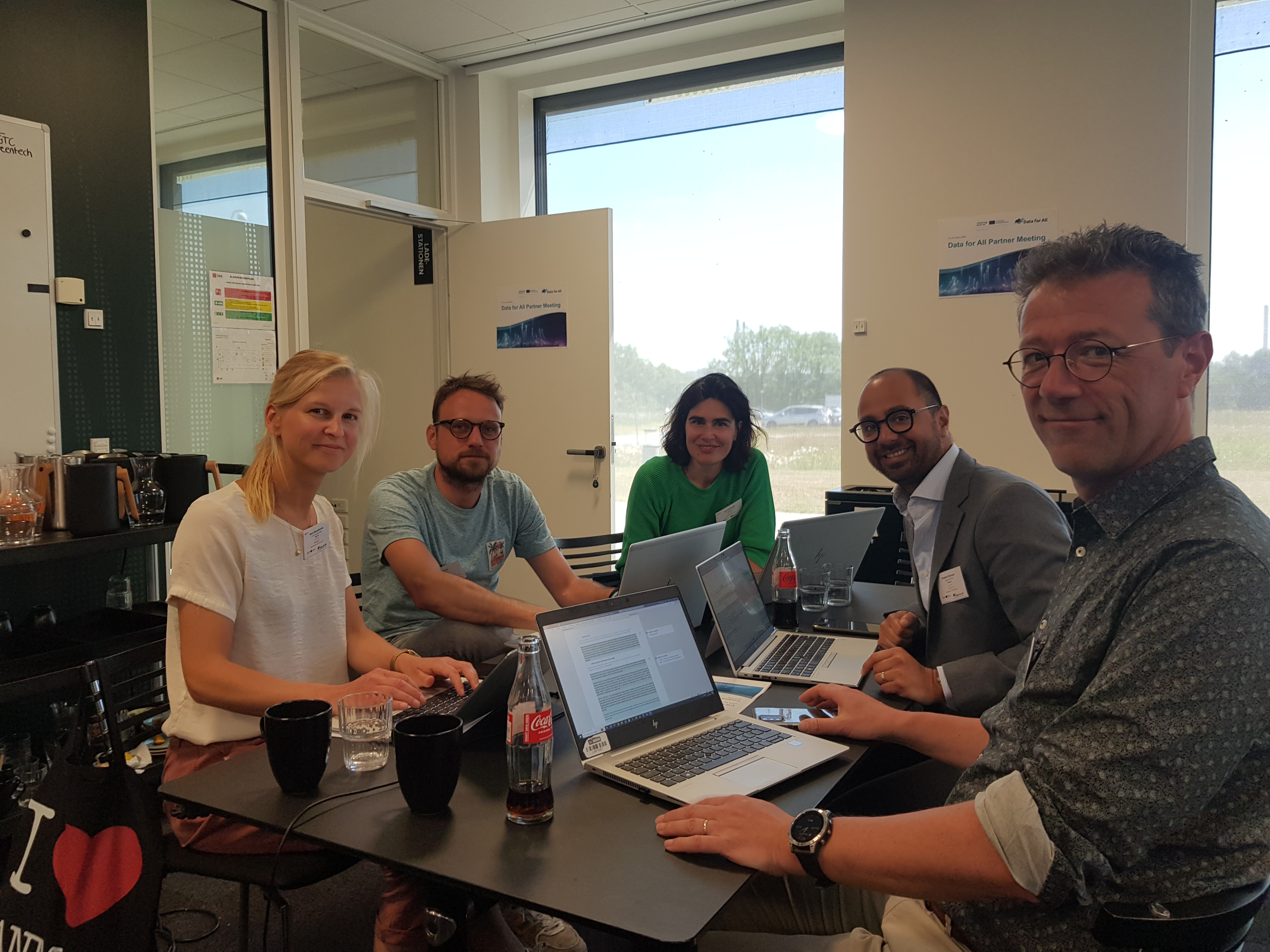
VIVES University of Applied Sciences is a state-recognized higher education institution. Its core mission is to ensure higher education for students at bachelor level in the study areas of Applied engineering & Technology, Biotechnology, Education, Commercial Sciences & Business Management, and Health Care & Applied Social Studies. VIVES will accompany Leiedal and Kortrijk in the strategic and technical definition and implementation of the pilot. It will provide them with framework knowledge around ethical consideration in gathering, analysing, and visualising data.
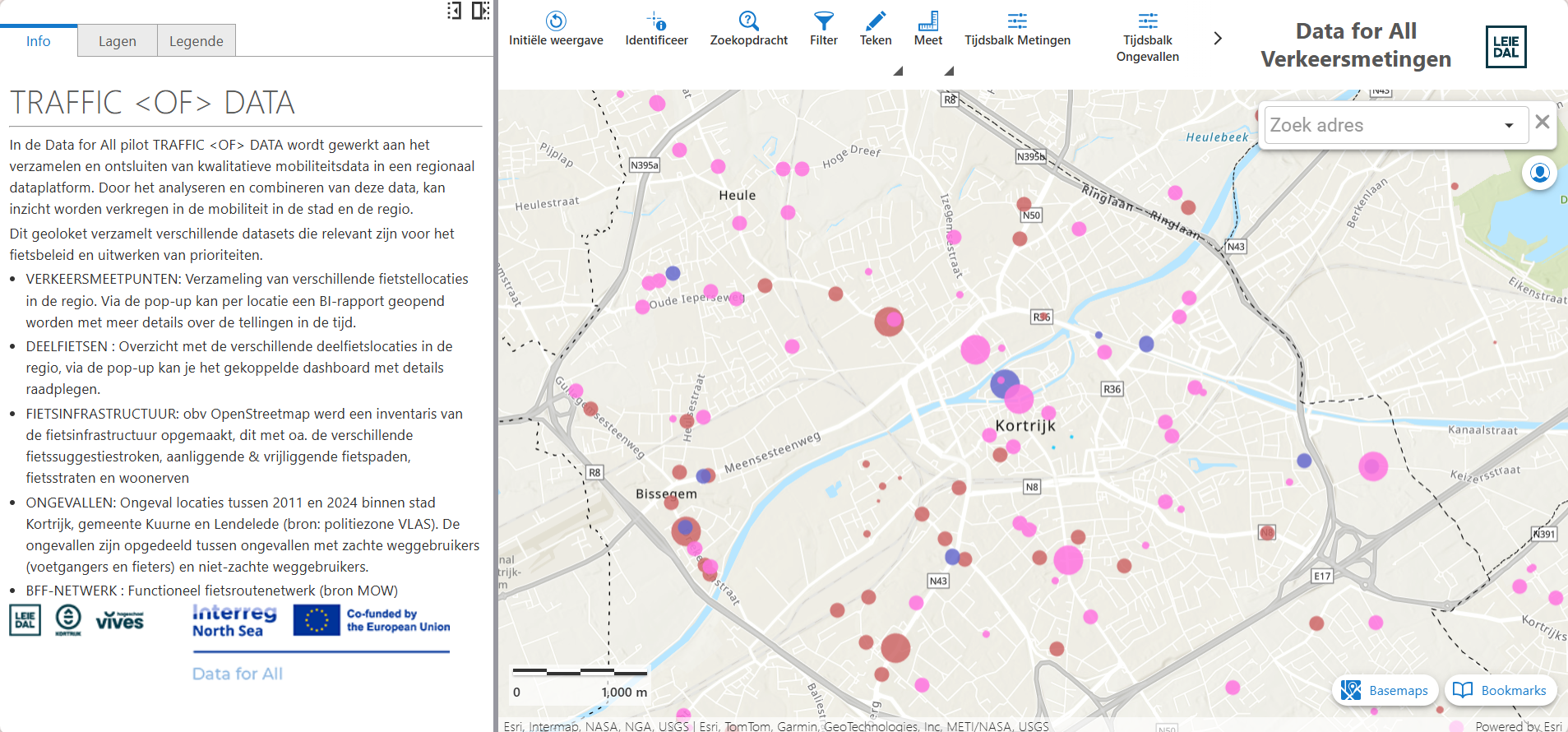
The dashboard Traffic Counts
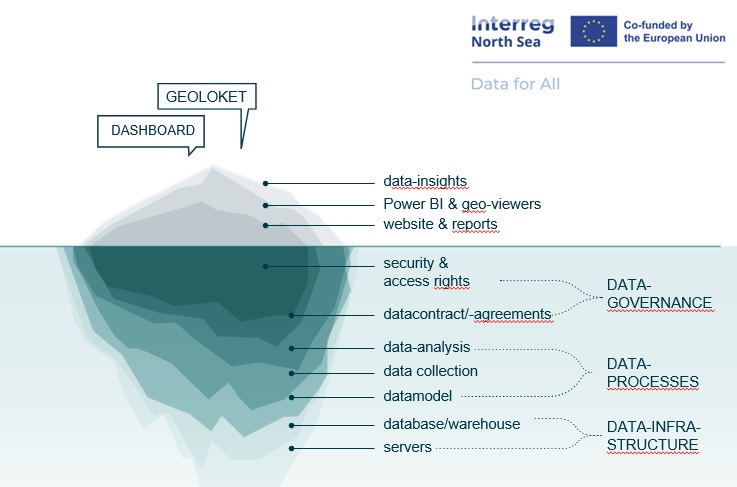
Data iceberg