Ostend Port: LOGISTICS HUBS´ SPATIAL PLANNING/ADAPTATION TO SERVE OFFSHORE RE DEVELOPMENTS (Pilot 5.1)
The 399 wind turbines, installed in the Belgian part o
f the North Sea, are continuously monitored and maintained. A cluster of around sixty companies carries out these works, providing employment for +/- 600 full-time workers. This business cluster is located up and around the REBO (Renewable Energy Base Oostende) heavy weight terminal inside Ostend Port. The Princess Elisabeth Energy Island to be built 45 km from the Belgian coast (off Ostend) is expected to be installed by 2027 to collect electricity from offshore wind farms and transmit it to land. Construction already commenced in 2025 exploiting Ostend port as mainland logistical and operational centre for this offshore work, with vessels and equipment departing from and returning to the port.
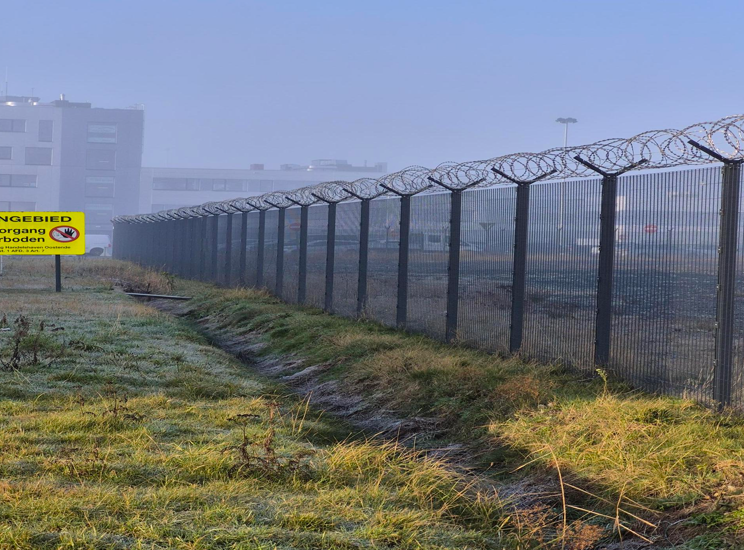
In order to prepare to play a significant role also as future support harbour for the involved energy sector, within DIOL Ostend Port started investing in new equipment and infrastructure adaptation to better serve the new Renewable Energy artificial hub. A fencing compliant with the ISPS (International Ship and Port Facility Security Code) global regulatory framework was set up around the offshore terminal OSSCO (subsidiary of REBO), complemented by cameras and a drone detection system.
BrestPort: LOGISTICS HUBS´ SPATIAL PLANNING/ADAPTATION TO SERVE OFFSHORE RE DEVELOPMENTS (Pilot 5.2)
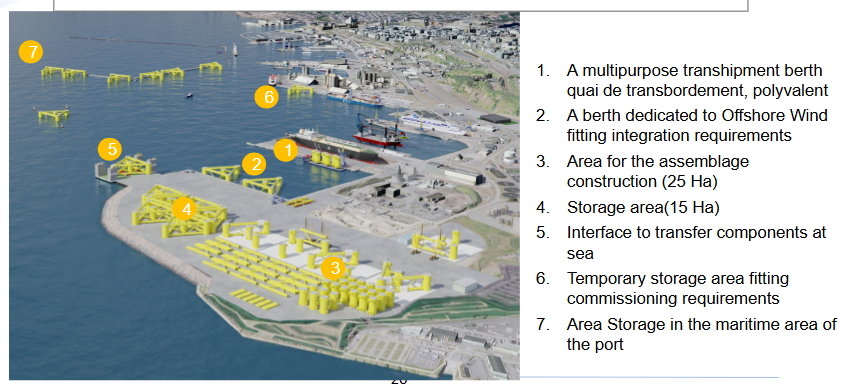
Brest Port has been carring out technical research to adapt the offshore wind terminals to the requirements of the industry, and fitting the fast deployments targeted by the government. Due to its particular geographical location, BrestPort focuses on floating wind technologies; these have specific characteristics in terms of size and weight of the components which require specific adaptations of the terminal to support the necessary weights, the logistic equipment which must be able to transport and load/ unload the components, and the sea areas where the wind masts will be stored. The produced BrestPort studies are divided in five themes:
Terrestrial spatial planning: studies to optimise the land spaces required for the floating wind industry to produce, store and integrate the floaters, masts and rotors, considering forms, sizes of components.
Transhipment: details the most convenient means to unload the components from a service vessel
Launching systems: details means of launching the components at sea and on board a vessels
Maritime Spatial planning: studies the storage of the components at sea
Adaption of the berths (the Offshore Wind berth and the "energy" berth that could be used for transhipment and storage of components).