

When it comes to building climate-resilient cities, no municipality can do it alone. Every project – from redesigning a square to greening a busy street – depends on the collaboration among internal teams, local residents, designers, and many other partners. But how do you ensure that everyone is on board at the right time, with the right level of involvement? That’s where the Stakeholder Integration Guide (SIG) comes in.
Written by Vito Leyssens
Last August, we proudly published our newest tool, the Stakeholder Integration Guide. Here we offer you some more information on why and how to use it!
A practical tool for small and medium-sized municipalities
Last August, we proudly published our newest tool, the Stakeholder Integration Guide. Here we offer you some more information on why and how to use it!
The SIG helps local governments identify and categorise stakeholders involved in public space projects – whether they concern new developments, renovations, or maintenance efforts. It is specifically designed to support small and medium-sized municipalities in mapping both their internal and external partners and understanding how and when to involve them.
The tool consists of two parts: an Excel Worksheet and a step-by-step guidance document. Together, they help project teams structure collaboration from the very start. While ideally used after completing the Green Team Funnel, the SIG is equally valuable as a stand-alone exercise.
From insight to action
In the early stages of a project (or during a reflection moment later on), you and your colleagues of the core project team – often the municipality’s Green Team – complete the Excel sheet of the SIG. By then, a rough project outline, the main climate adaptation challenges, and politically approved goals should already be in place. These can, for example, be defined using the Funnel Tool and its accompanying workbook.
By answering the questions in the SIG Worksheet, users create a clear overview of their stakeholders, categorised according to influence and importance. The result is a visual map of who to engage, when, and how. This structured approach helps municipalities move from scattered contacts to a solid, well-founded action plan for stakeholder engagement.
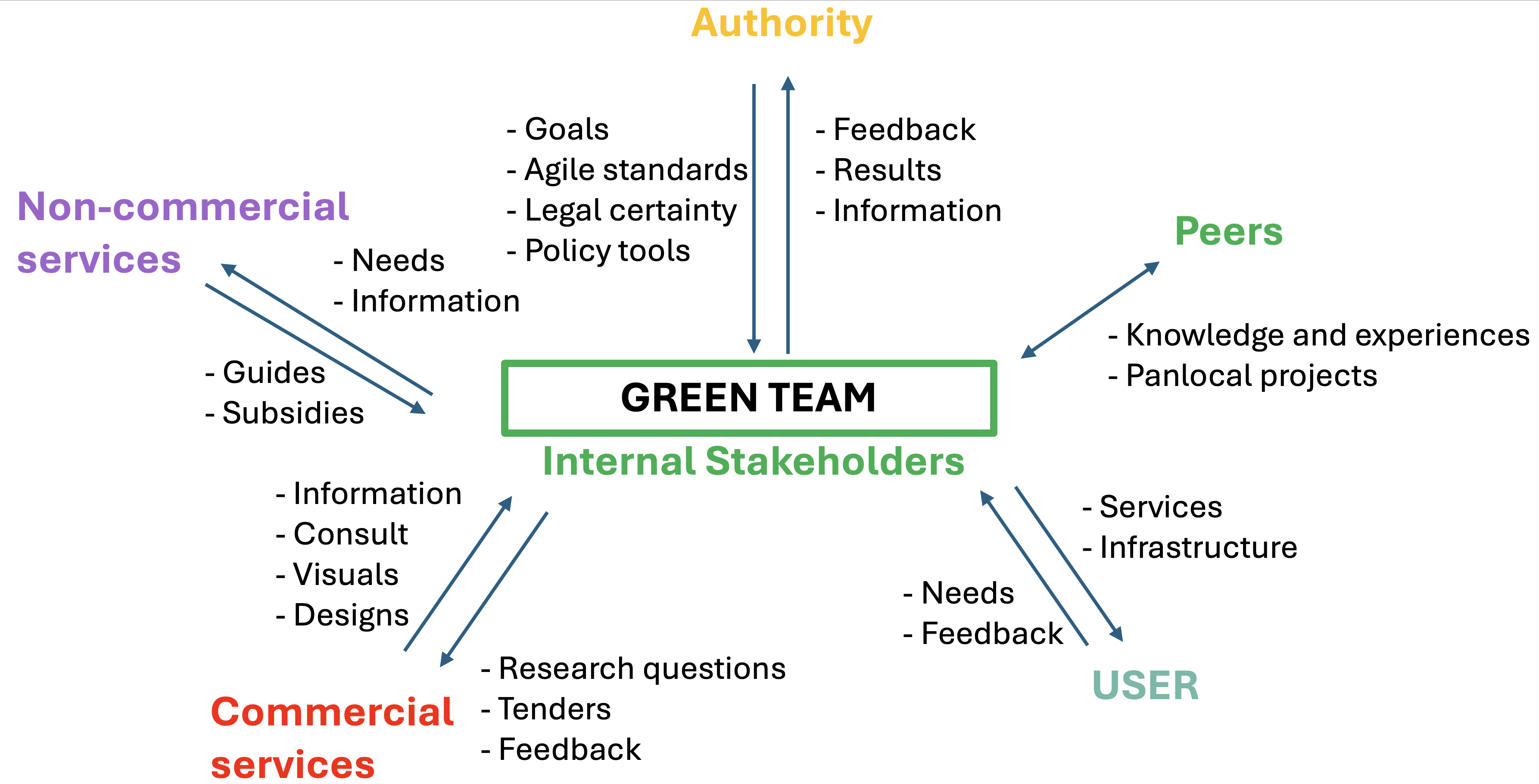
Diagram of the Stakeholder Integration Guide (credits: Green Team project).
Building ownership and embedding climate adaptation
There is no climate-adaptive project without the right partners around the table. The Stakeholder Integration Guide offers a concrete framework for this collaboration. It helps project managers think strategically about the role each partner should play – from internal departments and political leaders to external experts, contractors, and local residents.
Through a few guided steps, municipalities gain a better understanding of the dynamics at play and develop an engagement plan that ensures everyone contributes to shared objectives. This not only strengthens project ownership but also embeds climate adaptation more deeply into municipal policy and daily practice.
From quick wins to a shared, long-term vision
With tools like the Overview of Initiatives, the Green Team Funnel, and now the Stakeholder Integration Guide, the Green Team project empowers municipalities to gradually make their public spaces climate-resilient. Together, these instruments show how technical solutions and participatory processes can reinforce each other, leading to more sustainable and widely supported results.
What once started as isolated “quick wins” is evolving into an integrated approach that tackles flooding, drought, and heat stress – while improving quality of life for everyone.
The next step? An upcoming Green Team tool will help municipalities translate their climate adaptation ambitions into clear design specifications for landscape architects and planners. Read more about how we proceed in this article.
In short: the Green Team project helps local governments anchor climate adaptation into their DNA – ensuring that today’s efforts blossom into tomorrow’s resilient cities.