

MegaBITS project makes international cycling data available with the help of Mobility Data Space
Munich, 20.01.2026. With the official go-live of the Cycle Data Space in January 2026, the EU-funded project MegaBITS is creating a Europe-wide, open exchange platform for mobility and infrastructure data related to cycling. After extensive testing, MegaBITS chose Mobility Data Space (MDS), a data space for mobility-related data funded by the Federal Ministry of Transport (BMV), as the technological basis for the service.
‘With its secure and proven IT environment and existing community, MDS is an enabler for our Cycle Data Space,’ says Casper Van Gheluwe from imec, the technical lead in MegaBITS. ‘It allows data providers to freely decide who can use which data and under what conditions, while at the same time giving us access to a large group of potential data users.’
The MDS allows cycling data to be utilised without having to develop a new data space from scratch. The Cycle Data Space is, so to say, a sub-data space within the MDS. The data is not stored in the data space; data exchange takes place peer-to-peer between data space users. Members of the project therefore have full data sovereignty and can decide whether to make their data sets available only within the Cycle Data Space or also to other users of the MDS, for example.
‘With Cycle Data Space, MDS is expanding its portfolio to include data relating to cycling as a mode of transport,’ says Julius Meyer, Business Development Manager at MDS. ‘The Cycle Data Space demonstrates that MDS is a user-friendly and technically mature platform for national and international data sharing projects.’ The data space was designed from the outset for Europe-wide data exchange, and today one third of MDS members are international organisations from around 20 countries. Data providers from four countries are currently active in the Cycle Data Space.
The Cycle Data Space combines various data points. This includes data on cycle paths, traffic volumes, accident black spots, e-scooter and bike-sharing schemes, the locations of e-bike charging stations and parking facilities, as well as other Intelligent Traffic Service (ITS) data that is crucial for Smart Cycling. This data, along with information on roadworks and real-time weather and air quality data, is intended to help make cycling safer and more attractive. In the medium and long term, the Cycle Data Space should contribute to improving cycling infrastructure in cities and increasing the share of bicycle traffic in overall traffic volume. At the same time, the project is laying the foundation for new business models in the field of micromobility.
The City of Zwolle emphasises that ‘Through the Mobility Data Space, we share data with other MDS members, and the MDS gives us access to valuable mobility data. Together with the other MDS members, we contribute to a more complete picture of mobility and jointly promote smart, sustainable solutions. This enables us to make better-informed decisions and create safe, comfortable, and sustainable cycle routes.’
Several European cities and provinces are acting as data providers for the launch of the Cycle Data Space: the cities of Hamburg and Copenhagen, the municipalities of Enschede and Zwolle, the provinces of Antwerp and Overijssel and the metropolitan region of Le Havre. Other municipalities outside of the MegaBITS consortium have also shown interest in participating. Potential data recipients include municipalities and companies, for example. The Cycle Data Space opens up new opportunities for both groups: infrastructure can be optimised on the basis of data, as bottlenecks such as a lack of parking facilities or accident blackspots can be identified more easily and cycle paths can be better planned. Sharing providers could better position their rental bikes or e-scooters based on demand forecasts, and app programmers could use the data to offer better dynamic route planners. In addition, local authorities can exchange bicycle data with each other in order to internationally compare measures implemented to improve cycling.
Printable images can be found here.
Contact Mobility Data Space
DRM Datenraum Mobilität GmbH
c/o acatech – Deutsche Akademie der Technikwissenschaften e.V.
Catrin Schlatmann
Karolinenplatz 4
80333 München
Mobil: +49 151 52816662
Catrin.Schlatmann@mobility-dataspace.eu
www.mobility-dataspace.eu
Mobility Data Space PR agency
Press’n’Relations II GmbH
Ralf Dunker
Gräfstr. 66
81241 München
Telefon +49 89 5404 722-11
du@press-n-relations.de
www.press-n-relations.com
About the Mobility Data Space:
The Mobility Data Space (MDS) is a data ecosystem where partners in the mobility sector can exchange data on their own terms in order to enable and develop innovative, environmentally and user-friendly mobility concepts. The technical design of the MDS is being implemented in close coordination with European and national initiatives to ensure compatibility with the projects of Gaia-X and other European data spaces. The Mobility Data Space’s operating company DRM Datenraum Mobilität GmbH – a limited company (German GmbH) without the intention of making a profit – grew out of a project initiated by the acatech Foundation. The MDS is funded by the Federal Ministry of Transport (BMV).
The operating company´s partners are the acatech Foundation, BMW INTEC Beteiligungs GmbH, Caruso GmbH, Deutsche Bahn Aktiengesellschaft, DHL Group, HERE Europe B.V., HUK-COBURG Haftpflicht-Unterstützungs-Kasse kraftfahrender Beamter Deutschlands a.G. in Coburg, Mercedes-Benz AG, VDV eTicket Verwaltungsgesellschaft mbH, Volkswagen Group Info Services AG and the states of Baden-Württemberg, Bavaria and North Rhine-Westphalia.

Julius Meyer, Business Development Manager at Mobility Data Space
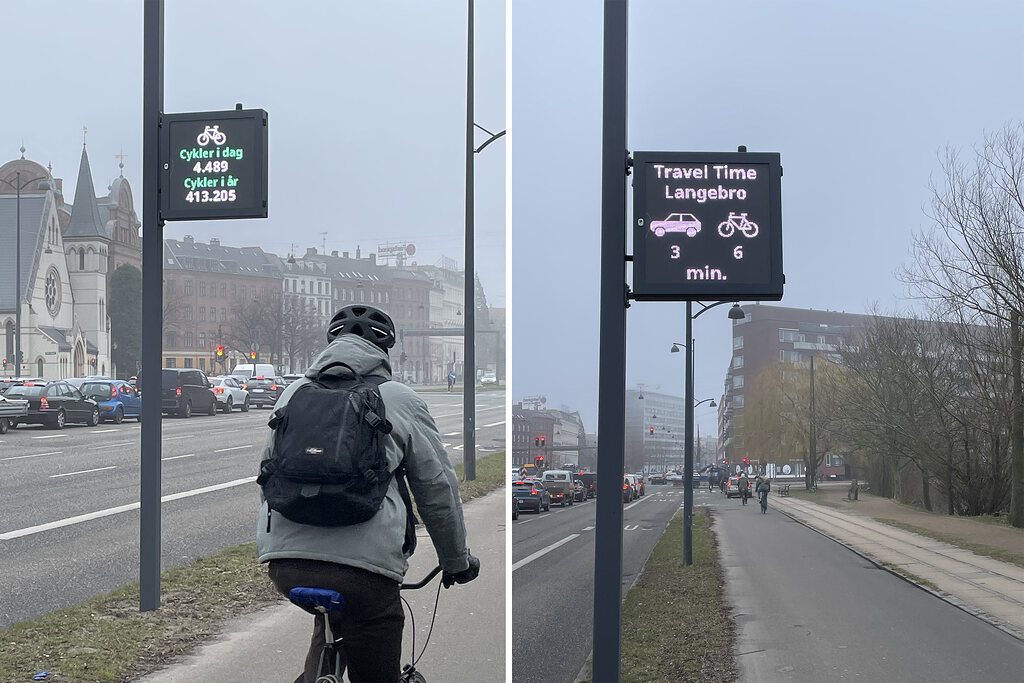
Variable message sign in Copenhagen © MegaBITS
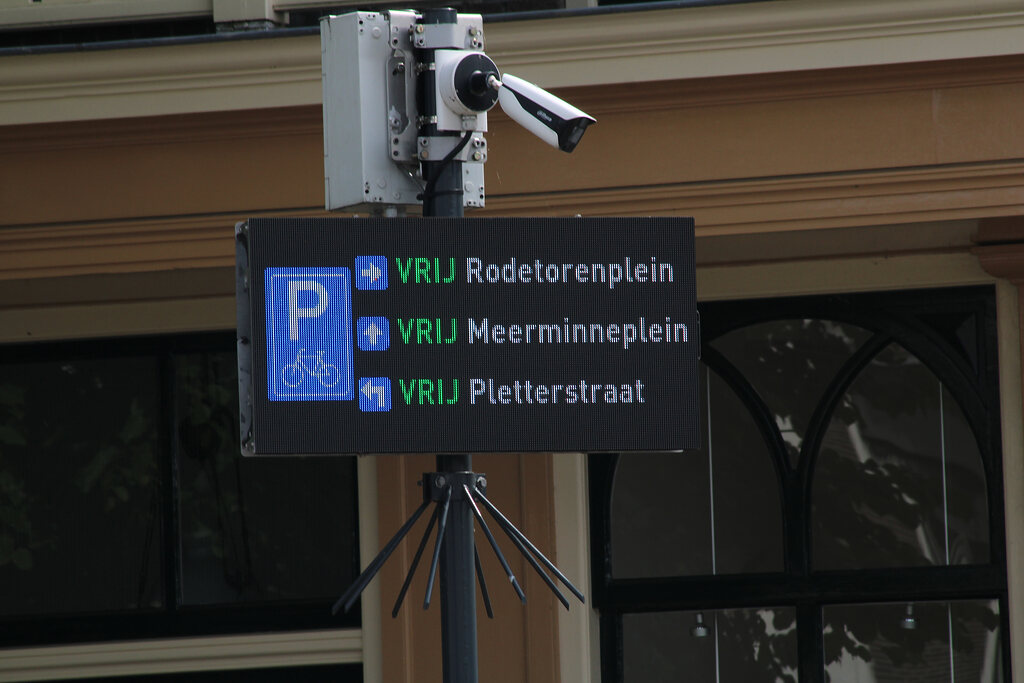
© Mobycon
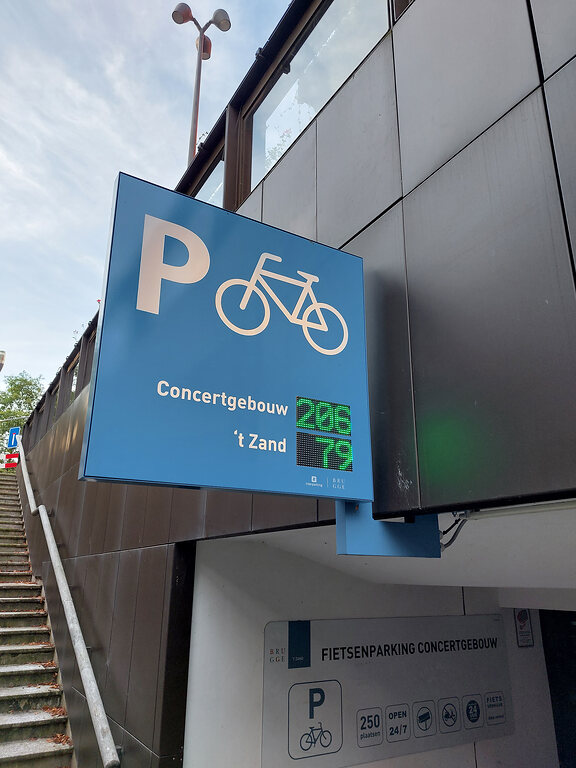
Bike parking in Brugge © Koen Vansteenland