

Building on the previous article on Le Havre Seine Métropole’s advancements in cycling speed data collection, which explored how the counting system was progressively set up and improved, this article takes a step further by looking at what these data actually reveal.
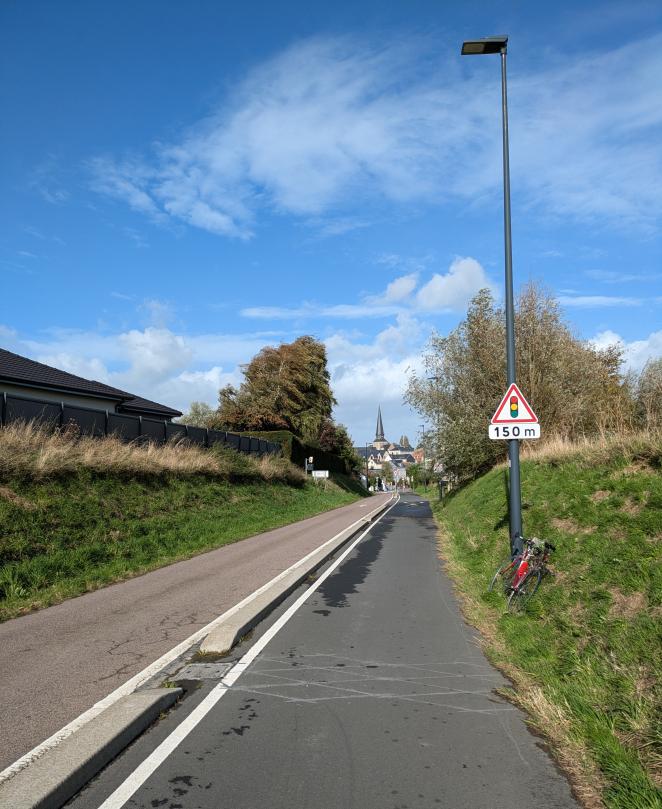
With a more robust dataset now available, the focus shifts from how data is collected to how it can inform our understanding of cycling speeds and, ultimately, infrastructure design.
Through the MegaBITS project, Le Havre has been collecting speed from 39 counters (34 original devices plus 5 newly installed since the start of the project). The analysis focuses on cruise speed in order to better adapt infrastructure to observed user behavior.
To ensure relevance, non-representative data had to be excluded. As a result, 7 counters were isolated due to their placement on hills or near intersections or fences, which could significantly influence speed measurements. Additionally, many counters are positioned at the beginning of bike lanes, often close to constrained entry points. At the time of installation, this placement was more practical, as speed data collection was not yet a primary consideration.
Speed was analyzed across six intervals: 1–5, 5–10, 10–15, 15–20, 25–30, and above 30 km/h. The results show that speeds are widely distributed between 10 and 25 km/h, with a peak observed in the 20–25 km/h range. The more suitable the infrastructure, the more pronounced this peak becomes. This study shows that in Le Havre, a shared lane for pedestrians and cyclists is not suitable in the city center when it serves as a main cycling route. While this relatively high speed can be seen as positive, it also implies the need to adapt curves and intersections accordingly, and to remain cautious in areas where cyclists and pedestrians share space.
One hypothesis is that the increase in speed may be linked to the growing use of e-bikes. E-bikes from Le Havre Seine Métropole services are much more in demand than mechanical bikes. Moreover, the slope between the upper city and the lower parts of the city encourages new cyclists to buy an electric bike.
Following the initial phase of deployment and calibration described in the previous article, this analysis highlights the added value and limitations of speed data when used for infrastructure planning.
The results confirm that data quality, counter positioning, and contextual interpretation are key to producing meaningful insights. Beyond descriptive findings, these first trends already point toward concrete implications for design, particularly in adapting infrastructure to higher cruising speeds and mixed-use environments.
Photos by Aimon Guillaume (Le Havre Seine Métropole).
Find or showcase connected mobility solutions for free in the BITS Directory .