

Last years, our Dutch partner Delphy, carried out an extensive trial with 12 substrates. Based on different potential residual wastestreams, like miscanthus, biowaste compost, fermented corn silage and solid and dried fraction of cow manure. Now the first results are known.
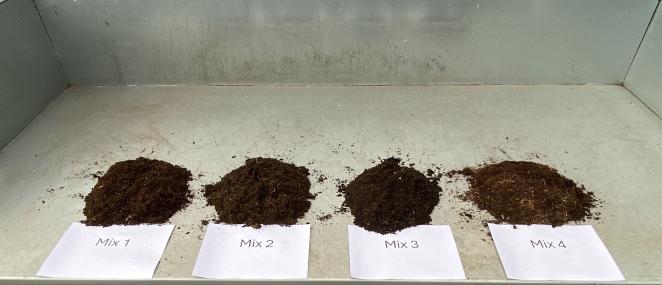
Eleven alternative mixtures
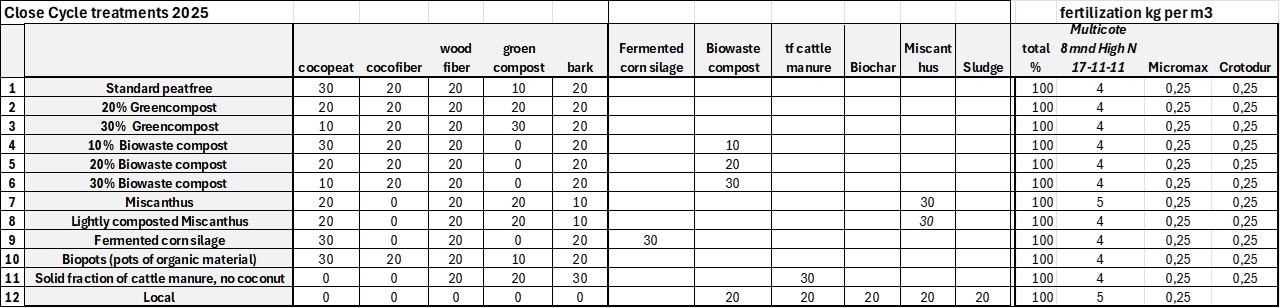
In 2025, Delphy coonducted trials with alternative substrate materials in the tree nursery. Eleven alternative mixtures were created, using a peat-free mix with the certified raw materials coir, bark, wood fiber, and green compost as the standard.
The alternative materials were organic biowaste compost, Miscanthus, fermented chopped maize silage, solid fraction of cattle manure, biochar, and dredged material from local ditches.
Mixtures were used to grow Thuja plicata 'Gelderland' in 3-liter pots. The plants were potted in April and placed in outdoor container fields in several repetitions. Two watering strategies were used.
Photo: Delphy
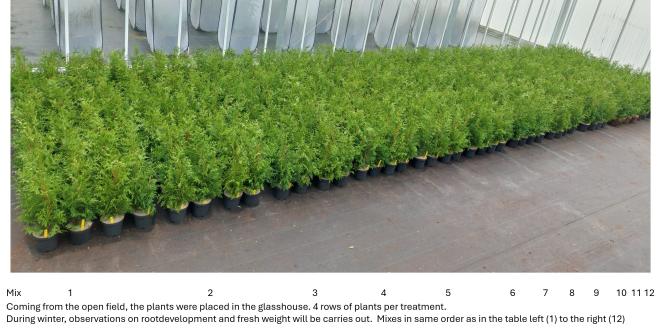
First results season 2025
All mixtures showed sufficient to good growth. Due to the dry summer, the EC (Electric Conductivity) in the pots increased to high values. Varying across treatments. This resulted in only quite small growth reduction or salt damage. Unlike 2024, no nitrogen deficiency was observed. Application of 10%, 20%, and 30% organic biowaste compost didn’t lead to any differences in growth, compared to the certified green compost treatment.
The highest application rates resulted in slightly less growth for both types of compost. The treatments with 30% Miscanthus or 30% fermented maize silage also showed good growth. The plants in the mixtures containing dredged material, biochar, and thick fraction cattle manure were slightly shorter at the end of the growing season but more branched.
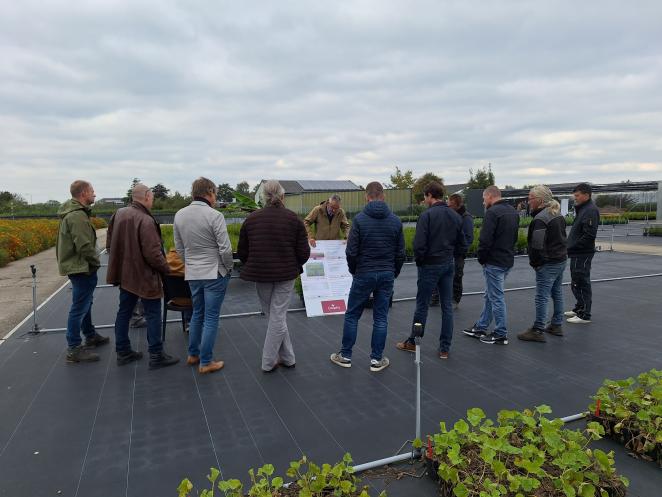
Field visit
On Friday, September 26, the trial was explained in detail to small groups of growers during the Open Day at the Delphy Research Nursery. Growers were very interested in the alternative materials, partly due to the current scarcity of certified substrate materials.
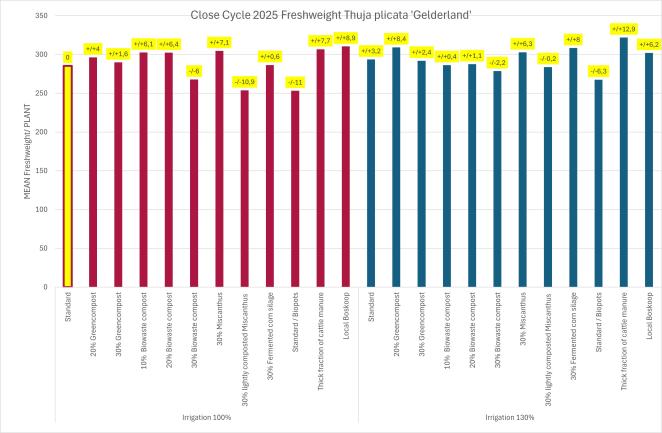
Fresh Weight
In November 2025, the fresh weight of the plants were analyzed. Fresh weight per substrate treatment and within the irrigated and non irrigated plots.
The first conclusions and points of attention from the trial:
- Peat free substrates dry out faster that substrates with peat;
- Crop was tolerant for higher salt concentrations;
- Immobillisation of nutrients takes especially place under wet conditions
- Also biowaste compost was good to use.
- Point of attention for all substrates was the risk of compaction/ shrinking of the substrates