

Last September, our Belgium partner PSKW, presented the results of the long-term compost trial in lettuce. In addition, the design of the most recent silage trial was introduced.
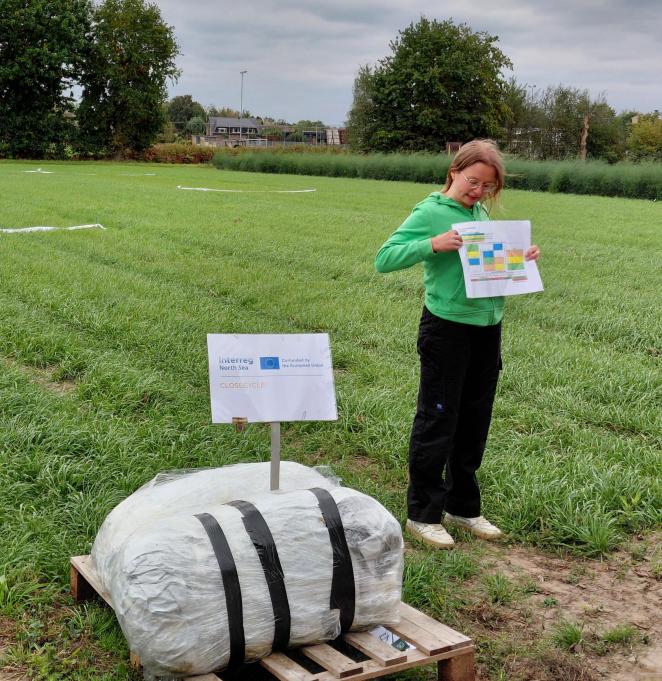
Multi-annual compost trial
This long-term trial on organic fertilization began in 2006 at the PSKW research station. From the start, four types of organic fertilizers were included: mushroom manure, organic waste compost (GFT), green compost, and farmyard manure. These treatments are compared with a reference plot receiving no organic fertilizer, resulting in five treatments in total. Last year, farmyard manure was not applied due to lack of material.
Since 2019, fertilization takes place every two-three years. To allow a fair comparison between the different fertilizers, each product is always applied at a rate supplying 10 tons of organic matter per hectare, even when this exceeds what is legally permitted in practice. This makes it possible to study the long-term effects of organic matter inputs under controlled conditions.
Also this year, after carrying out the trial already 20 years, some interesting results could be seen.
Mineralisation
To evaluate mineralization and nitrogen availability, soil samples were taken on 17 April (one week before planting) and on 26 June (two weeks after harvest). Nmin, the sum of nitrate (NO₃⁻) and ammonium (NH₄⁺), was low in mid-April (Table 3), as expected after winter. Already at this stage, plots receiving organic fertilizers tended to show slightly higher Nmin values. By late June (Table 4), mineralization had progressed substantially. The compost-amended plots showed clearly higher Nmin values than the unfertilized reference.
Soilmoisture
Positive trend was seen in soil moisture. Plots with organic fertilization retained more moisture than those without, even during a period of limited rainfall. Repeated compost application significantly increased mineralization, which in turn built up organic matter. This structural increase improves both soil structure and water-holding capacity. Water infiltrates the soil more efficiently, making it more accessible to the plant. This beneficial effect is especially important in dry periods, when the little water that is available must be retained in the soil and accessible to the crop, rather than lost through surface runoff.
Nitrate residues
Nitrate residue (0–90 cm) was also monitored to assess potential nitrate leaching. At the end of the crop cycle, all treatments remained at or below the Flemish target threshold, even for a nitrogen-demanding crop like lettuce. This indicates that the gradual release of nitrogen from compost can be compatible with low residual nitrate levels when fertilization is properly managed.
Effects on yield
The long-term application of compost also translates into significantly higher yields compared to the plots without compost (Table 5). With a yield increase of more than 30%, red oak leaf lettuce responded spectacularly to these long-term organic matter applications. Previous trials have also shown that lettuce crops generally respond even more positively to organic fertilization than most other vegetables.
For the more detailed report with statistic results and comparisons, see here.