

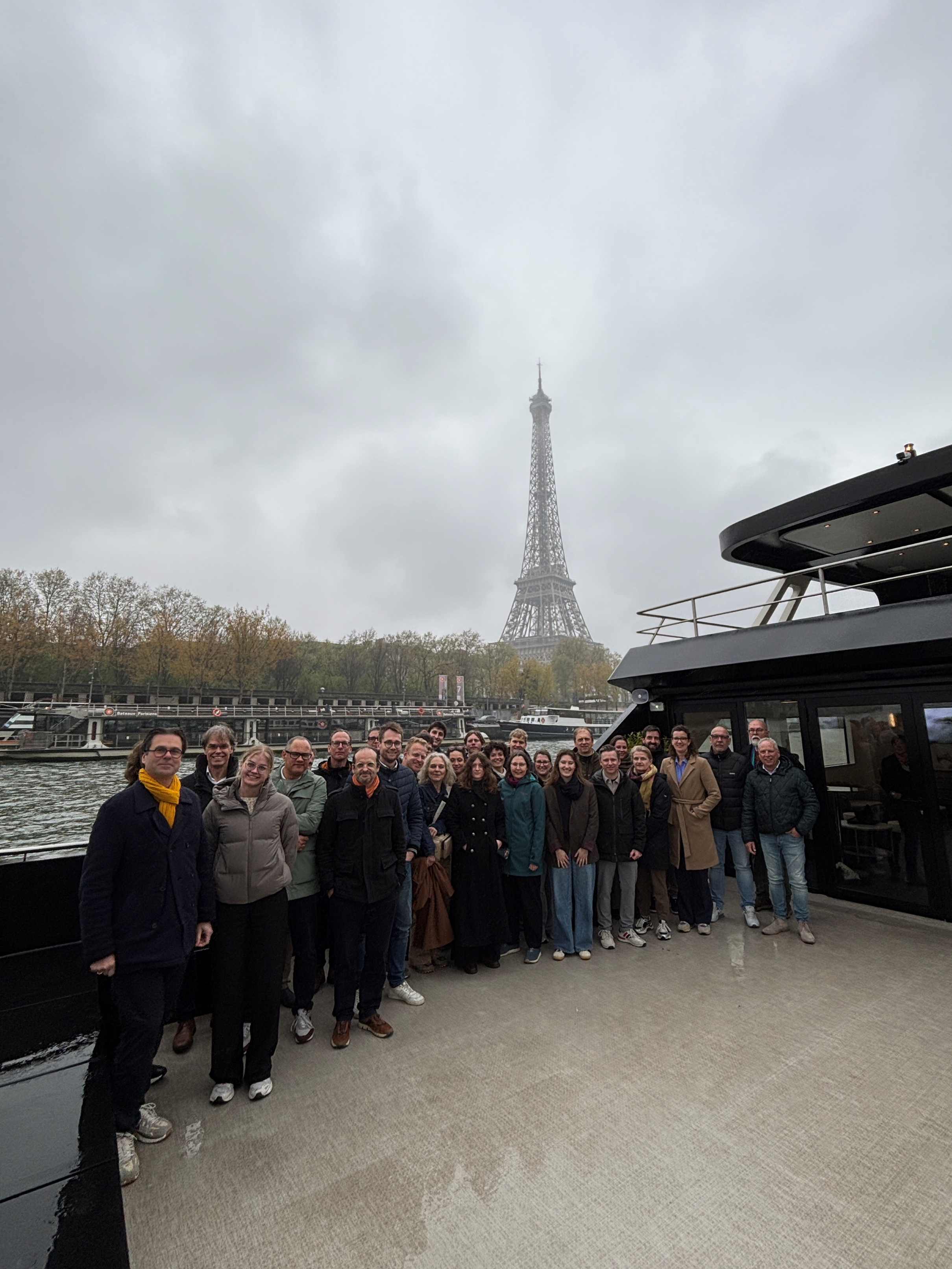
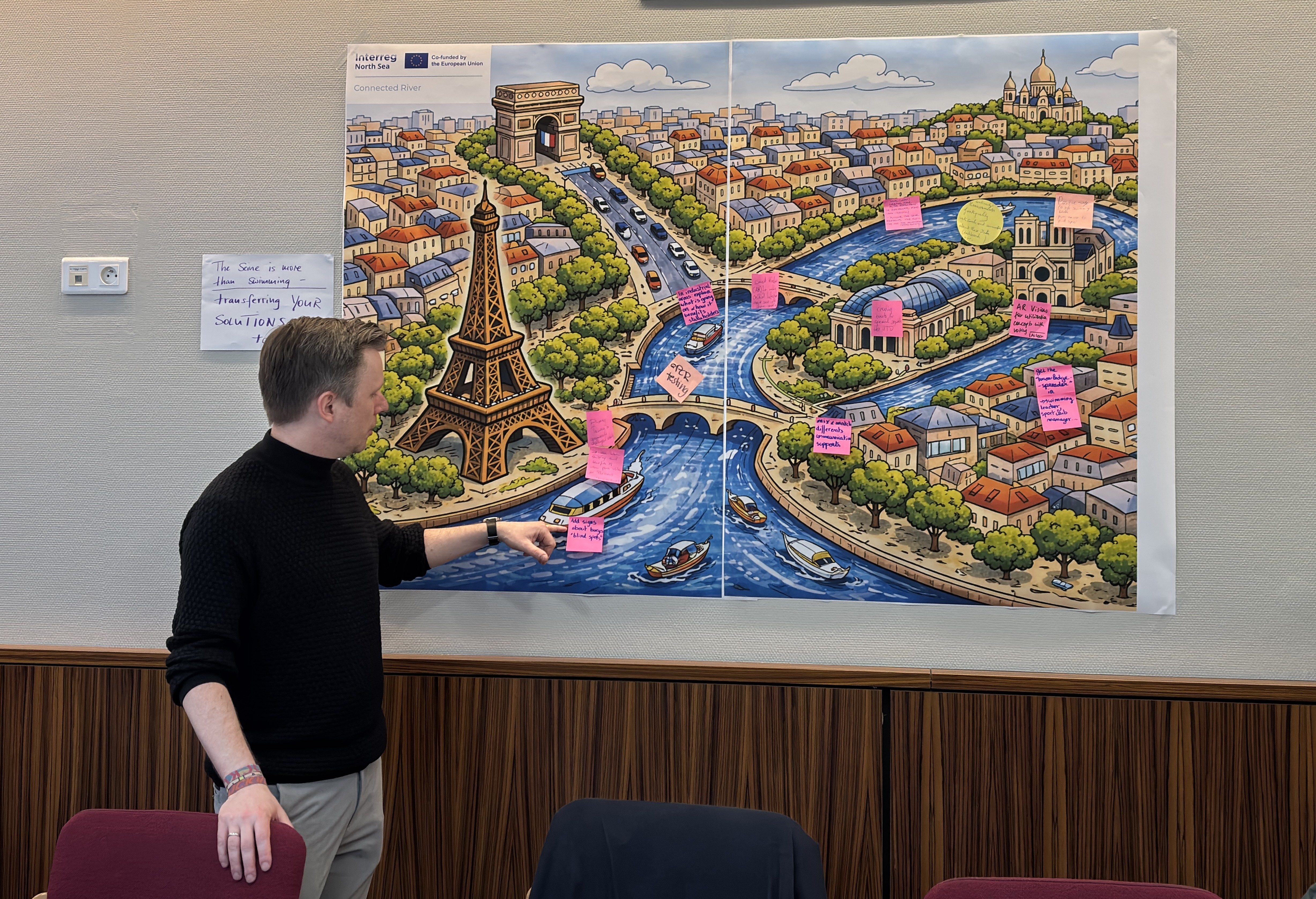
At the beginning of April, Paris became a meeting point for European waterway experts: project partners and experts from the French waterway authority VNF the port operator HAROPA PORTand the City of Paris came together for a multi-day exchange organized by the International Association of Cities and Ports (AIVP), to jointly develop solutions for future-proof and resilient waterways.
A key focus of the meeting was the “Seine” as a central transport artery in an urban environment. Discussions centered on how to better balance conflicting uses between logistics, urban development, and ecological requirements in the future.
During the evening reception hosted by the Dutch Ambassador, H.E. Mr. Jan Versteeg, Marjolijn van de Zandschulp, Chief Engineer and Director of Rijkswaterstaat Oost-Nederland, emphasized the importance of cross-border cooperation in building resilient waterways across Europe. This message was reinforced during a roundtable discussion highlighting the need for strong partnerships across regions and disciplines.
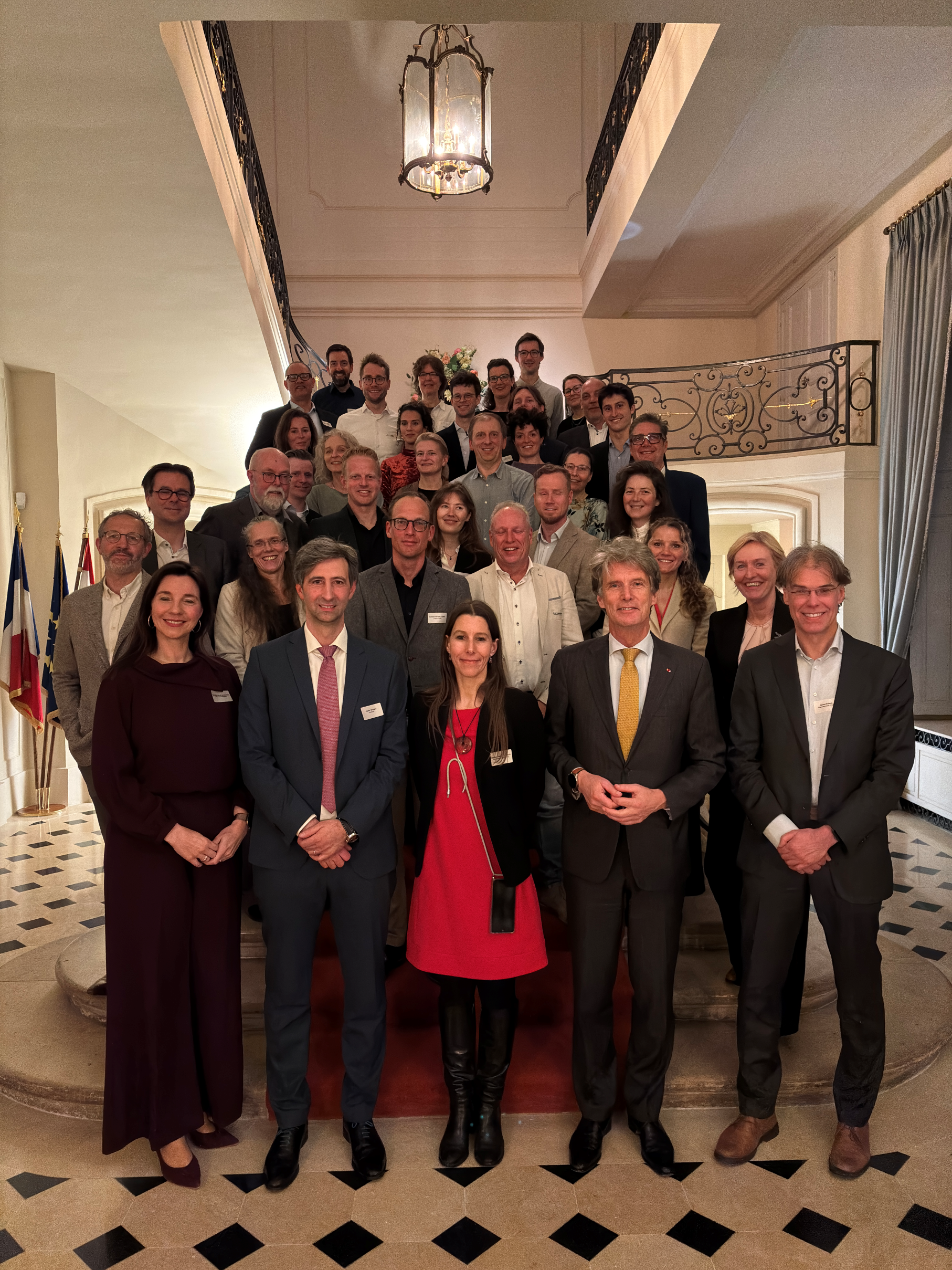
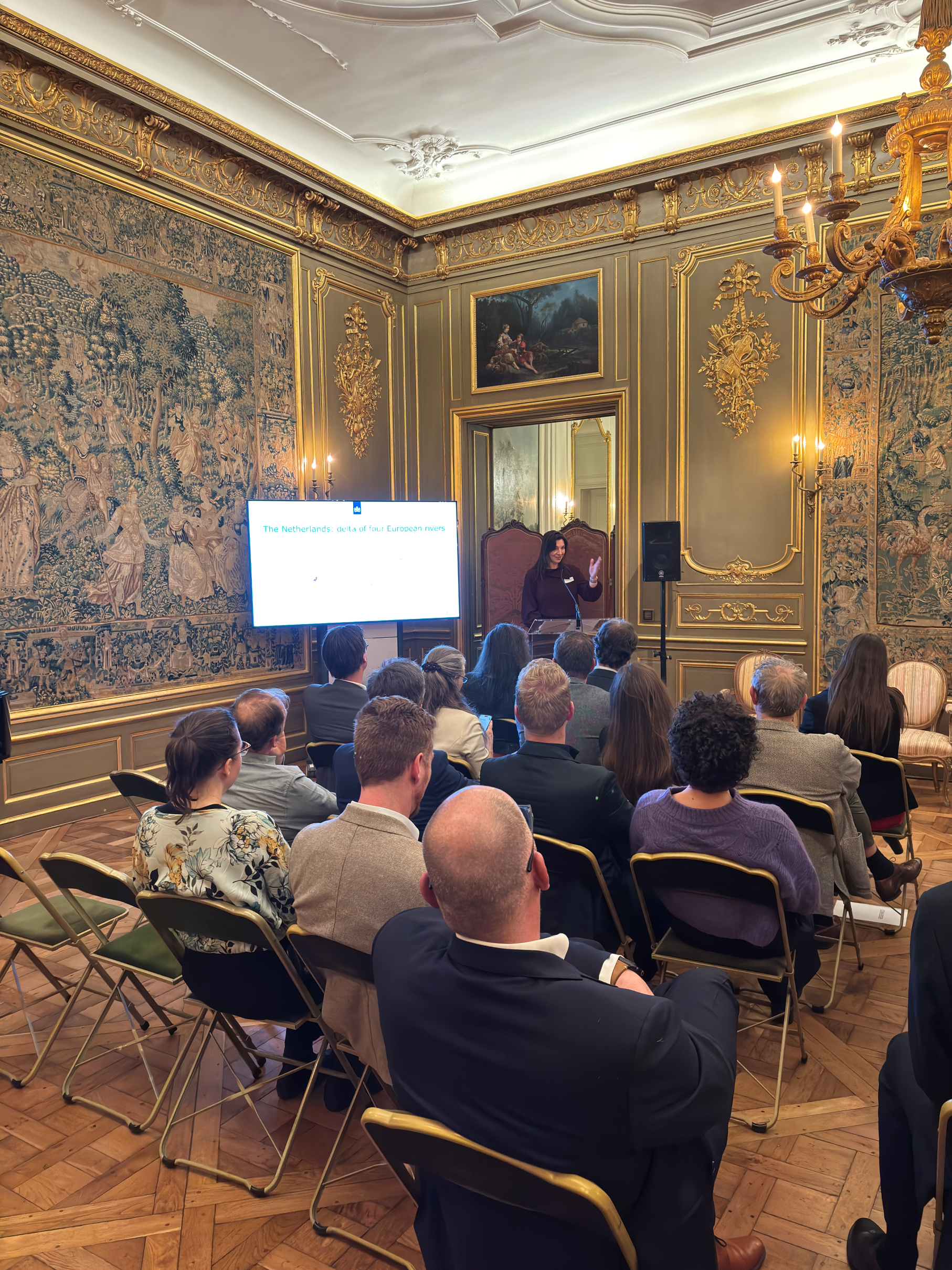
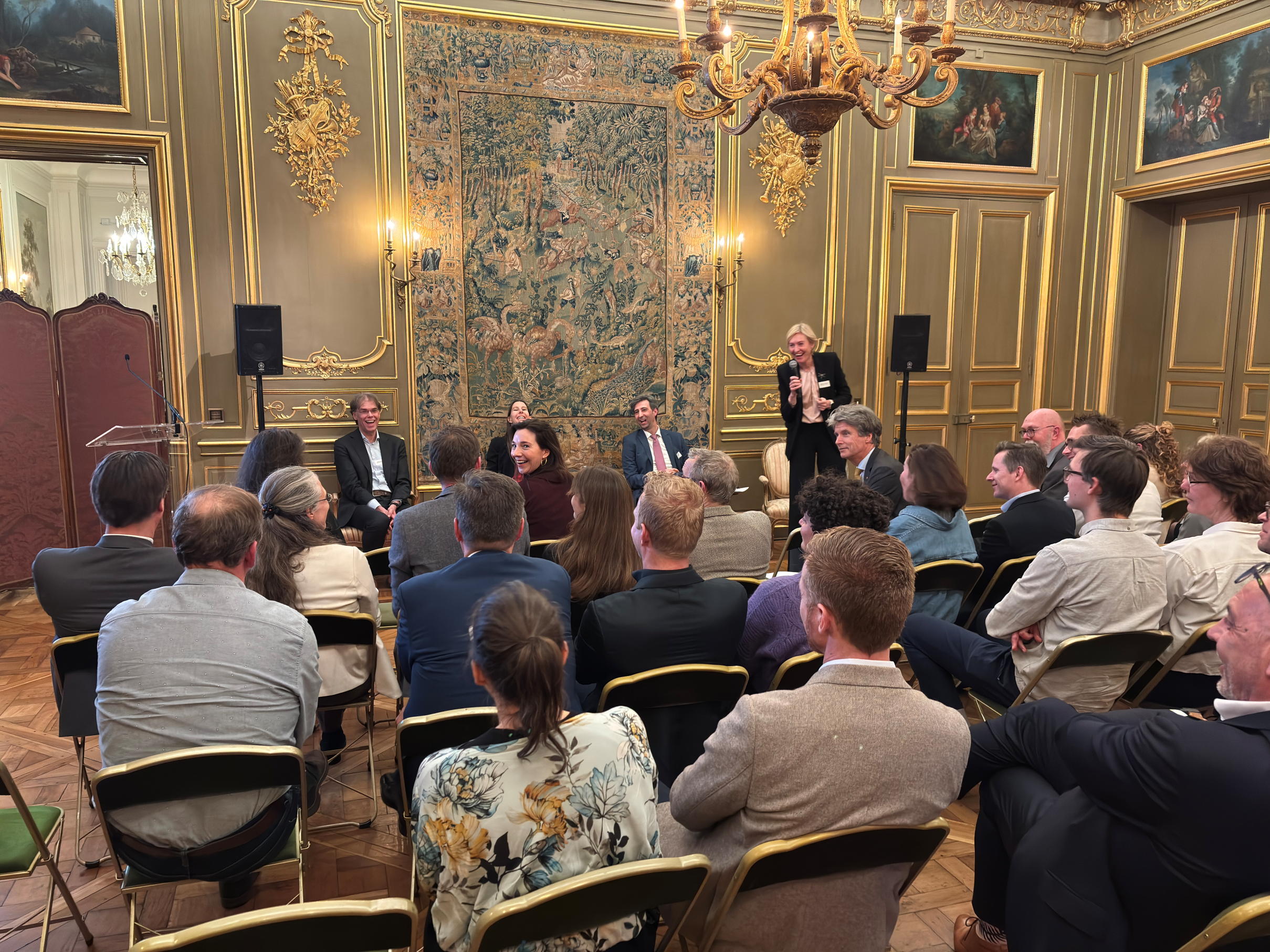
Paris as a Role Model for the Mobility Transition, Urban Shipping, and New Delivery Concepts
Paris is widely recognized as a pioneer and role model for a consistent mobility transition that places residents and users at the center of decision-making. It was particularly impressive to see how pragmatic solutions ensure that the Seine is always taken into account and made accessible to all users and residents as a waterway, transport route, recreational space and urban natural landscape.
Outstanding examples included:
- Concepts for spatially and temporally limited uses that allow logistics and even industry to coexist with residential and leisure activities in the city center
- Operational and functioning delivery concepts using urban inland waterway transport on the Seine, replacing hundreds of truck journeys every day
- A bold vision of swimming in the Seine, which is becoming reality despite challenges – without displacing shipping traffic or other uses
- The creation of new public spaces along the water, contributing to a more livable city and more attractive waterfront areas
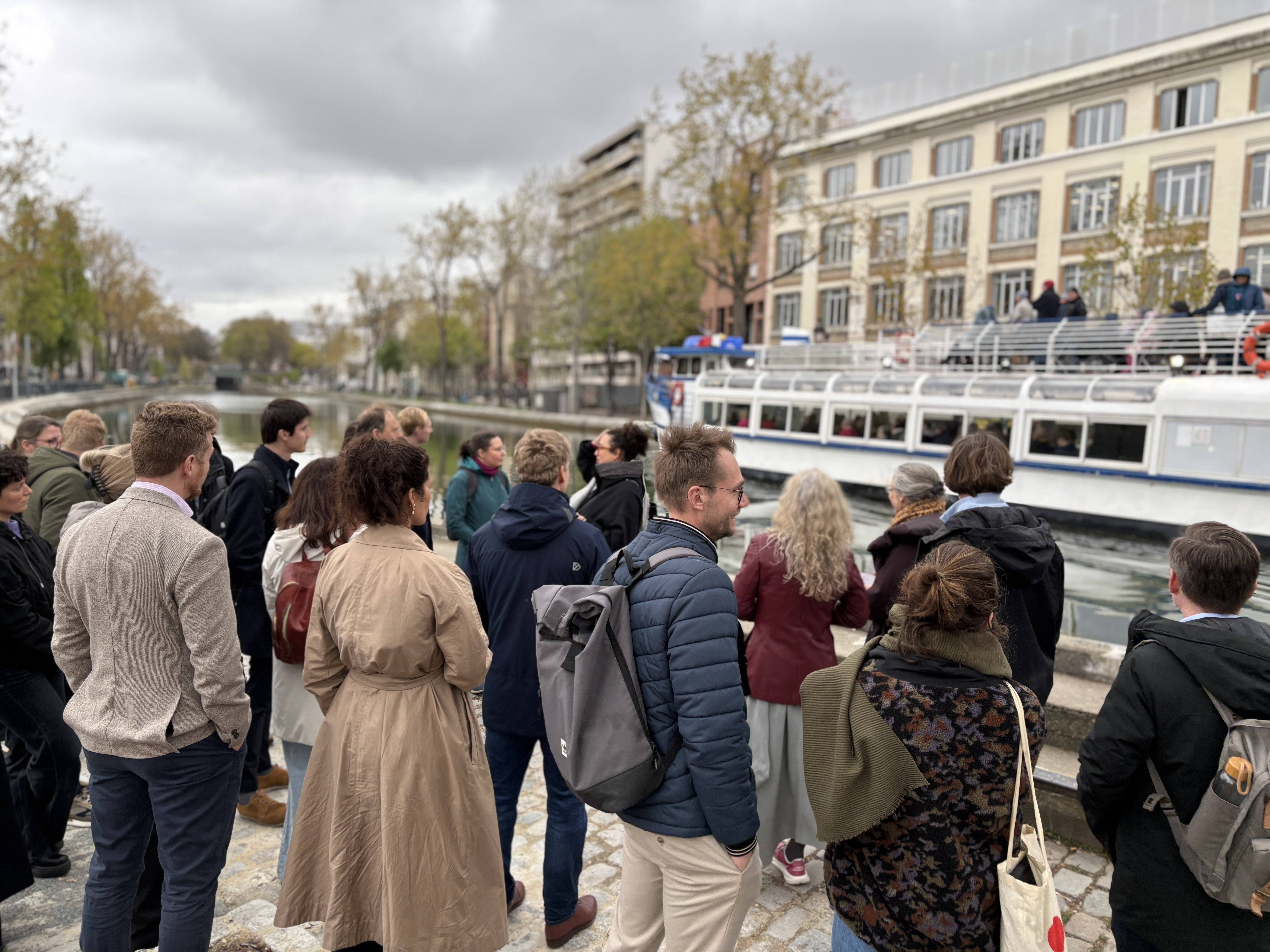
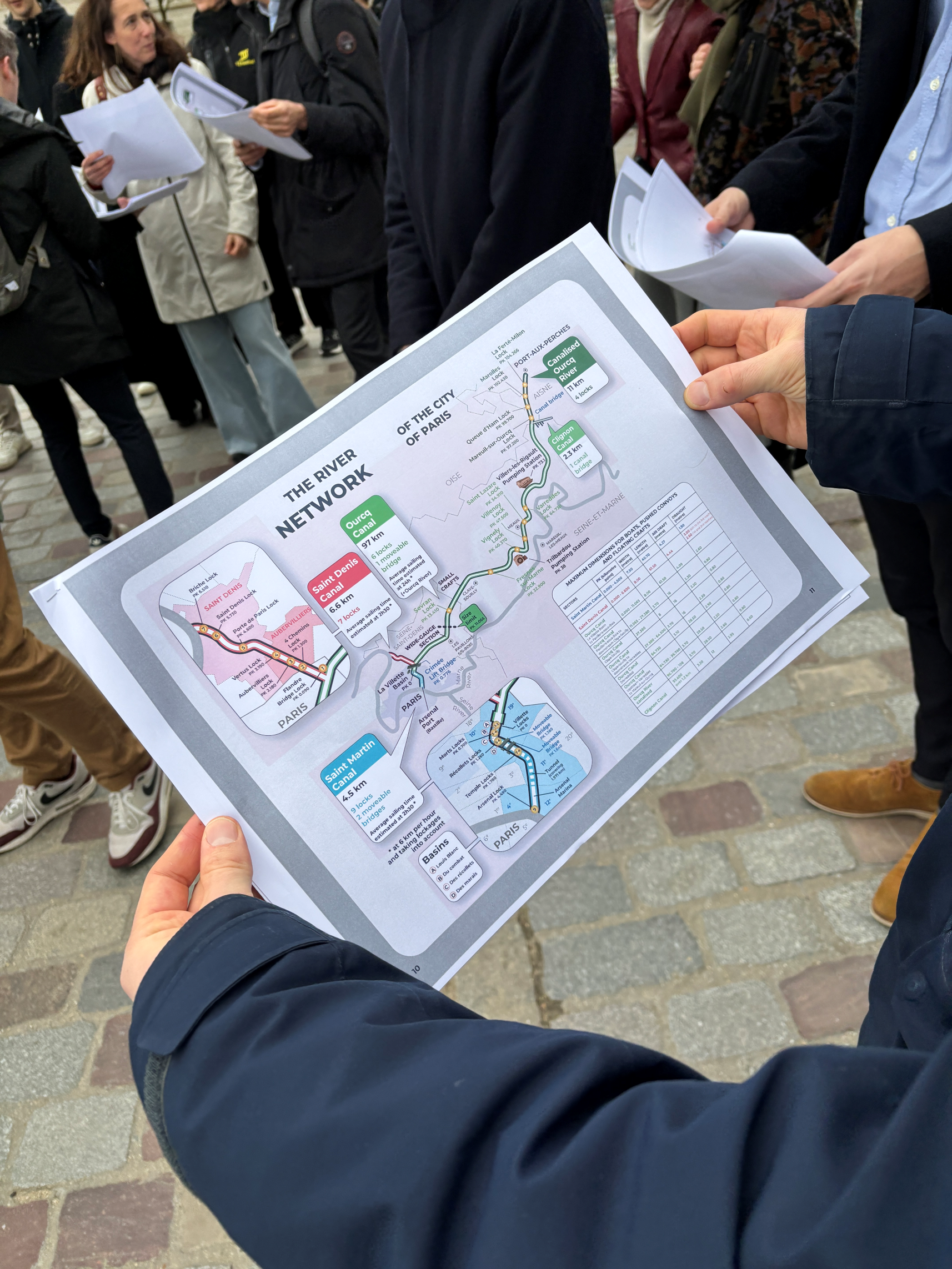
Practical insights were provided through excursions along the “Canal Saint-Martin” and the “Bassin de la Villette”. These highlighted how urban waterfront areas are being transformed into multi-functional spaces that combine logistics, quality of life, and sustainability.
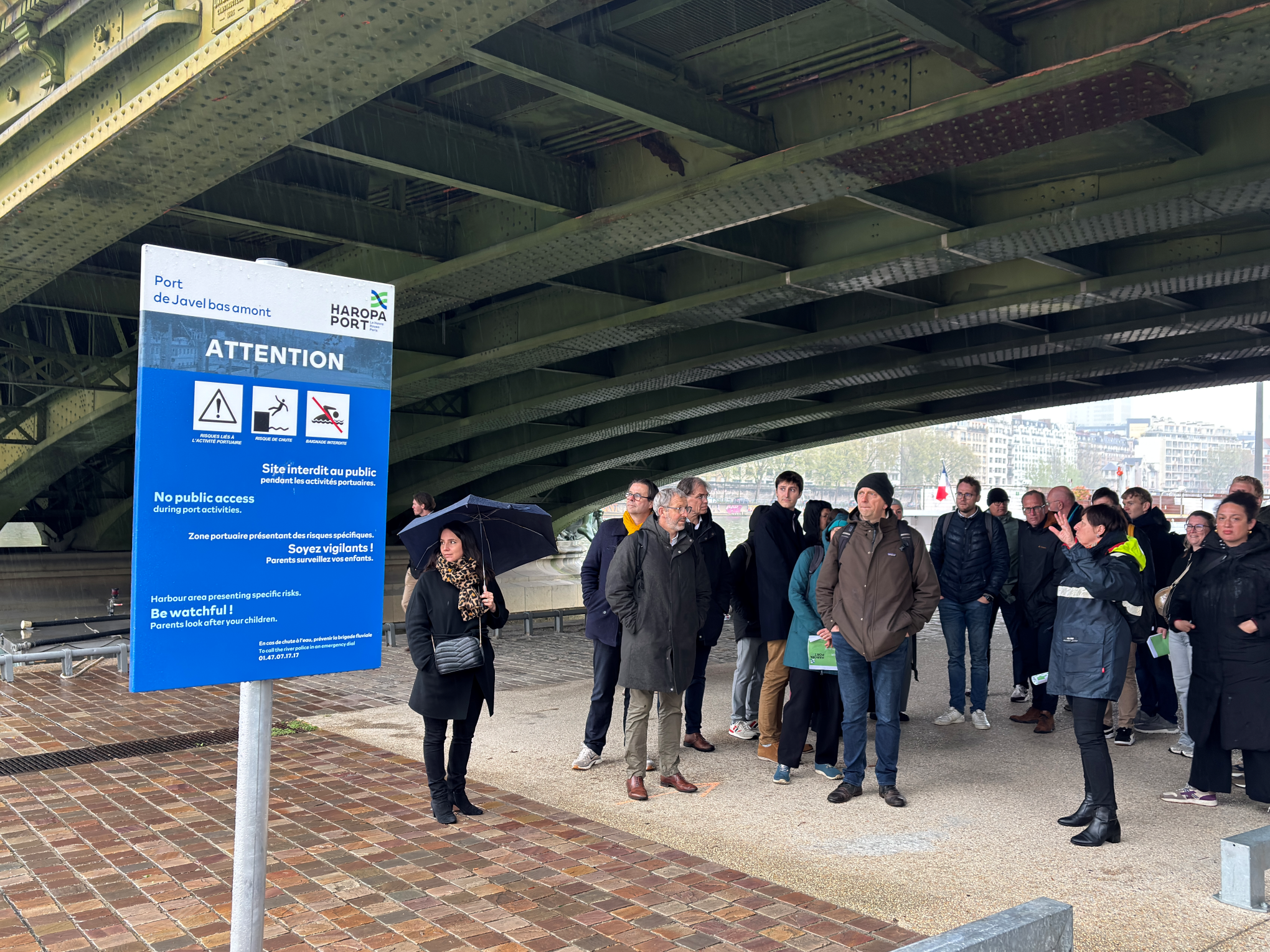
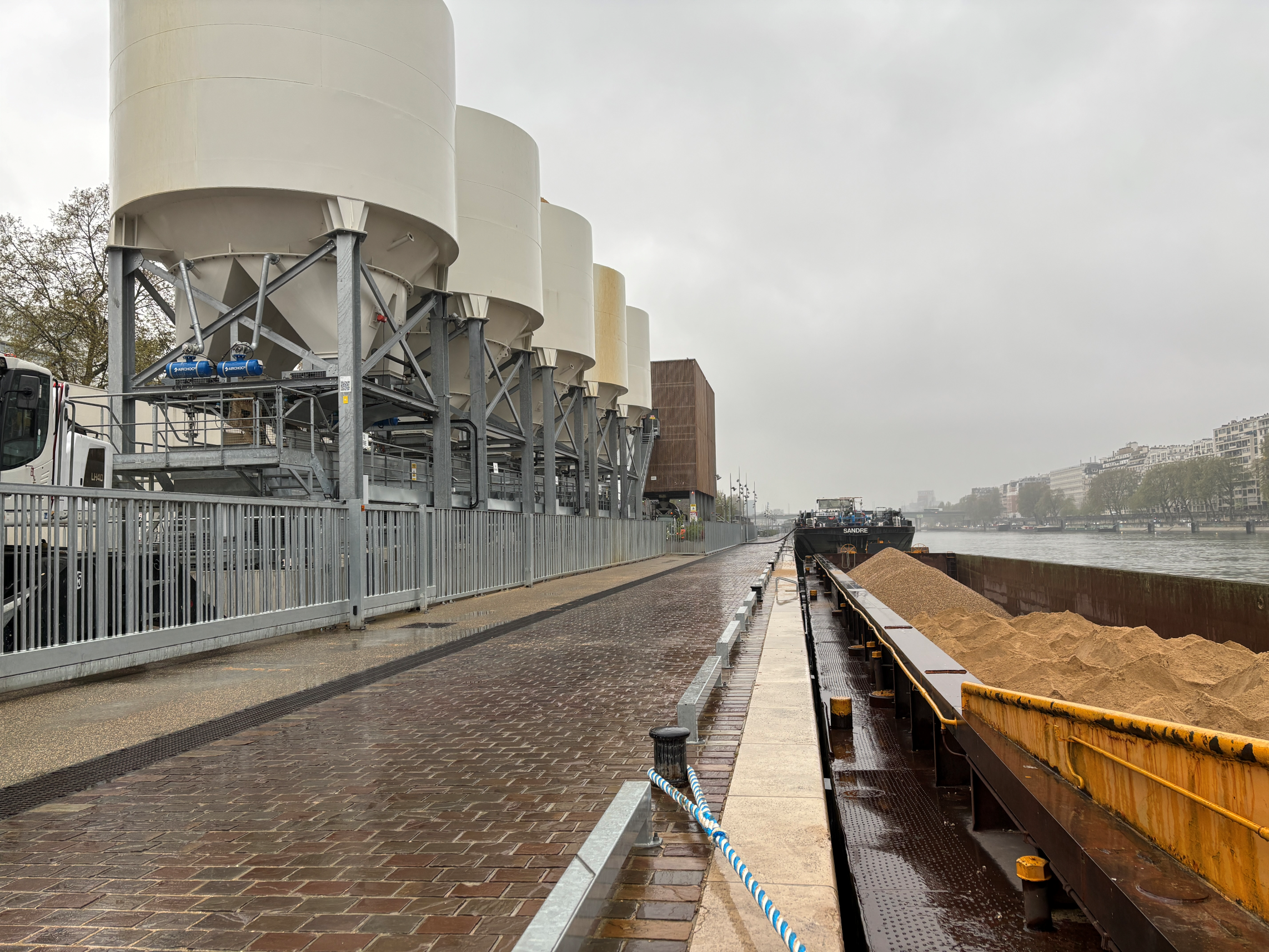
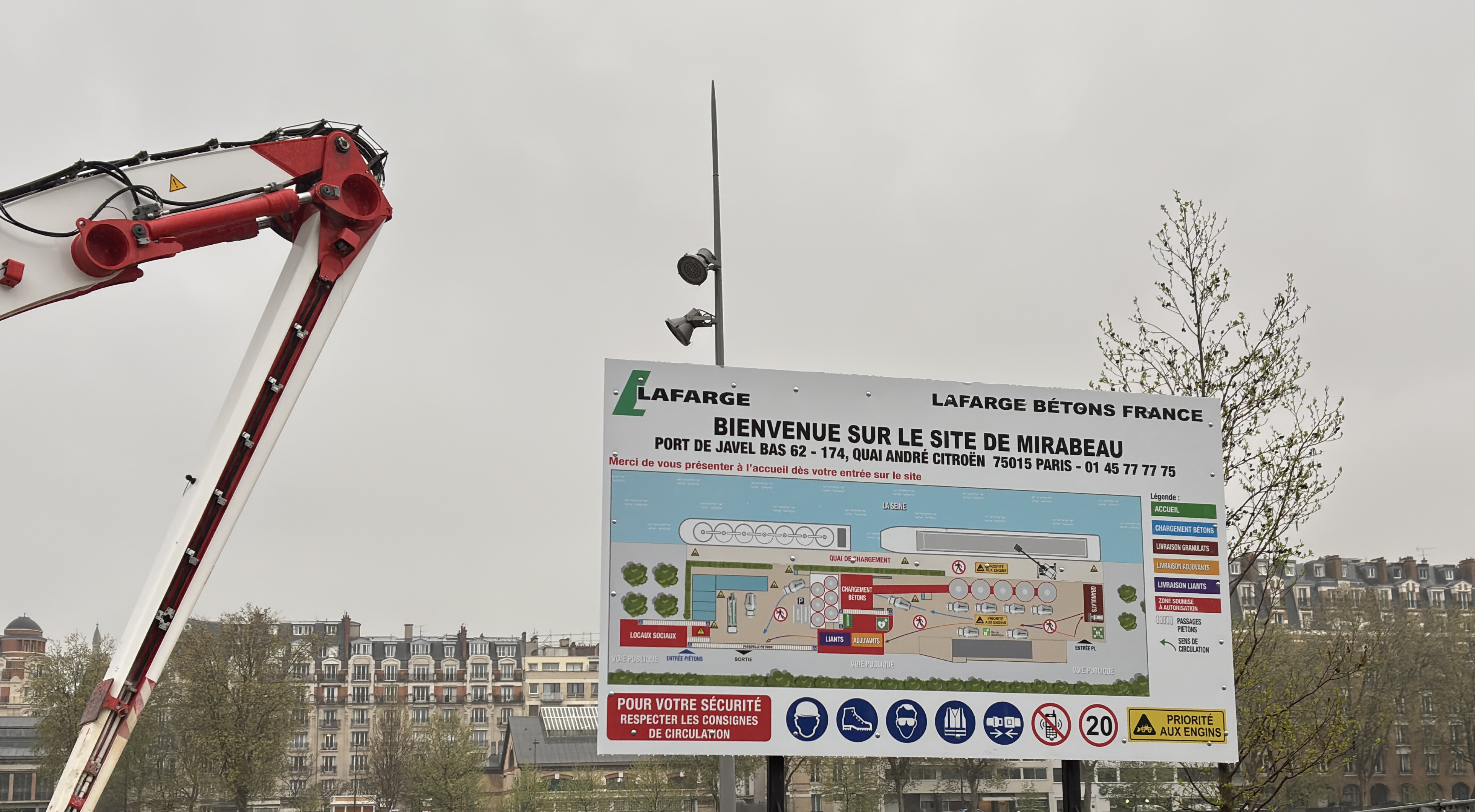
Another highlight was the visit to the Lafarge factory at “Port de Javel Bas”. This modern concrete factory produces ready-mix concrete at a central inner-city location on the Seine for local construction projects and uses the river for transporting materials. This example clearly demonstrates how using waterways for material transport can reduce urban truck traffic. At the same time, modern architecture and surrounding design have created added value for local residents. After operating hours, for example, the quay area is publicly accessible for walking, cycling, jogging, or simply spending time by the water.
Nearby, the retailer “Franprix” supplies around 300 stores in central Paris via inland waterway transport. Only last-mile delivery – from the quay to the store – is carried out by road.
Scaling Innovation
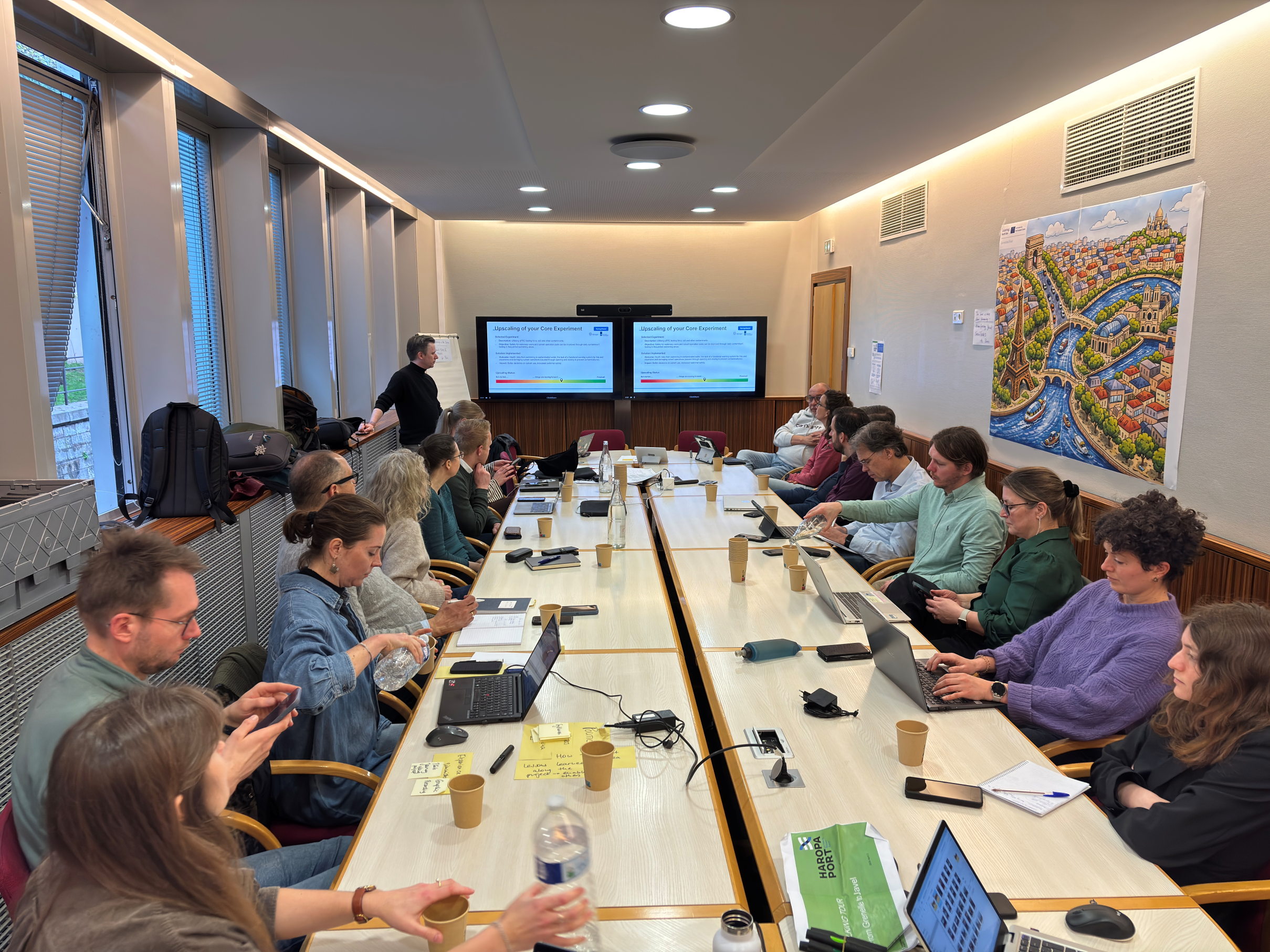
On the final day, the focus shifted to the topic of ‘Up-scaling’. The Hamburg Logistics Initiative will take the lead in implementing and integrating the digital and smart solutions developed over the coming months. There will be three main areas to focus on:
- Spatial upscaling: transferring successful approaches to new regions (such as the Seine)
- Functional upscaling: further developing existing tools for additional use cases
- Structural upscaling: integrating solutions into existing logistics and urban systems to ensure long-term implementation
The goal is to create robust reference models that demonstrate how innovative solutions can be successfully implemented in different geographical and infrastructural contexts.
Looking Ahead
The outcomes of the meeting provide valuable impulses – not only for the further development of European waterways, but also for the strategic orientation of European ports toward greater sustainability, digitalization, and resilience.
On November 17–18, 2026, the Logistics Initiative Hamburg, together with HPA and the Digital Hub Logistics & Commerce, will host the final event of the Connected River project in Hamburg. Further information will be announced here >> in summer.
Source: LIHH