

Following the first visit to Ameland in February, 2026, students return to Ameland to deepen their understanding of real-world sustainable building challenges as part of the Short Advanced Course (SAC) on Integral Construction developed by Firda under the NESSIE project.
To read part 1 of this series, click here.
After an initial introduction to sustainable construction on Ameland, the next phase of the Short Advanced Course (SAC) on Integral Construction moves from observation to application. Where the first visit focused on understanding the context and ambition behind the new KNRM boathouse, this second phase challenges students to engage with the complexity of real-world project preparation.
This progression reflects a core principle of NESSIE: combining technical learning with hands-on, place-based experience to prepare the next generation of energy transition installers.
From Site Visit to Work Preparation
In February 2026, students from Firda were introduced to the KNRM boathouse project through site visits and expert guidance. Building on these insights, they returned to the island on 12 March for a second, more advanced programme day.
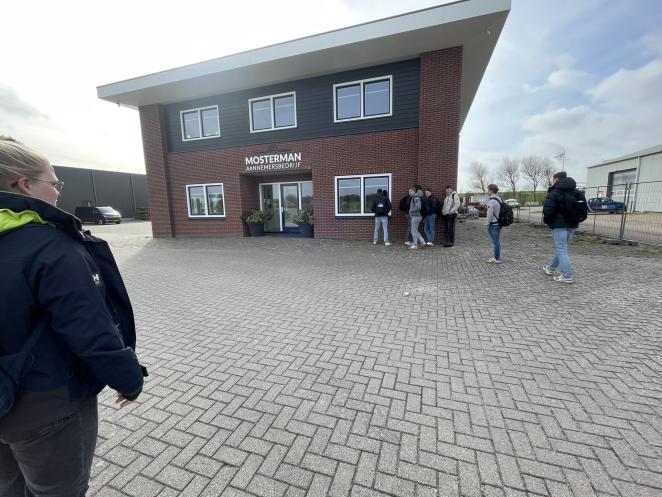
This time, the focus shifted towards work preparation and planning: a critical but often underestimated phase in sustainable construction. Students visited local installation company Installatiebedrijf R. Oud and contractor Mosterman to explore how technical decisions translate into executable plans.
Building on an Island: A Logistical Reality
Planning a construction project on an island introduces a layer of complexity that goes far beyond standard practice. Students quickly discovered that even well-structured planning becomes a multi-dimensional puzzle when logistics, regulations, and environmental constraints intersect.
Key challenges explored during the visit included:
- Transport limitations: Materials and equipment must be transported by ferry, restricting size, timing, and flexibility
- Protected environments: The KNRM site lies within the Wadden Sea area, limiting construction methods such as pile-driving
- System design constraints: Sustainable buildings require careful planning to avoid issues such as legionella in water systems
Through direct interaction with industry professionals, students were able to explore not only the challenges, but also the decision-making processes behind viable solutions.
Learning Through Problem-Solving
Rather than theoretical exercises, the course places students in realistic problem-solving scenarios. During the visit, discussions focused on how to adapt technical solutions to local constraints.
For example, instead of conventional foundations, students examined the use of 24-metre grout screw piles combined with rubble foundations – a solution that meets both environmental requirements and logistical limitations, while remaining feasible within island transport constraints.
Similarly, installation experts demonstrated how piping systems in sustainable buildings must be designed to actively prevent legionella (pneumonia-causing bacteria), highlighting the importance of integrating health, safety, and sustainability considerations from the outset.
This open exchange between students and professionals is central to the NESSIE approach: learning is not one-directional, but collaborative and grounded in practice.
Preparing for Real-World Delivery
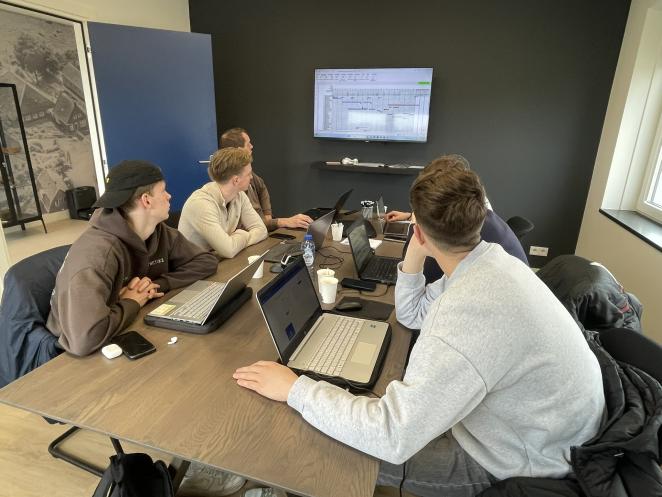
Armed with new insights, the students returned to the mainland to continue developing their work preparation and improvement plans. Within a matter of weeks, they will present their proposals back to the same companies and stakeholders who guided them.
This feedback loop—learning, applying, and validating—is a defining feature of NESSIE’s training model. It ensures that education remains aligned with real industry needs while giving students early exposure to professional expectations.
The next step in the programme will bring students back to Ameland once more, where they will assess the KNRM boathouse in the context of a multi-year maintenance plan, further expanding their understanding of lifecycle thinking in sustainable construction.