

24/03/2026
3 minutes
Stakeholder Mapping: General reflections after the quality check
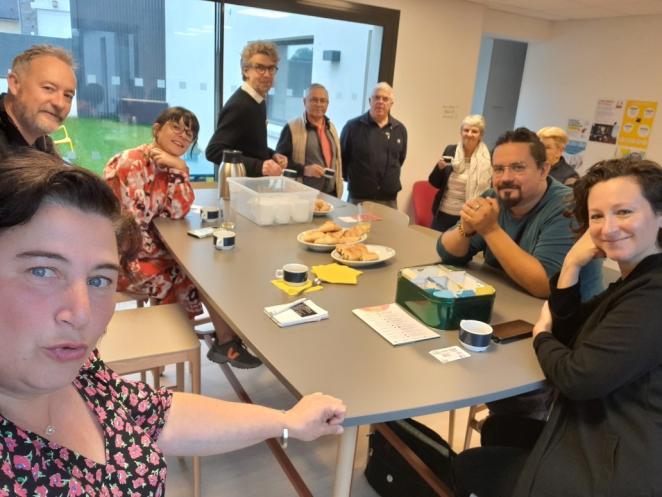
Morning meeting for entrepreneurs at SIRR hub Arobase - Louvigné du Desért
- Blurring of stakeholder categories in small communities
In rural, coastal and small‑scale contexts, stakeholders rarely fit neatly into a single Multi‑Helix category. Organisations often span several roles simultaneously—public, civic, commercial, or knowledge‑based—and the same individual may hold influence across multiple domains. This overlap challenges traditional mapping exercises but also highlights the value of flexible, context‑sensitive interpretations of the Multi‑Helix model.
- Dependence on key individuals and the fragility of personal networks
Many relationships are maintained not at organisational level but through key individuals or “champions”. This raises important questions: How can personal trust be translated into organisational commitment? What resilience mechanisms are needed when champions change jobs or retire? Strengthening institutional memory and formalising informal links may be essential to reducing dependency on single individuals.
- Project formats shape the durability and depth of relationships
Several hubs note that stakeholder engagement is often tied to specific project cycles. When a concrete project exists, stakeholders can allocate time and resources; outside these frames, engagement becomes harder to sustain. This suggests a strategic need for hubs to articulate clearer reciprocal value, develop long‑term collaboration agreements, and explore hybrid models where project‑based cooperation is supplemented by broader partnership commitments.

Skagen, Denmark
- The significance of physical meeting places for anchoring and trust-building
A physical hub or meeting space serves not only as a gathering point for activities but as an anchor of legitimacy and presence. It enables cross‑Helix encounters—industry meeting academics, citizens meeting public officials—and fosters relational density that digital interactions struggle to replicate. In some cases, the value lies not in strengthening the hub’s own relations, but in enabling connections between stakeholders who would otherwise not meet.
- Quantity versus quality of stakeholder connections
Mapping exercises sometimes identify actors who are relevant to the wider system but not necessarily meaningful partners for the hub. This raises strategic questions: Should the hub cultivate many weak ties to maintain broad awareness, or prioritise a smaller set of deep, strategic relationships aligned with its mission? Concepts such as “influence”, “importance”, and “potential impact” may help determine which relationships matter most. Considering a “dream configuration” of Multi‑Helix partners can help clarify long‑term ambitions.
- Culture and local environment as enablers of engagement
Cultural norms, community dynamics, and the specific environmental context shape how relationships can be built and maintained. Local identity, shared stories and the sense of belonging can serve as powerful entry points for engagement—especially in places like Skagen, where landscape, heritage and maritime culture are central to community cohesion. Understanding these cultural drivers may help hubs tailor engagement strategies that resonate more deeply across stakeholder groups
Share this article: