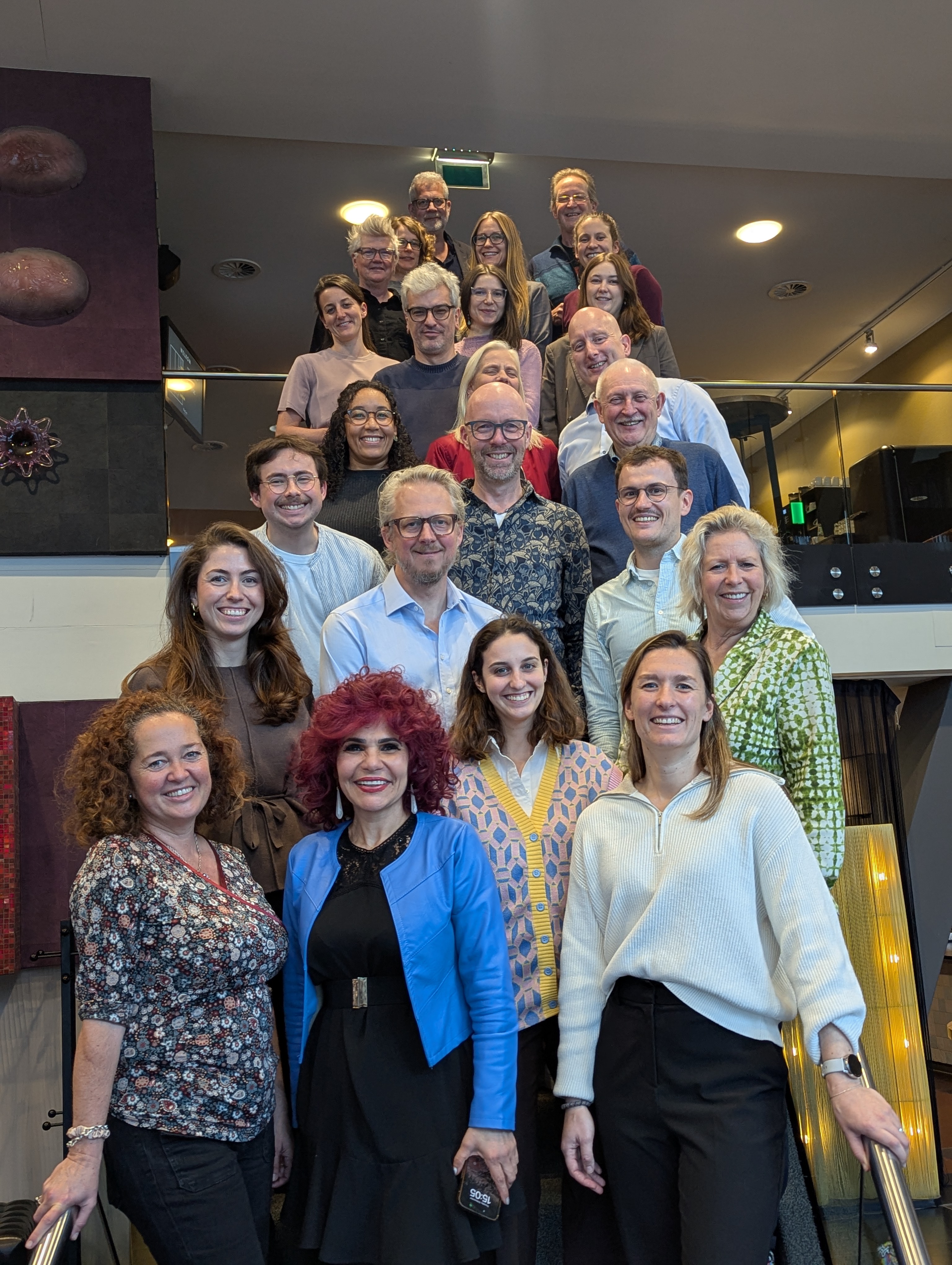
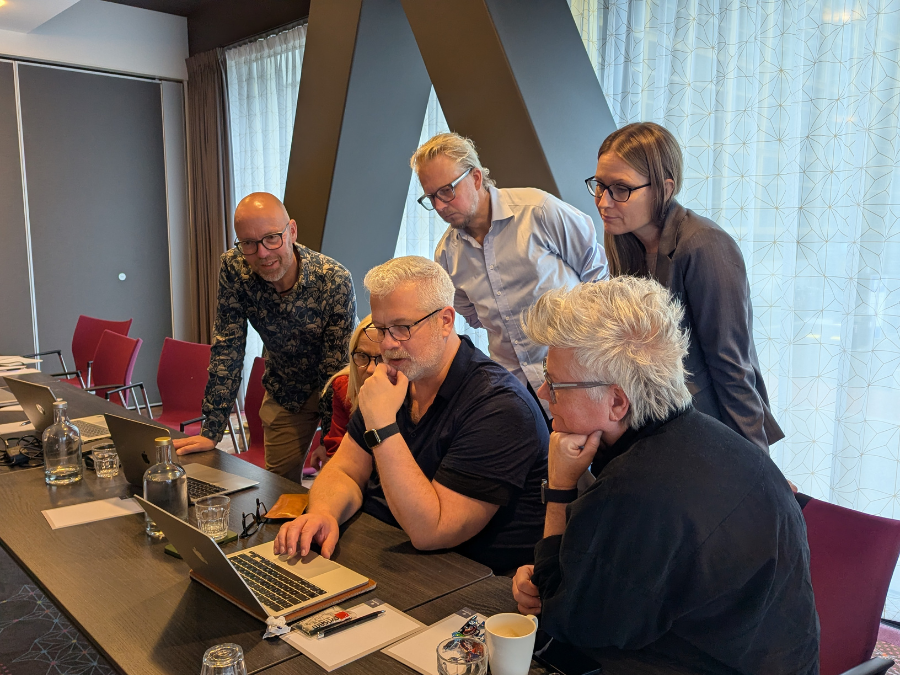
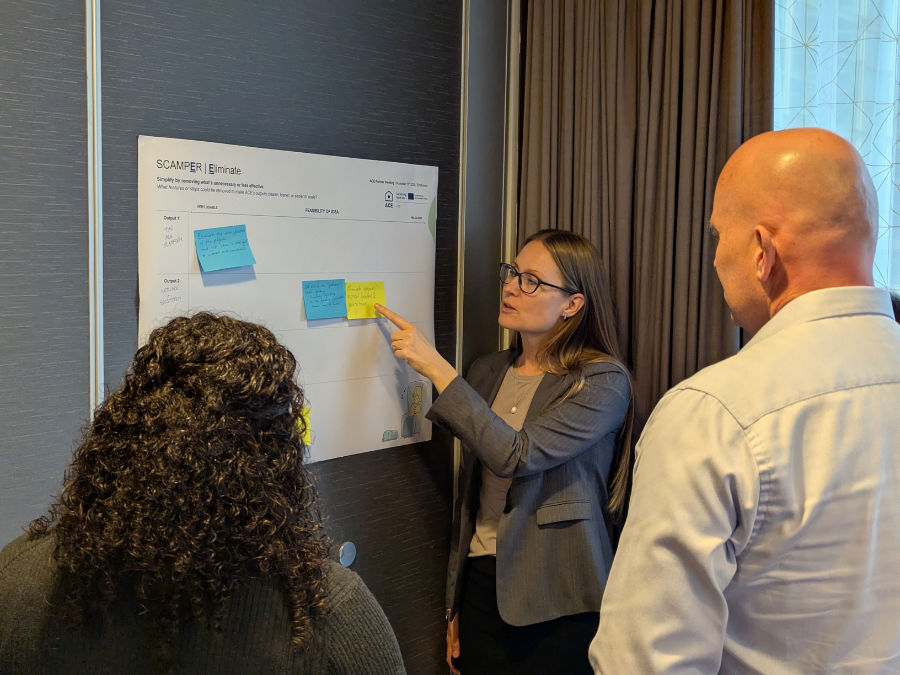
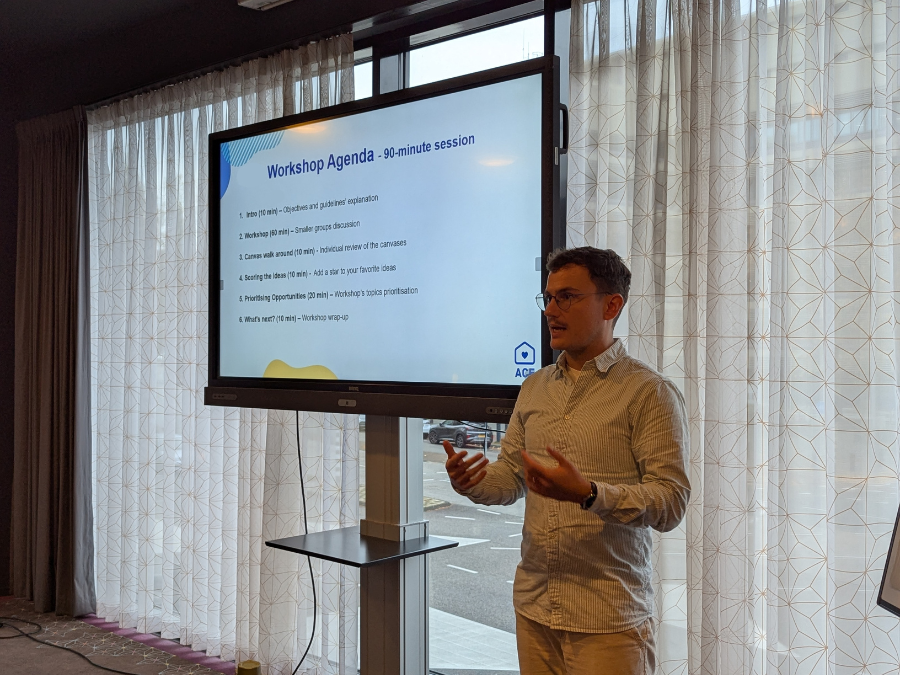
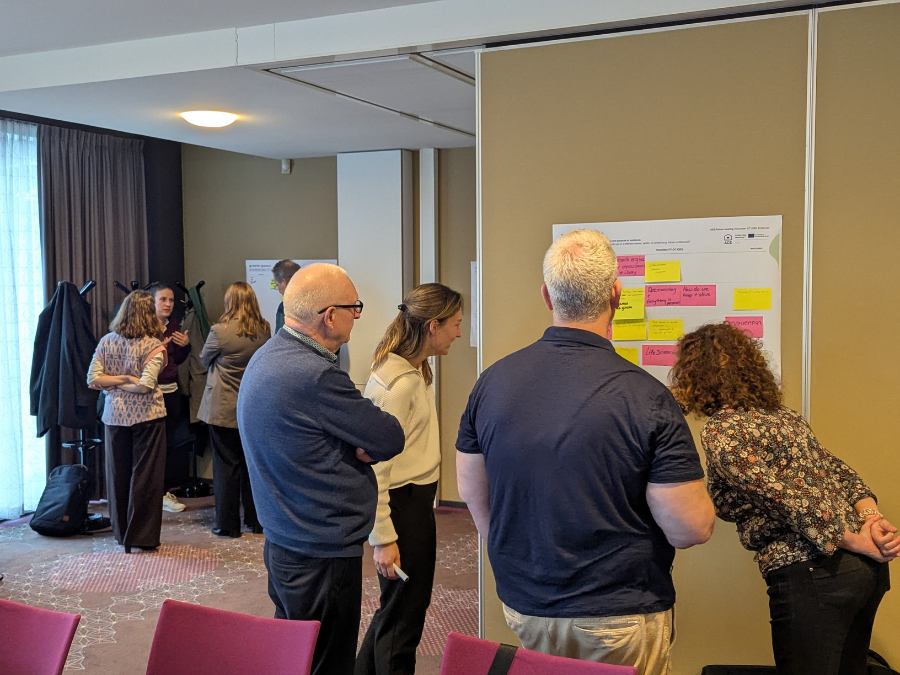
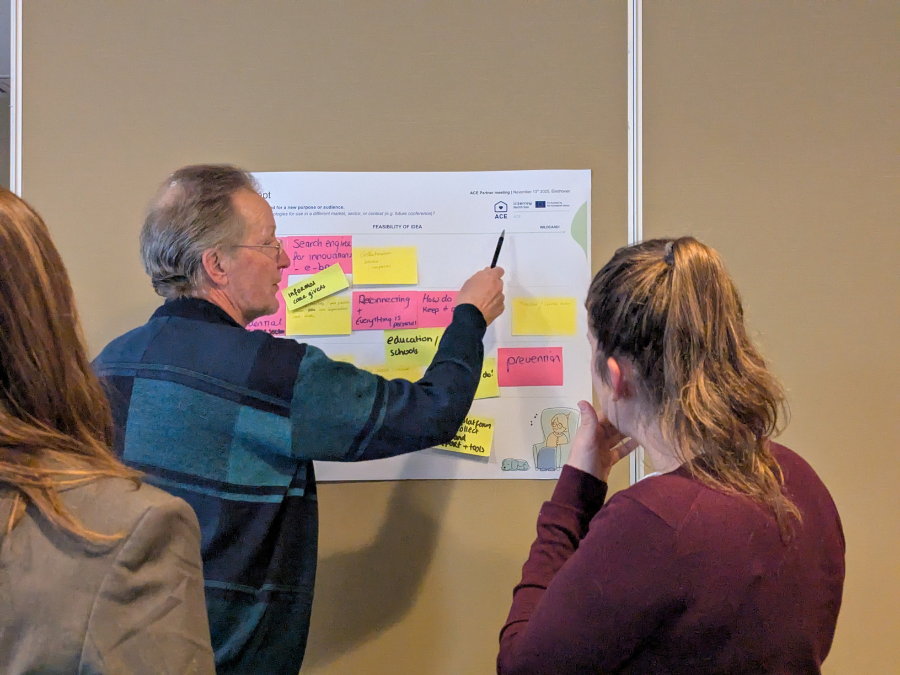
On 13–14 November 2025, the ACE consortium gathered in the Dutch city of Eindhoven, for a two-day partner meeting hosted by BOM (Brabant Development Agency). This penultimate partner meeting provided an important opportunity for the consortium to take stock of pilot progress, review critical adaptations, and explore how to carry the project’s legacy forward beyond 2026. With 22 approved SME–pilot site matches across six countries, the meeting marks a turning point: from “getting pilots off the ground” to capturing what it really takes to adapt homecare systems so innovation can reach those who really need it.
Pilots in progress: learning from “crashes” and “sparks”
During the meeting, the ACE pilot coordinators presented reflections on each of their pilots by highlighting the “crash” (what went wrong and why, what was learnt, and how it shaped the next steps) and the “spark” (what the positive impact was for the healthcare organisation and the SME).
Examples include:
DigiDetect
An AI solution for fall prevention, tested with data from hundreds of care recipients. The pilot exposed challenges around handling large volumes of sensitive data and limited AI knowledge in the municipality, but also shows how operational data can support more targeted preventive work. You can read more insights from Höganäs on our website.
Q-pen
A pen that aims to improve the handwriting of people with Parkinson’s using rhythmic audio cues that increase letter size and readability. Tested with ten occupational therapists from four care organisations, the collaboration gave care organisations a chance to explore a new solution with like-minded professionals, while offering the SME time for further development and direct access to several providers at once.
Moxiam
A sensor system designed to support independent living in assisted flats faced several technical challenges, from sensors detaching from the walls, to connectivity and app interface issues. Despite these hurdles, seniors and caregivers remained curious and engaged, and their feedback has now given the company a clear roadmap for improvement.
SmartFloor
A sensor-equipped flooring system tested in a specialised fall-prevention centre. The floor is excellent for engaging older adults and raising awareness about falls, but offers limited additional clinical insight in such a highly specialised setting – indicating that its real potential may lie in other environments such as care homes.
Other pilots, such as EasyWheely’s shock-absorbing wheelchair wheels, Helpsoq’s device for putting on compression stockings and SmartUrine’s urine-analysis system, underline recurring themes across ACE: regulatory hurdles, country-specific requirements, Wi-Fi and data issues, and the need to involve end users and frontline staff early on.
Across all cases, companies emphasise that ACE not only opens doors to valuable test sites, but also helps them identify failures, adjust their products accordingly, and better understand where and how their solutions fit into homecare. The majority of the companies’ challenges were only revealed through their participation in the ACE pilot support programme.
Exploring critical adaptations
A central theme in Eindhoven was the concept of critical adaptations – the concrete changes required to make new solutions work in real-world conditions.
By November, dozens of adaptations have already been registered. Country reflections show how these adaptations play out in different systems:
In the Netherlands, early alignment between needs and solutions and co-creation with the right end users are essential.
In Sweden, pilots reveal how important cross-organisational collaboration is – legal, IT, procurement, caregivers, management, and citizens must all be involved.
In France, integrating solutions into the home environment requires attention to visibility, aesthetics and clear contact points in teams.
In Belgium, pilots inspire other organisations and highlight the value of accessible service points where citizens can learn about innovations.
In Denmark, the lack of common standards shows the need for clearer IT and implementation frameworks to support municipal adoption.
These insights will feed into ACE’s upcoming Innovation Alignment Strategy and Action Plan: Adapting to the Future, which will synthesise at least 20 of the most significant adaptations and provide practical guidance for regions seeking to scale innovation in homecare. Stay tuned for these resources in early 2026!
Looking ahead: from pilots to future care
As we look ahead to the final seven months of the project, the ACE partners are preparing for several key milestones:
- An online Lunch & Learn knowledge-sharing event, on Friday November 28th, for practitioners, innovators, and other stakeholders from the homecare sector who want to learn from peers, explore practical experiences, and take away actionable insights on implementing technology in homecare.
- The ACE Homecare jobs of the future campaign, which will illustrate “a day in the life” of homecare professionals and show how innovation can support future workforce needs.
- The ACE final event in Antwerp in May 2026, where partners will present critical adaptations, pilot outcomes and strategic lessons for future regional and European initiatives.
Together, these next steps keep ACE moving from individual pilots towards system-level change: helping older adults live independently for longer, making care work more attractive and sustainable, and giving SMEs a clearer path to market for solutions that truly benefit everyday practice.