

Biobased
SAWA, Rotterdam (NL): Biobased
As part of the Good Practices for Circular Planning and Construction outcome, CircleBIM highlights practical projects that show how circular strategies are applied in real planning and construction contexts.
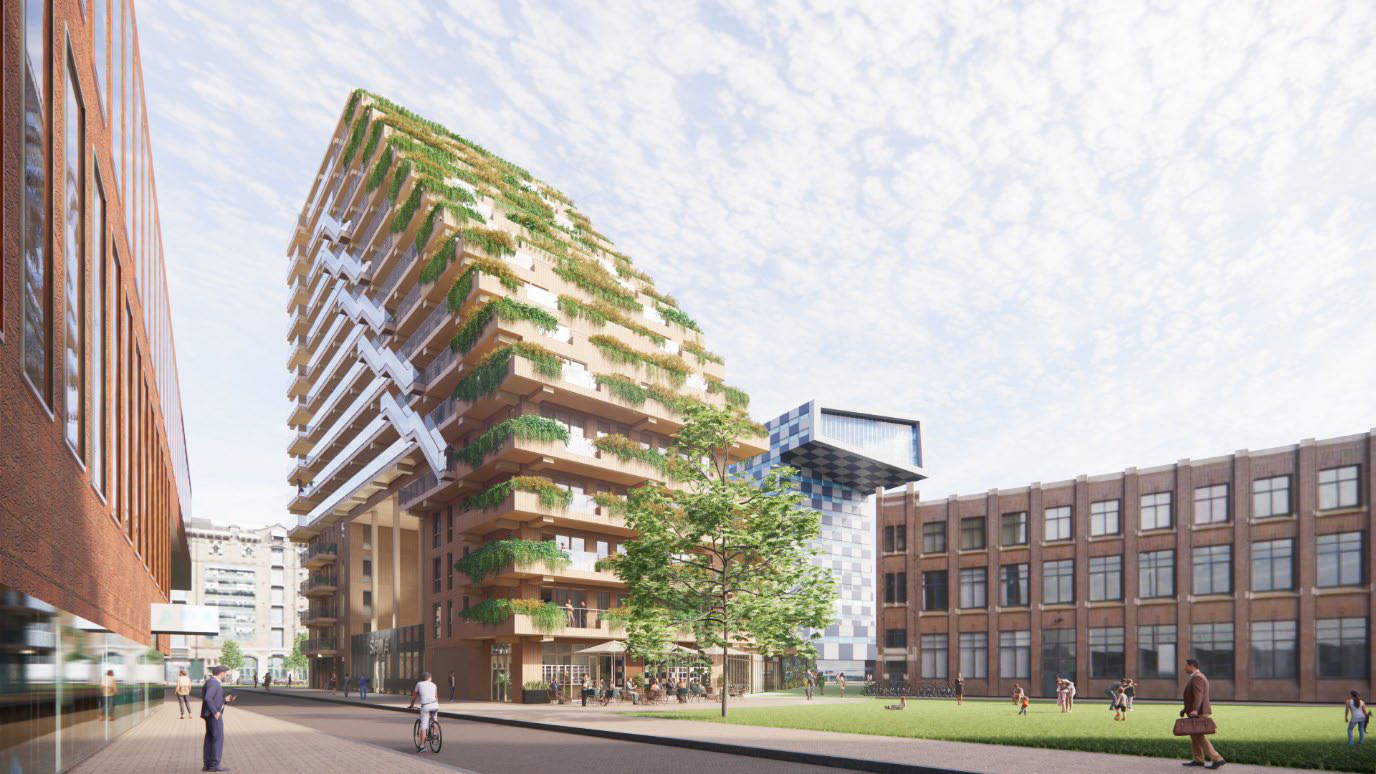
Visualization of the SAWA project, Rotterdam. (SAWA - Mei architects and planners, 2025)
- Client: Nice Developers, ERA Contour
- Architect: Mei Architects
- Structural Engineer: Pieters Bouwtechniek
- Building Physics Consultant: DGMR
- Location: Rotterdam, The Netherlands
- Function: Residential housing, catering, social functions
- Size: 12,000 m²
- Structural materials: CLT, Glulam, Steel (for additional stability)
- Completion: 2025
Circular strategy in practice
This project focuses on the circular strategy biobased, implemented through extensive use of wood and plant-based materials in construction and finishes.
SAWA is constructed largely from Cross Laminated Timber (CLT) and Glulam, forming the load-bearing structure, floors, and ceilings. The prefabricated timber elements minimize construction waste while creating a light, strong, and CO₂-sequestering building. Biobased façades, insulation, and finishing materials further reduce the ecological footprint. The timber is sourced from sustainably managed European forests, with a 4:1 replanting ratio, ensuring long-term environmental stewardship.
Added circular value
In addition to the main strategy, the project also applies:
- Maintain / Prolong
- Reuse / Redistribute
- Refurbish / Remanufacture
- Recycle
This combination demonstrates how multiple circular strategies, combined with biobased materials, can create a highly sustainable and resilient urban building.
Why this project matters
SAWA showcases how biobased construction can integrate with circular principles and biodiversity, including green terraces, façades, and rooftop gardens that enhance urban ecosystems. The project sets a benchmark for sustainable, future-proof residential development, minimizing waste and enabling reuse or recycling of materials at the end of their life.
This project is one of the analysed cases in the “Good Practices for Circular Planning and Construction” document.