

The CircleBIM team brings together expertise from universities, public authorities, municipalities, construction consultancies, and innovation networks. Together, we are working to shape a more circular and resource-efficient construction sector in the North Sea Region by applying and advancing the use of Building Information Management (BIM).
We unite 13 partner organisations from 7 North Sea Region countries: Belgium, Denmark, France, Germany, the Netherlands, Norway, and Sweden.

HafenCity Universität Hamburg (HCU) is a specialized university focused on the built environment and metropolitan development. It combines research and education in architecture, civil engineering, urban planning, and geomatics, and actively contributes to interdisciplinary and international projects that promote sustainable and circular construction practices.

IGEMO is a Belgian intermunicipal organization supporting local authorities in spatial planning, infrastructure, environment, and sustainable development. It assists municipalities with technical expertise, project coordination, and the implementation of innovative solutions for regional and urban development.
Embuild Vlaanderen is the representative organization of the Flemish construction sector. It supports companies through knowledge sharing, innovation, policy advocacy, and skills development, and promotes sustainable and future-oriented practices within the construction industry.
The Province of Overijssel is a regional public authority responsible for spatial planning, infrastructure, environment, and regional development. It plays a coordinating role in fostering sustainable innovation and supports municipalities in implementing circular and future-proof planning and procurement strategies.

Welbions is a social housing corporation and a frontrunner in circular construction within the WoonTwente region. Through innovative housing developments, it actively explores circular design principles and serves as an inspiring example for other housing corporations.
BUILDERS School of Civil Engineering is a higher education and research institution specializing in construction engineering, BIM, and eco-materials. Its research laboratory focuses on sustainable and recycled construction materials, and the institution acts as regional pilot coordinator, developing and testing innovative building methods within living lab environments.
Middelfart Municipality is a Danish local authority responsible for urban development, spatial planning, and public services. The municipality is actively engaged in sustainability and climate initiatives and contributes practical experience from municipal planning and implementation processes.

Arvika Municipality is a local public authority in Sweden responsible for urban development, public services, and spatial planning. It is engaged in sustainability and innovation initiatives aimed at improving the quality, efficiency, and environmental performance of the built environment at municipal level.
Sustainacon Sweden AB is a consultancy specializing in sustainable construction, circular economy, and innovation processes. The company supports public and private actors in developing, testing, and implementing new methods and tools for more sustainable planning and building practices.
Møre and Romsdal County Council is the regional authority responsible for the development of Møre and Romsdal County in western Norway. It provides key public services and plays an active role in promoting sustainable regional development, innovation, and international cooperation through participation in European programmes and networks.
Buro de Haan Informatietechnologie B.V. is a Dutch SME specialized in digital solutions and information technologies for the built environment. The company develops and applies BIM-based tools and data-driven approaches to support innovation, efficiency, and sustainability in construction and asset management.
Saxion University of Applied Sciences is a higher education institution with strong links to professional practice and applied research. It contributes expertise in sustainability, digitalization, and the built environment, supporting innovation through education, research, and collaboration with public and private partners.
University College of Northern Denmark (UCN) is a professional higher education institution with strong expertise in construction, technology, and applied sciences. It collaborates closely with industry and public authorities to support innovation, digitalization, and sustainable development in the built environment.
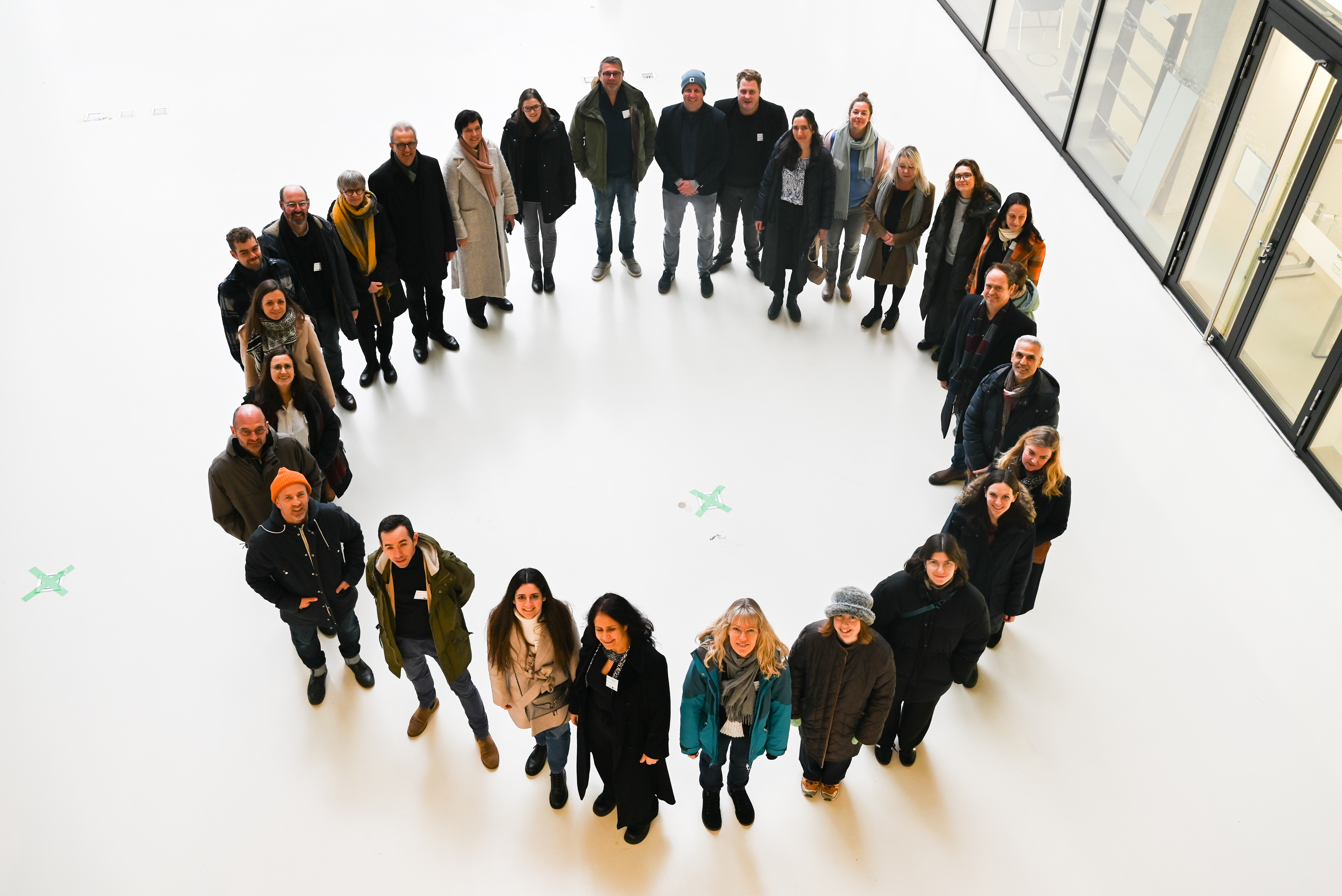
Image © HafenCity University communication