

Project outputs & publications
The CircleBIM Framework
to enable an innovative use of BIM in circular public planning and procurement processes
Summary based on the CircleBIM Framework (A1.3) written by:
Ir. A.H. (Amir) Babakhani EngD
Ir. T.J.H. (Twan) Rovers EngD
Dr. Ir. S. (Sander) Siebelink
Saxion University of Applied Sciences
30-09-2025
Building the Future
The construction industry faces the challenge of using resources more efficiently, reducing waste, and designing buildings more sustainably over their entire life cycle. At the same time, planning, construction, and operation processes are often fragmented, and digital processes such as Building Information Management (BIM) are still only used to a limited extent to implement the principles of the Circular Economy.
The CircleBIM Framework was developed precisely to close this gap. Its aim is to provide a common and transferable reference framework that systematically enables the integration of Circular Economy and BIM in public planning and procurement processes. The framework is the result of work carried out within the Interreg North Sea project CircleBIM and explicitly addresses public clients as well as their project partners.
This document presents the CircleBIM Framework. It offers a blueprint to make circular ambitions in public construction projects measurable, transparent, and, above all, implementable.
Core Idea of the CircleBIM Framework
At its core, the framework is conceived as a practice-oriented guiding structure that describes step by step:
what needs to be done in the individual phases from initiation to demolition/deconstruction of a construction project,
which actors should be involved, and
how BIM can be used to make circular objectives measurable and achievable.
The framework deliberately does not pursue a standard. It is designed to be adaptable to national regulations, different project types, contract models, and varying levels of BIM maturity. This transferability is a central design principle.
Life Cycle–Based Structure of the Framework
The CircleBIM Framework organizes construction projects along several life cycle phases, ranging from initiation to deconstruction. This structure makes clear that circular construction is not limited to individual project stages, but only becomes effective when decisions are aligned across the entire life cycle.
The visualization of the CircleBIM Framework illustrates this approach by representing the project process not as a linear sequence, but as a coherent cycle. The central position of the Initiation & Scoping phase explains that circular objectives and information requirements form the starting point for all subsequent phases and continue to have an effect throughout the entire project. The arrangement of the remaining phases in opposing pairs illustrates that certain phases are functionally linked, such as Planning and Delivery or Construction and Deconstruction. This makes it clear why early decisions regarding materials, constructions, or information requirements have direct impacts on later phases.
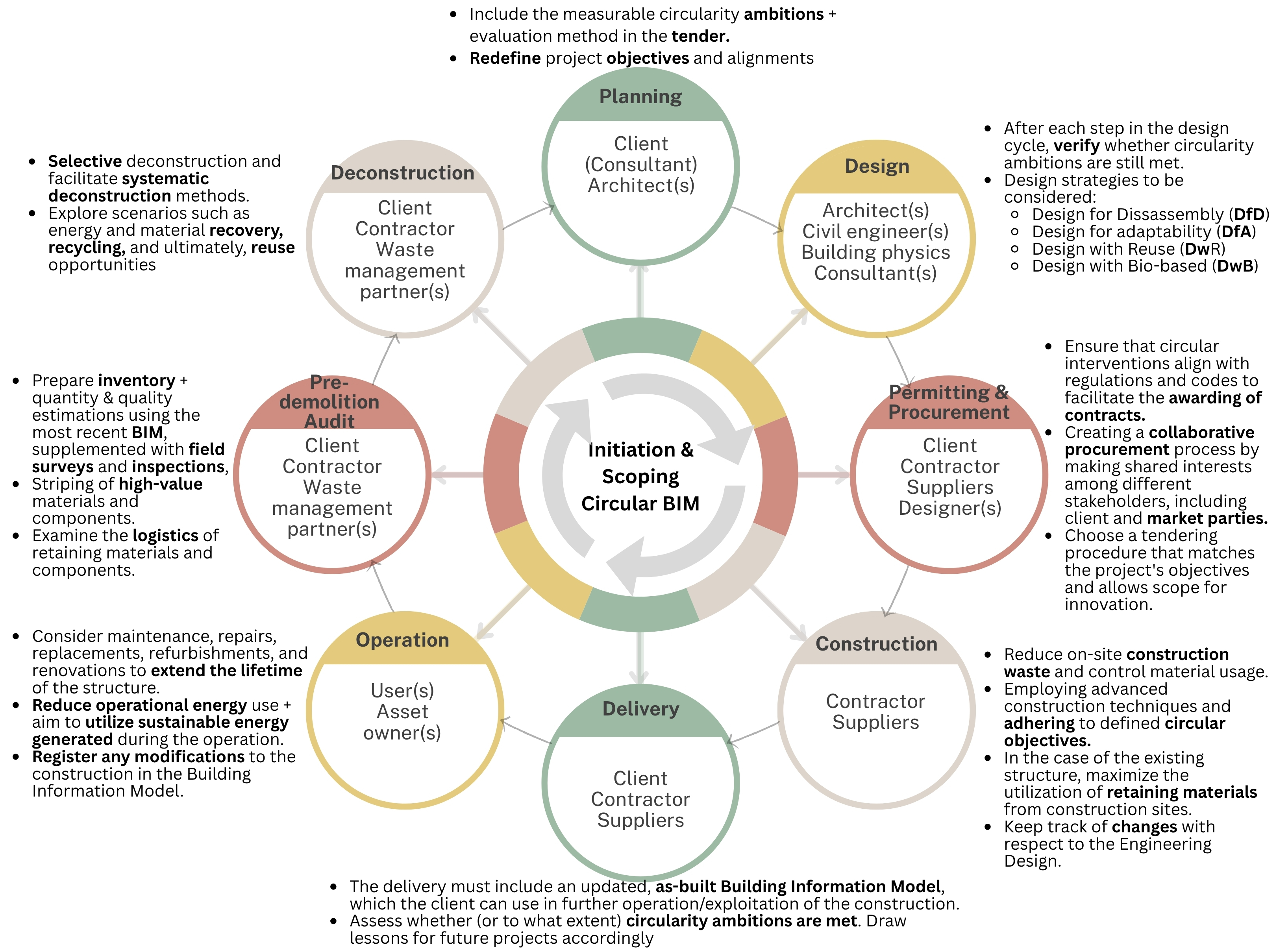
Figure 1: Visualization of the CircleBIM Framework
The visualization, therefore, supports the understanding that, within the CircleBIM Framework, BIM is not used solely for planning, but serves as a continuous information medium that safeguards circular decisions, enables feedback loops between phases, and provides the basis for meaningfully assessing and reusing materials and building components across multiple use cycles.
BIM as a Digital Backbone
Within the CircleBIM Framework, BIM assumes the role of a digital backbone through which relevant information is captured, verified, shared, and continuously updated throughout the entire life cycle of a built asset. The objective is not to maximize data collection, but to provide targeted information management that supports decisions on circular measures in every project phase.
The following illustration explains this approach by showing how information management is organized across all life cycle phases.
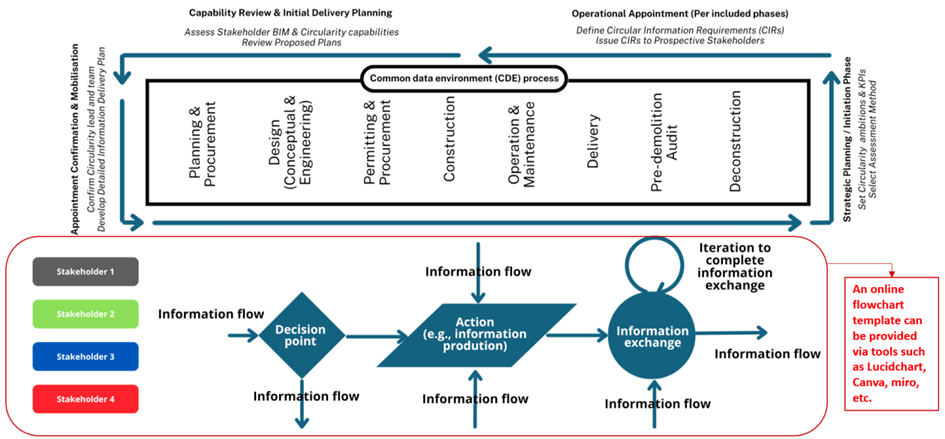
Figure 2: Template for the CDE and information flows within the CircleBIM Framework
The framework is aligned with the principles of ISO 19650, in particular concerning:
clear information requirements (Exchange Information Requirements),
clearly assigned responsibilities,
structured information delivery and review processes,
and the use of a Common Data Environment (CDE) as a central exchange platform.
This is intended to make clear that information management is not tied to individual phases, but is understood as a continuous process that is re-initiated with each new commission.
The depicted decision points and information flows explain how relevant data is generated iteratively: information is created, reviewed, approved, and further developed when necessary. This cycle is repeated until the information required for a given phase is complete. In this way, it becomes clear how BIM within the CircleBIM Framework functions as a connecting element between actors, phases, and circularity-related decisions.
At the same time, the diagram makes clear that information management must remain proportionate and adaptable. The CircleBIM Framework also acknowledges that, particularly in existing-asset projects, BIM models are not always fully available. In such cases, the framework provides for step-by-step and alternative digital approaches.
Current Developments
The CircleBIM Framework is not a static end product. It is a “living tool” that is continuously further developed through iterative pilot projects and feedback from project partners and stakeholders.
The next steps focus on operationalization. Implementation templates are being used to support pilot projects in applying the framework, and a comprehensive monitoring and evaluation system will track both the technical outcomes and user acceptance.
For more information on the CircleBIM Framework, the full version of the document can be consulted.
Good Practices for Circular Planning and Construction
Exchange and analysis of practical applications supported by digital tools
Summary based on Summary based on the CircleBIM Good Practices – Exchange and Analysis (A1.2) written by:
Buro De HAAN
Jaap Snijder
Arjan de Haan
Herbert Born
University College North Denmark (UCN)
Dorthe Holmberg Lauritzen
Mette Bisgaard Madsen
Meinhardt Thorlund Haahr
Raphael Peter Harrow-Hodgkinson
01-10-2025
From Ambition to Implementation
The construction sector plays a key role in the transition towards a circular economy. At the same time, public planning and construction processes remain complex, fragmented, and highly context-dependent. While circular ambitions are increasingly embedded in policies and strategies, their translation into concrete project-level actions often remains challenging.
This document addresses that challenge by presenting and analysing good practices that demonstrate how circular construction strategies are applied in real-world contexts. The focus is on practices supported by digital tools, in particular Building Information Management (BIM), and on their relevance for public planning and construction.
Purpose of the Document
The purpose of this document is to identify, analyse, and share transferable good practices that support circular planning and construction. It aims to provide public authorities, planners, and project partners with practical insights into how circular strategies can be implemented and supported through digital processes.
By combining examples from realised construction projects and European development initiatives, the document highlights solutions that are already in use and explores their potential for replication in different regulatory, organisational, and technical contexts.
Methodological Approach
The document is based on a structured exchange and analysis of selected good practices. A broad collection of examples was gathered through collaboration between project partners and subsequently assessed using a consistent analytical approach.
Real-life construction projects are analysed using the Butterfly Diagram, which positions circular strategies such as maintenance, reuse, refurbishment, recycling, and bio-based construction within technical and biological material loops. European development projects are examined through their key achievements, lessons learned, and practical relevance for circular planning and construction.
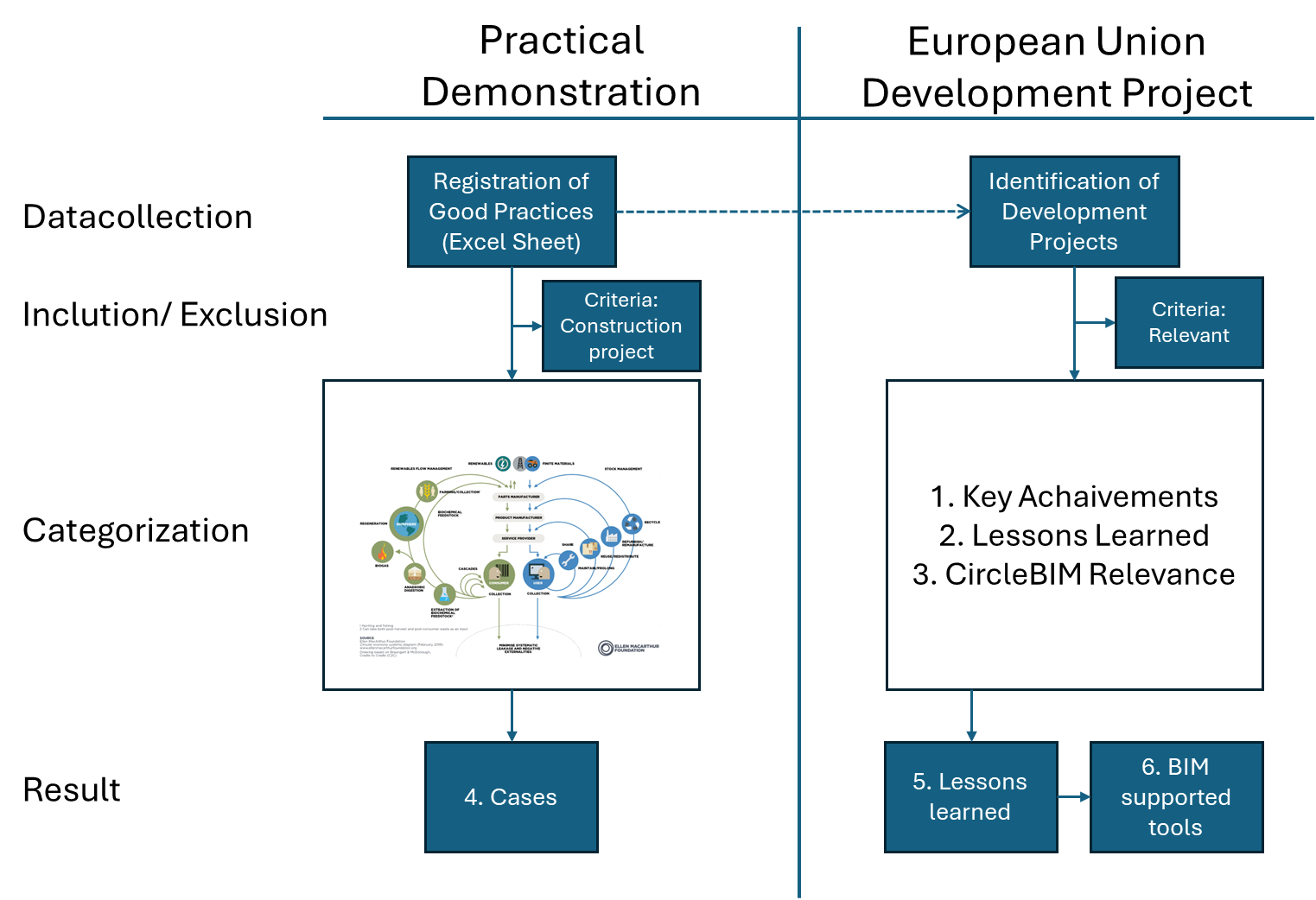
Figure 1: Overview of the methodology used in the Good Practices document
The figure illustrates how examples are selected, analysed, and synthesised to generate transferable insights.
Digital Support for Circular Construction
Across the analysed practices, digital tools play an enabling role in supporting circular decision-making. BIM is used as an information management approach to document, exchange, and update data on materials, components, and processes throughout the project lifecycle.
The document shows how BIM-supported tools contribute to:
design for disassembly and adaptability,
material documentation and traceability,
lifecycle assessment and costing,
stakeholder collaboration and data sharing.
At the same time, the analysis recognises that digital maturity and data availability vary widely between projects. Especially in existing buildings, digital information is often incomplete. The good practices therefore demonstrate proportionate and adaptable digital approaches that can be applied under different conditions.
Learning from Practice
The comparative analysis of construction projects and development initiatives reveals recurring themes. Successful practices are often characterised by early stakeholder involvement, clear circular objectives, transparent data structures, and alignment between technical solutions and organisational frameworks. Common challenges include limited documentation, fragmented responsibilities, and insufficient visibility of digital processes.
By explicitly addressing both successes and barriers, the document supports learning across projects and regions.
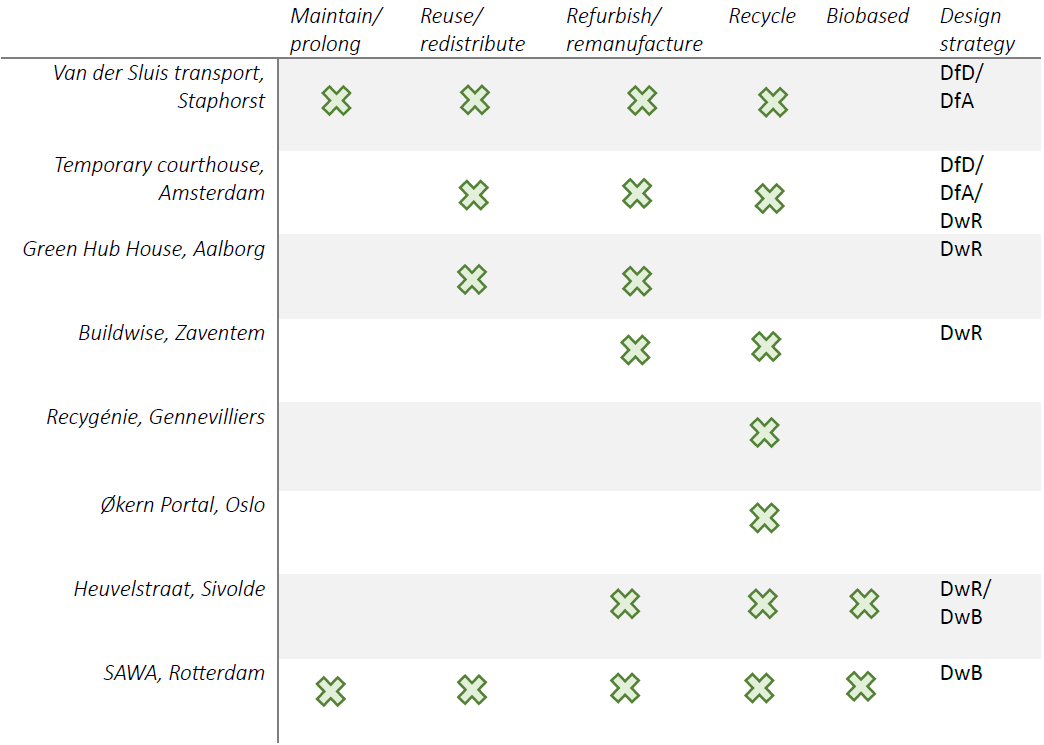
Figure 2: Overview of analysed cases and circular strategies
This overview highlights how different practices contribute to specific circular strategies and material loops.
Looking Ahead
The good practices presented in this document demonstrate that circular planning and construction are enabled through a combination of practical experience, digital support, and organisational learning. Continued exchange of knowledge, clearer documentation of digital processes, and the further development of shared indicators will be essential to strengthen and scale circular practices in public construction.
For more detailed descriptions, case analyses, and tool overviews, the full version of the document can be consulted.
BIM & Circular Construction in Flanders
Integration of digital information management and circular building practices
Summary based on the whitepaper BIM & Circular Construction in Flanders (2026) written by:
Embuild Vlaanderen & Buildwise
From Digitalization to Circular Transformation
The construction sector in Flanders is undergoing a dual transition: the increasing adoption of digital processes through Building Information Management (BIM), and the shift towards circular construction practices. While both developments are progressing, their integration remains a key challenge and opportunity.
This whitepaper explores how BIM can act as an enabler for circular construction by improving information management, collaboration, and decision-making across the entire life cycle of buildings. It provides an overview of the current state of BIM and circular construction in Flanders, highlighting policies, tools, and real-life applications.
Purpose of the Document
The document aims to inform and inspire stakeholders in the construction sector by:
explaining the fundamentals of BIM and circular construction,
presenting the Flemish policy context and supporting initiatives,
showcasing tools and methodologies that facilitate circular strategies,
and illustrating how BIM can support circularity in practice.
It targets public authorities, construction professionals, and project partners seeking to better understand and apply digital and circular approaches.
BIM as a Foundation for Information Management
BIM is presented as a digital process that integrates geometric and non-geometric data into a shared model, enabling better coordination and reducing errors throughout the construction process.
The document highlights the importance of structured information management based on standards such as ISO 19650, as well as key supporting documents like:
Exchange Information Requirements (EIR),
BIM Execution Plans (BEP),
and Master Information Delivery Plans (MIDP).
Interoperability is identified as a critical factor, with open standards such as IFC playing a key role in enabling collaboration between different stakeholders and software environments.
Circular Construction in the Flemish Context
Circular construction in Flanders is driven by strong policy frameworks and collaborative initiatives, such as Vlaanderen Circulair and the Green Deal Circular Construction.
The document outlines key ambitions, including:
reducing resource consumption and waste,
extending the lifespan of buildings,
promoting reuse and recycling of materials,
and enabling adaptable and future-proof design.
A wide range of digital tools supports these ambitions, including lifecycle assessment tools, material databases, and building passports that document material use and reuse potential.
Linking BIM and Circular Construction
A central message of the whitepaper is that BIM can significantly enhance circular construction by structuring and managing relevant data.
BIM enables:
material tracking and documentation (e.g. material passports),
lifecycle analysis and environmental impact assessment,
improved collaboration and data exchange,
and better-informed design and demolition decisions.
However, challenges remain, particularly regarding data standardization, interoperability, and consistent information exchange across the value chain.
Learning from Practice
The document presents multiple case studies from Flanders, demonstrating how BIM and circular principles are applied in real projects. These include:
renovation and reuse of existing structures,
design for disassembly and adaptability,
high rates of material reuse and recycling,
and the use of BIM to support coordination and decision-making.
These examples highlight both the potential and the practical challenges of implementing circular construction supported by digital tools.
Looking Ahead
The whitepaper concludes that while significant progress has been made, the full potential of combining BIM and circular construction is not yet realized.
Future efforts should focus on:
improving data quality and interoperability,
further integrating digital tools into circular workflows,
strengthening collaboration across stakeholders,
and scaling up successful practices.
By positioning BIM as a carrier of lifecycle data and circular information, it can become a key driver in the transition towards a more sustainable and resource-efficient construction sector.
Posters
Posters © CircleBIM
Press and website releases
February 2026
Newsletter of Vlaanderen Circulair
Circular bouwen en klimaatbeleid in Hamburg
Tijdelijke invullingen als motor voor circulaire vernieuwing
March 2025
Blog of the German Bundesinstitut für Bau-, Stadt- und Raumforschung (BBSR)
im Bundesamt für Bauwesen und Raumordnung (BBR)
CircleBIM: Erfolgreicher Projektstart in Hamburg
March 2025
Newsletter of the German Bundesinstitut für Bau-, Stadt- und Raumforschung (BBSR)
im Bundesamt für Bauwesen und Raumordnung (BBR)
CircleBIM (Nordseeraum)
10.01.2025
CircleBIM will Kreislauforientierung im Bausektor voranbringen
06.01.2025
CircleBIM: Neues EU-Bauprojekt für nachhaltiges Bauen
03.01.2025
CircleBIM – Interreg Nordsee Projekt will Kreislauforientierung im Bausektor voranbringen
23.12.2024
CircleBIM – Interreg Nordsee Projekt will Kreislauforientierung im Bausektor voranbringen
N.A
Das Projekt CircleBIM: Innovation im Bereich der zirkulären Bauplanung mit BIM